Learn how modern social media management builds consistent presence, real engagement, and measurable growth across every platform in 2026.
What Social Media Management Actually Means in 2026
Social media management is no longer just about posting a few times a week and hoping the algorithm smiles on you. In 2026 it is a disciplined system: planning content, designing assets, scheduling across platforms, engaging with your audience, and measuring what actually moves your business forward. Done well, it turns scattered activity into a compounding growth engine.
The average person now spends well over two hours a day scrolling feeds, watching short videos, and skimming stories. That attention is the raw material every brand competes for. A strong management approach makes sure your business shows up consistently, speaks in a recognizable voice, and gives people a reason to stop, watch, and act.
The Core Pillars of Management
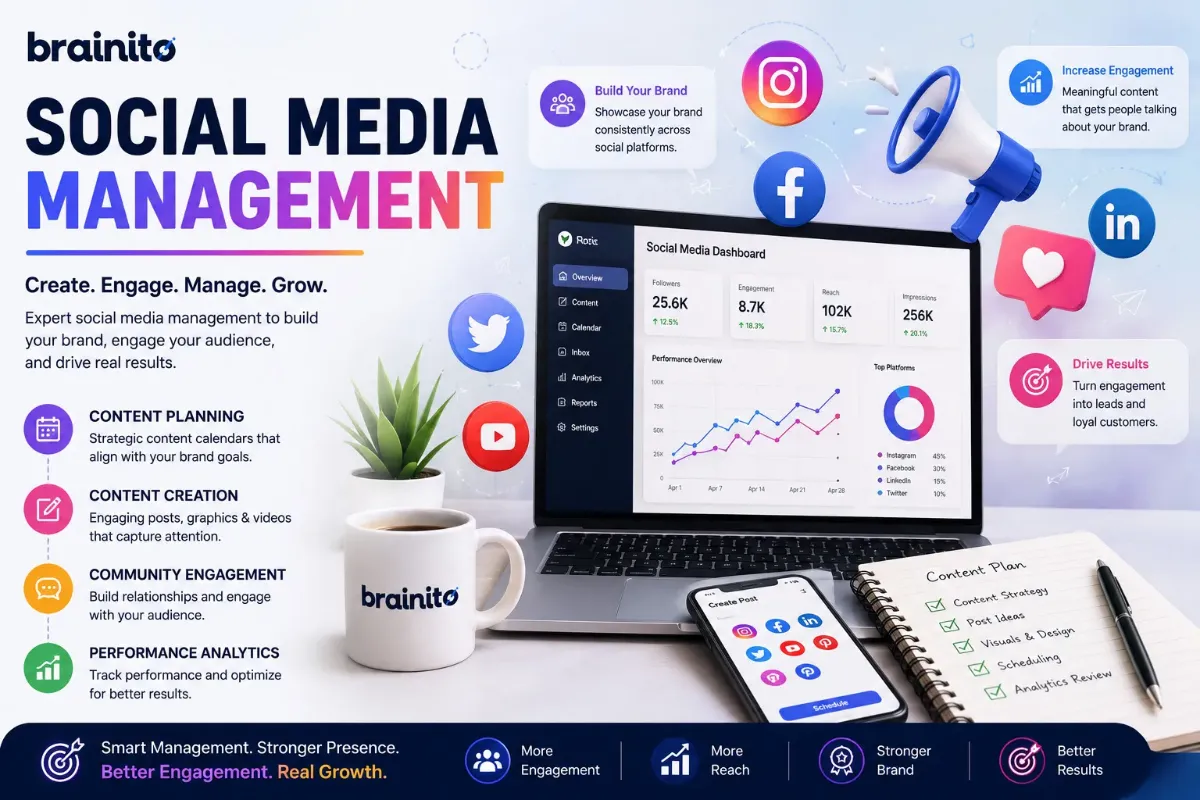
Effective social media management rests on four pillars: strategy (who you are talking to and why), content (what you create and how it looks), distribution (when and where you publish), and analysis (what worked and what to change). Skip any one of them and the whole system wobbles. If you are unsure where your gaps are, a free marketing audit can pinpoint exactly which pillar needs attention first.
Building a Content Calendar That Runs Itself
Consistency is the single most underrated growth lever on social media. A 30-day content calendar removes the daily scramble and lets you plan around launches, seasons, and audience behavior instead of reacting to them. It also makes collaboration easier, because everyone knows what is going live and when.
A healthy monthly cadence for most brands includes a mix of formats: short-form video (reels), carousels that teach or tell a story, single-image posts, and lightweight stories for behind-the-scenes moments. The exact ratio depends on your industry, but variety keeps your feed from feeling repetitive and gives the algorithm more signals to work with.
Plan in Themes, Not Random Posts
Instead of inventing a topic every day, group your month into content themes: education, social proof, product spotlights, and community. This makes ideation faster and your feed more coherent. Our content calendar generator can map out a full month in minutes, and the blog content generator helps you repurpose long-form articles into snackable social posts.
Creating Content That Stops the Scroll
Great social content is not about production polish alone. It is about relevance and rhythm. The first second of a video, the first line of a caption, and the first frame of a carousel decide whether someone keeps watching. Design with that hierarchy in mind: hook first, value second, call to action last.
Captions matter more than most brands assume. A well-written caption gives context, adds personality, and invites a response. Pair strong visuals built in tools like Canva or Adobe with captions that sound human, not corporate. When you need a starting point for a paid amplification, the Facebook ad copy generator can spark angles you can adapt for organic posts too.
Repurpose Ruthlessly
One good idea can become five pieces of content. A single blog post can turn into a carousel, a reel script, three quote graphics, and a story series. This is how lean teams keep a full calendar without burning out. Browse the Brainito blog for frameworks on turning one asset into many.
Choosing the Right Platforms for Your Business
You do not need to be everywhere. You need to be where your customers actually are, showing up in the format that platform rewards. Spreading yourself thin across ten channels almost always underperforms doing two channels exceptionally well.
Here is a quick lens for the major platforms in 2026:
- Instagram: visual-first brands in fashion, food, beauty, travel, and fitness. Reels drive reach, carousels drive saves.
- LinkedIn: B2B, services, and personal brand building. Thoughtful text and document posts win here.
- Facebook: community groups, local businesses, and older demographics. Still strong for events and boosted posts.
- TikTok and YouTube Shorts: discovery engines for entertaining, educational, and trend-driven content.
- Pinterest: high-intent search traffic for products, recipes, and home or lifestyle niches.
If you are launching a new channel and want a structured rollout, the DIY marketing plan walks you through choosing platforms and setting realistic goals.
Turning Engagement Into Measurable Growth
Vanity metrics like follower counts feel good but rarely pay the bills. The metrics that matter are engagement rate, saves and shares, click-throughs to your site, and ultimately conversions. Management means watching these numbers weekly and adjusting your content mix based on what the data tells you.
Engagement is a two-way street. Replying to comments, answering DMs, and joining conversations signals to both the algorithm and your audience that a real business stands behind the account. Boosting your best-performing organic posts with a small budget can extend reach without the complexity of full campaign management.
Connect Social to the Rest of Your Funnel
Social media rarely closes a sale on its own. It builds awareness and trust that your website, email, and SEO then convert. To see how your social presence fits into your broader marketing picture, run a free marketing audit. It scores your website across 77 factors and returns a prioritized action plan, so you know whether your next win comes from social, search, or something else entirely.
In-House, Freelance, or Managed: Choosing Your Model
Once you commit to consistent social media, the next question is who runs it. Each model has trade-offs. Doing it in-house gives you the most control but eats real hours every week. Hiring a freelancer adds capacity but often lacks strategic oversight. A managed approach bundles strategy, creation, scheduling, and reporting into one accountable system.
For many growing businesses, the sweet spot is a hybrid: an expert sets the strategy and produces the anchor content, while lightweight tools handle repetitive tasks like scheduling and ideation. If you would rather hand the reins to a specialist, you can hire a marketer who lives and breathes social. Curious what that costs? Our transparent pricing lays it out clearly.
Set Expectations Before You Start
Whatever model you choose, agree on deliverables, response times, and reporting cadence up front. Clarity here prevents most of the friction that derails social media partnerships.
Frequently Asked Questions
How often should a business post on social media?
There is no universal number, but consistency beats volume. For most small and mid-sized brands, three to five feed posts per week plus daily lightweight stories on your primary platform is a sustainable, effective baseline. It is far better to post four excellent pieces a week reliably than to burn out trying to publish daily.
How long does it take to see results from social media management?
Expect early engagement signals within four to six weeks and more meaningful traffic or lead growth within three to six months of consistent effort. Social media compounds. The accounts that win are the ones that show up steadily while learning from their data. If you want a faster read on where to focus, start with a free marketing audit to spot your quickest wins.
Do I need paid ads to grow on social media?
Not to start. Strong organic content and genuine engagement can build a meaningful audience on their own. Paid boosting simply accelerates what is already working. Once your organic posts prove which messages resonate, a modest budget can amplify your best performers and speed up growth.