Learn what influencer marketing is and how to develop a high-ROI influencer marketing strategy in 2026, from setting goals to vetting creators and measuring results.
What Influencer Marketing Actually Means
Influencer marketing is the practice of partnering with creators who have earned the trust and attention of a specific audience, then collaborating with them to put your product or service in front of that audience in an authentic way. It works because people listen to people. A recommendation from a creator who shares your customer's interests carries more weight than a polished ad from a brand they have never heard of.
That trust is the entire engine. Surveys consistently show that the vast majority of consumers trust recommendations from real individuals over branded messaging, and well-run influencer programs routinely return several dollars for every dollar invested. The catch is that "well-run" does most of the heavy lifting. Throwing money at a creator with a big follower count is not a strategy. A deliberate plan is.
If you are not sure where influencer marketing fits alongside your other channels, a quick free marketing audit can show you which gaps a creator partnership would actually close before you spend a rupee or a dollar on it.
The Types Of Influencers (And Why Size Is Not Everything)
Creators are usually grouped by audience size, but the more useful lens is reach versus relevance. A smaller, tightly focused audience often converts better than a massive, scattered one.
- Nano-influencers (under 10K): Tiny but loyal. High engagement, very affordable, and ideal for hyper-local or niche launches.
- Micro-influencers (10K to 100K): The workhorses of 2026. Strong engagement, real community trust, and reasonable rates make them the sweet spot for most brands.
- Mid-tier and macro-influencers (100K to 1M): Broader reach with more polished production. Better for awareness pushes than for squeezing out every conversion.
- Mega-influencers and celebrities (1M+): Huge reach, huge price tags, and lower engagement rates. Reserved for brand-building budgets, not scrappy growth.
For most businesses, a roster of several engaged micro-influencers beats one expensive mega name. You spread your risk, test more messages, and pay less per genuine conversion.
Step One And Two: Set Goals, Then Find The Right Creators
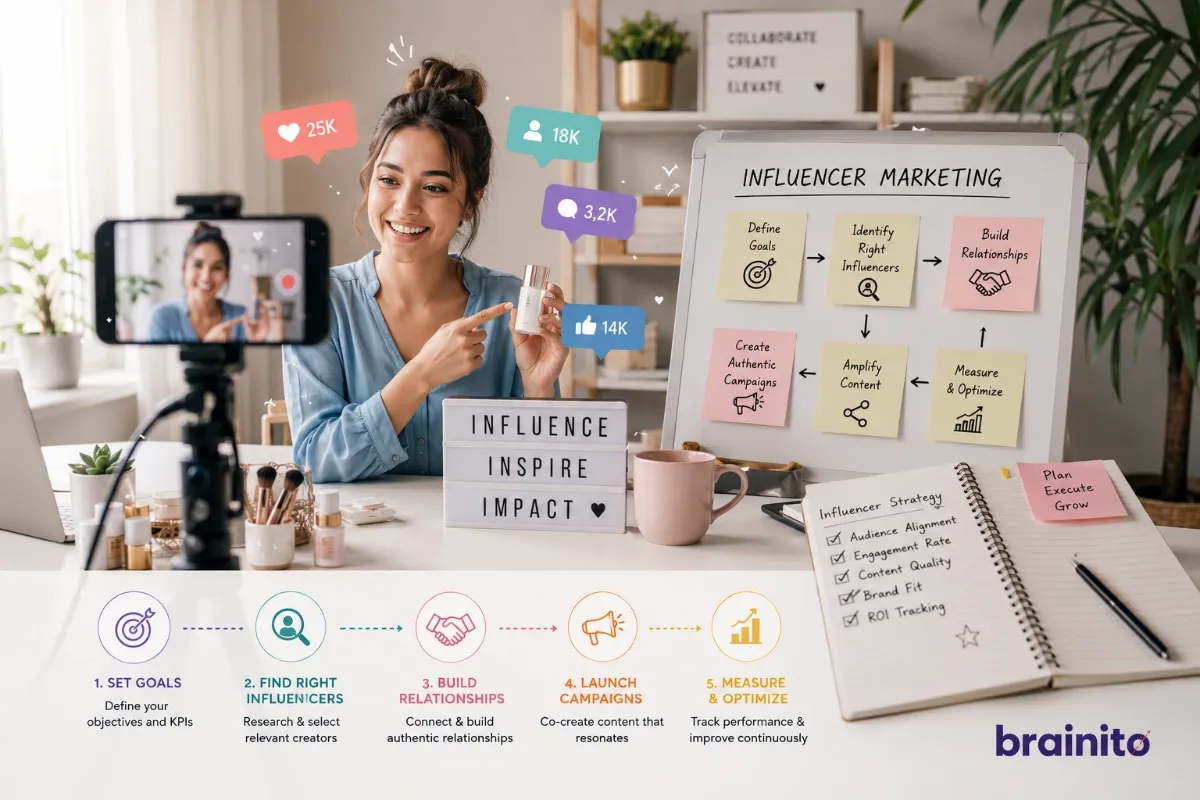
Before you contact anyone, decide what success looks like. Are you chasing brand awareness, website traffic, email signups, or direct sales? Each goal points to different creators, different content formats, and different ways of measuring whether the partnership worked. Vague goals like "more exposure" make it impossible to judge results later.
Finding creators who fit
Once your objective is clear, hunt for creators whose audience overlaps with your ideal customer. Search niche hashtags, study who your customers already follow, and lean on each platform's "suggested accounts" feature to find similar voices. Build a longlist, then narrow it down. If you want your messaging dialed in before outreach even starts, mapping it inside a DIY marketing plan keeps every partnership pointed at the same outcome.
Step Three: Vet Every Account Before You Commit
Follower counts can be bought. Engagement and trust cannot. This is where most influencer budgets are quietly wasted, so slow down and verify.
- Engagement rate: Compare likes, comments, and shares against follower count. A creator with 30K followers and lively comment threads usually outperforms one with 300K and silence.
- Comment quality: Read the comments. Real questions and reactions signal a real community. Generic emoji spam signals bots.
- Audience fit: Make sure their followers actually resemble your buyers in interests, location, and intent.
- Brand safety: Scroll their recent posts. Their values and tone become associated with yours the moment you partner.
Treat this like hiring. A short, structured vetting checklist will save you far more than it costs in time.
Step Four And Five: Reach Out And Choose A Collaboration Model
Outreach succeeds when it feels personal and low-pressure. Reference a specific post you genuinely liked, explain why your product fits their audience, and be upfront about what you are offering. Skip the copy-paste templates; creators can spot them instantly.
Common collaboration models
- Gifted product: You send free product in exchange for an honest post. Cheap and great for early testing.
- Shoutout exchange: Two complementary brands or creators promote each other. Zero cash, mutual reach.
- Paid promotion: A flat fee, affiliate commission, or both. The most scalable and predictable option.
Whatever the model, put it in writing. A simple contract should cover deliverables, deadlines, required calls-to-action, account mentions, and disclosure of the partnership. For larger paid deals, pay in installments tied to milestones rather than everything upfront. When you are ready to brief creators on the message itself, a content calendar generator helps you schedule posts around launches and promotions so nothing collides.
Step Six: Measure, Then Double Down On What Works
An influencer campaign without tracking is just a donation. Give every partnership a way to measure itself.
- Unique links and UTM tags: Tag each creator's links so analytics can attribute traffic and conversions back to them.
- Promo codes: Assign a personalized discount code per creator to track sales precisely.
- Engagement and reach: Watch saves, shares, and comments, not just likes, for awareness goals.
After a campaign cycle, the numbers tell you who to scale and who to drop. Reinvest in top performers, renegotiate with the middle, and quietly retire the underperformers. Apply this same test-and-scale discipline to your email and ad copy too. A email subject line generator can sharpen the follow-up messages you send once influencer traffic lands on your list, turning one-time visitors into repeat buyers.
Influencer marketing rarely works in isolation. Pair it with strong landing pages, retargeting, and email nurture. To see how all of these fit together for your specific site, run a free marketing audit that scores your website across 77 factors and hands you a prioritized action plan instead of guesswork.
Frequently Asked Questions
How much should I budget for influencer marketing in 2026?
There is no fixed number, but most small and mid-sized brands start by allocating a test budget across three to five micro-influencers rather than one big name. Begin with gifted product or low-cost paid posts, measure conversions, then reinvest in whoever delivers the best return. Let performance, not follower counts, set your budget.
Do influencers need to disclose paid partnerships?
Yes. Clear disclosure of sponsored or gifted content is a legal and ethical requirement in most markets, and audiences increasingly expect it. Build disclosure language directly into your contract so it is never an afterthought. Transparency actually protects trust rather than diminishing it.
How do I know if my influencer strategy is working?
Tie every partnership to a measurable goal and track it with UTM links, unique promo codes, and engagement data. If you are unsure which metrics matter most for your goals, a free marketing audit can highlight where influencer activity should connect to the rest of your funnel and what to fix first.