
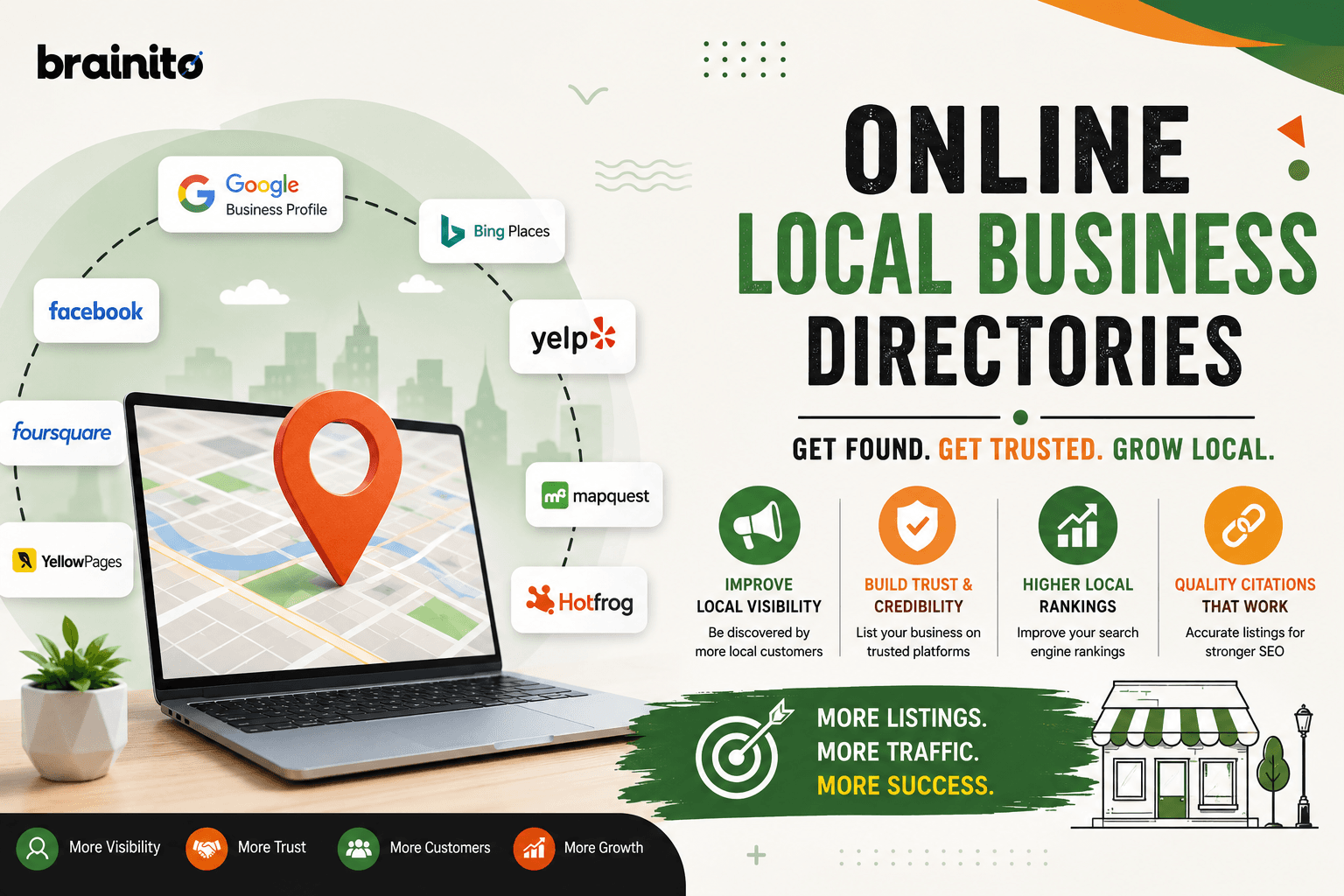
Learn how online local business directories boost visibility, build citations, and lift local SEO rankings in 2026, plus which listings actually matter.
Why Online Local Business Directories Still Matter in 2026
When people search for a service near them, search engines and AI assistants both lean on a quiet layer of data most owners never think about: directory listings. Online local business directories are the structured records of your name, address, phone number, and category that live across the web. They feed the algorithms that decide whether you appear when someone searches "best plumber near me" or asks a voice assistant for a recommendation.
In 2026, this matters more than ever. Local search has fragmented across Google, Apple Maps, Bing, AI chat tools, and vertical platforms, and each of them cross-references directory data to verify that your business is real, active, and trustworthy. A consistent presence across the right directories is one of the cheapest, most durable ways to grow local visibility.
What Counts as a Local Business Directory
The category is broader than Yelp and the Yellow Pages. It includes general directories (Google Business Profile, Apple Business Connect, Bing Places), industry directories (legal, medical, home services), and regional directories tied to a specific country or city. Each listing is a chance to be found and a signal that reinforces your legitimacy. If you want to see where you currently stand, a free marketing audit scans your site across 77 factors and flags citation gaps you can fix this week.
How Directory Citations Influence Local Search Rankings
A citation is any online mention of your business details, whether or not it links back to your site. Search engines treat the volume, accuracy, and consistency of these citations as a trust signal. The more your details line up across reputable sources, the more confident the algorithm becomes that your business exists and serves the area it claims to serve.
Consistency Beats Volume
One inconsistency, an old phone number on one site, a suite number missing on another, can quietly drag down rankings. Algorithms read conflicting data as uncertainty, and uncertainty pushes you down the map pack. Before you chase new listings, audit the ones you already have and standardize every field to match exactly.
Relevance and Authority
Not all directories carry the same weight. A listing on an authoritative, niche-relevant directory in your industry often counts for more than a dozen low-quality general sites. Prioritize directories that real customers actually use and that search engines already trust. If you are building this into a broader plan, our DIY marketing plan walks through how citations fit alongside content and reviews.
Choosing the Right Directories for Your Business
Spreading yourself across hundreds of random sites wastes time and can even introduce errors. A focused list of high-value directories produces far better results. Think in three tiers.
Tier 1: Core Platforms Everyone Needs
Start with the platforms that power most local discovery: Google Business Profile, Apple Business Connect, Bing Places, and the major data aggregators that distribute your information to dozens of downstream sites. These are non-negotiable and should be claimed, verified, and fully completed first.
Tier 2: Industry-Specific Directories
Next, target directories built for your profession. A dentist belongs on health platforms, a lawyer on legal directories, a contractor on home-services sites. These reach buyers already in research mode and signal topical relevance to search engines. Use a keyword research tool to confirm which directories rank for the terms your customers search.
Tier 3: Local and Regional Listings
Finally, add chamber of commerce pages, city guides, and country-specific directories. These hyperlocal citations are powerful for businesses competing in a defined geographic area, and they often have less competition than the big national platforms.
Optimizing Each Directory Listing for Maximum Impact
Claiming a listing is only the starting line. A complete, optimized profile converts far better and ranks higher than a bare-bones entry. Treat every directory profile like a mini landing page.
Complete Every Field
Fill in hours, categories, service areas, payment methods, and attributes. Add photos, since listings with images earn meaningfully more clicks and calls. Write a clear, keyword-aware business description that reads naturally for humans first.
Keep Your Core Details Identical Everywhere
Your business name, address, and phone number should be character-for-character identical across every platform. Copy them from a single master document rather than retyping each time. Small variations are the most common reason citations fail to reinforce each other.
Use Categories Strategically
Choose the most specific primary category that fits your business, then add relevant secondary categories. Categories tell the algorithm exactly which searches you should appear in, so vague choices cost you visibility. Pair this with strong on-page content; our content brief generator helps you map directory categories to the pages on your site.
Managing Reviews and Keeping Listings Fresh
Directories are not set-and-forget. The platforms that influence rankings reward active, well-reviewed businesses, and they penalize stale or abandoned profiles. Ongoing maintenance is where most competitors fall short, which is exactly why it is an opportunity.
Build a Steady Stream of Reviews
Reviews shape both rankings and click-through rates. Ask happy customers to review you on the platforms that matter most, respond to every review (positive and negative) promptly and professionally, and never buy fake reviews, which platforms increasingly detect and punish.
Update Promptly When Things Change
New hours, a moved location, a new phone line, or seasonal closures should be reflected everywhere within days. Outdated information frustrates customers and erodes the consistency that powers your rankings. Set a quarterly reminder to sweep your top directories, and consider routing this work to a specialist if your team is stretched, our hire a marketer option connects you with help. To catch problems before they cost you traffic, run a free marketing audit on a recurring basis.
Turning Directory Listings Into a Repeatable System
The businesses that win at local search treat directories as an ongoing program, not a one-time chore. Build a simple system you can repeat every quarter so your presence compounds over time.
A Simple Quarterly Workflow
Maintain a master spreadsheet of every directory you appear on, the login, and the exact details listed. Each quarter, verify accuracy, add a few new high-value citations, refresh photos, and request fresh reviews. Track which directories drive calls and form fills so you double down on what works.
Connect Directories to the Bigger Picture
Citations work best alongside a strong website, local content, and active social profiles. Plan a few location-focused blog posts to support your listings, and use a content calendar generator to keep that publishing consistent. If you are mapping the whole effort, start with a DIY marketing plan and benchmark your progress with a free marketing audit that returns a prioritized action plan.
Frequently Asked Questions
How many business directories should I list my business on?
Quality matters far more than quantity. Start with the core platforms (Google, Apple, Bing) and the major data aggregators, then add a focused set of industry and regional directories that real customers use. For most local businesses, twenty to forty well-chosen, accurate listings outperform hundreds of low-quality ones.
Do directory listings still help SEO in 2026?
Yes. Consistent, accurate citations remain a foundational local ranking signal and increasingly feed AI-driven search results too. They verify your business is legitimate and relevant to a location, which directly influences whether you appear in map results and near-me searches.
What is the most common directory mistake businesses make?
Inconsistent details. A mismatched phone number, abbreviated street name, or missing suite number across listings confuses search engines and weakens your rankings. Keep one master record and copy your exact name, address, and phone everywhere. A free marketing audit will surface these inconsistencies quickly.