Grow your essential oil business in 2026 with proven digital marketing strategies covering SEO, social, email, influencers, and paid ads that drive sales.
Why Essential Oil Brands Need a Sharper Digital Strategy
The essential oil market is crowded, wellness-obsessed, and fiercely competitive. Shoppers can find lavender, tea tree, or a blended roller from a dozen brands in seconds, so the winner is rarely the one with the best oil. It is the one that shows up, builds trust, and stays memorable. That is what a strong digital marketing strategy delivers.
Success in this space comes down to four ingredients: passion for your product, patience to let channels compound, a realistic budget, and a marketing plan that connects each tactic to a measurable goal. Random posting and occasional ad boosts will not move the needle. A coordinated system will.
If you are not sure where your current efforts are leaking, start with a free marketing audit. It scores your website across 77 factors and returns a prioritized action plan, so you spend energy on the fixes that actually influence sales rather than guessing.
Build an SEO-Optimized Store That Ranks and Converts
Your website is the hub every other channel points back to. Before you spend a dollar on ads, make sure organic search can find you. Essential oil buyers search with clear intent: "best essential oils for sleep," "eucalyptus oil for congestion," or "carrier oil for sensitive skin." Each of those is a page you can own.
Target the right keywords
Group your keywords by intent. Product terms capture ready buyers, while informational terms ("how to use frankincense oil") capture people earlier in their journey. Map both to product pages and blog content so you cover the full funnel. Our keyword research tool helps you find the phrases with real demand and manageable competition.
Optimize product and category pages
Write unique descriptions for every SKU, add specific benefits, sourcing details, and usage tips. Use descriptive titles, clean URLs, and fast-loading images. If you sell on Amazon too, coordinate your listings with an Amazon keyword research tool so your product surfaces where shoppers already buy.
Publish helpful content
A consistent blog builds topical authority and gives you internal links to your products. If a blank page slows you down, a blog content generator can draft usage guides, recipes, and comparison posts you refine into your brand voice.
Combine Paid Ads With Organic for Faster Traction
SEO compounds over months. Paid advertising delivers visibility today. The smartest essential oil brands run both, using ads to generate early revenue while organic rankings build in the background.
Google Shopping and Search
Google Shopping puts your product photo, price, and name in front of high-intent searchers. Pair it with search ads on your strongest converting terms. Structuring campaigns properly matters more than budget, so use a Google ad structure generator to organize tightly themed ad groups that lower your cost per click.
Facebook and Instagram
Social ads excel at discovery. Wellness shoppers respond to lifestyle imagery, testimonials, and short demos. Test several angles and let the data pick winners. A Facebook ad copy generator gives you variations to test without staring at a blank brief.
Start small, watch return on ad spend closely, and scale only what proves profitable. Paid traffic also feeds your remarketing pools, so even browsers who do not buy today become audiences you can win later.
Win Social Media and Influencer Partnerships
Essential oils are visual, sensory, and highly shareable, which makes social platforms a natural fit. The goal is not just followers but an engaged community that trusts your recommendations.
Lean into Pinterest
Pinterest is a search engine disguised as a mood board, and its audience skews toward exactly the wellness-minded buyers you want. Create boards for diffuser blends, DIY recipes, and aromatherapy benefits. Pins have a long shelf life and keep driving traffic months after posting.
Partner with aligned influencers
Influencer marketing works when the creator genuinely fits your audience. A wellness coach or aromatherapist with an engaged following of a few thousand often outperforms a celebrity with millions of passive fans. Prioritize alignment and authenticity over raw reach, and track results with unique discount codes so you know your return.
Post with consistency
Show real usage: morning routines, before-bed rituals, and quick how-tos. Plan ahead so posting never stalls. A content calendar generator keeps your channels active and on-theme without last-minute scrambling.
Turn Email and Referrals Into Repeat Revenue
Acquiring a customer is expensive. Keeping one is where the profit lives. Email and referral programs are your two highest-return retention channels, and both cost far less than chasing new traffic.
Build and nurture an email list
Offer a first-order discount or a free blend guide in exchange for an email. Then send a welcome sequence, restock reminders, seasonal blends, and educational tips. Your subject line decides whether any of it gets read, so sharpen every send with an email subject line generator.
Reward referrals and run giveaways
Word of mouth is powerful in wellness communities. Give customers a reason to share by offering both the referrer and the friend a discount. Contests and giveaways, where entry means tagging a friend or joining your list, expand reach quickly and capture qualified leads at a low cost.
Layer these tactics together and each new customer becomes a source of more customers, compounding your marketing without compounding your ad spend.
Bring It Together Into One Plan
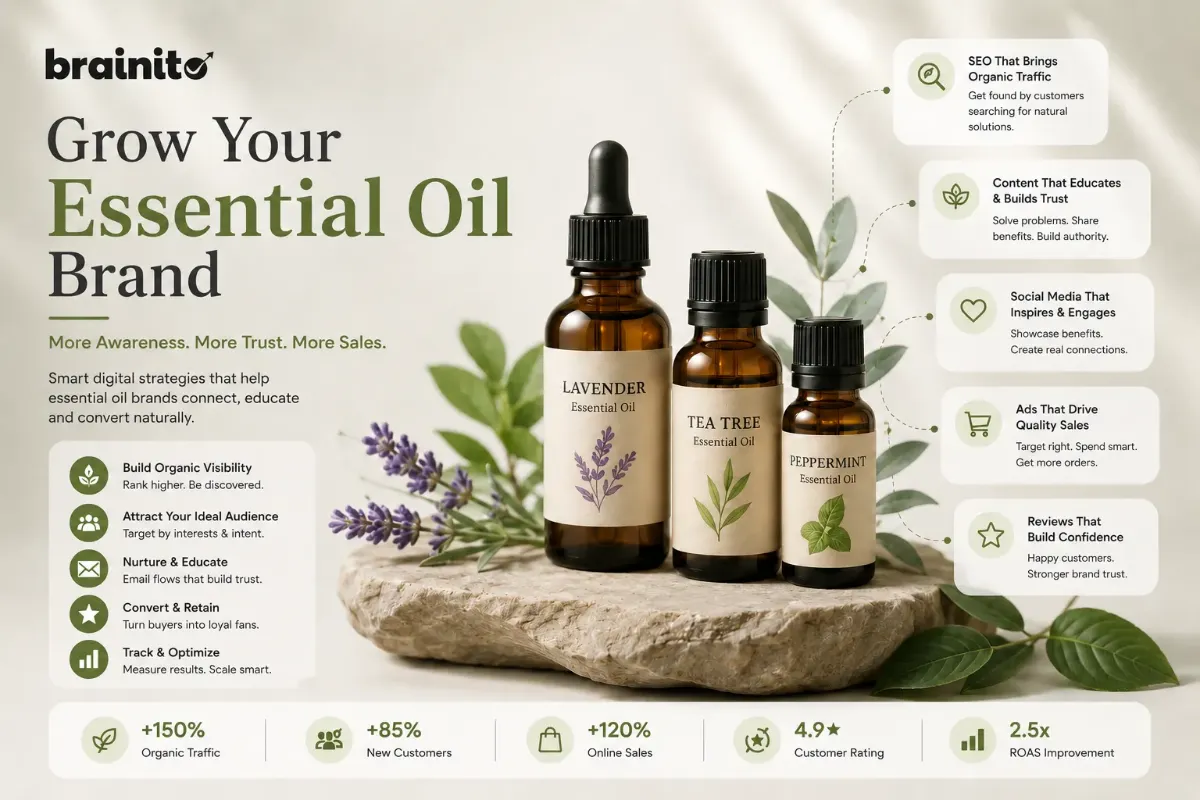
Individual tactics rarely fail because they are bad. They fail because they run in isolation. Your SEO, ads, social, email, and referrals should all feed each other: content earns rankings, ads capture demand, social builds trust, and email converts and retains.
If you would rather not assemble this alone, a DIY marketing plan gives you a structured roadmap tailored to a small wellness brand. Prefer expert hands? You can hire a marketer to execute, and you can compare options on our pricing page. Wherever you start, ground your first moves in a free marketing audit so every hour goes to the fixes with the biggest payoff. For more tactics, keep exploring the blog.
Frequently Asked Questions
Which digital marketing channel works best for essential oil brands?
There is no single winner. SEO and content build lasting organic traffic, Pinterest and influencer partnerships drive discovery, and email plus referrals maximize repeat purchases. The strongest results come from combining them so each channel reinforces the others rather than betting everything on one.
How much should a small essential oil business budget for marketing?
Many small wellness brands invest a portion of revenue into a mix of paid ads and content, then reinvest as return on ad spend proves out. Start lean, measure closely, and scale only the channels that generate profitable sales. A free marketing audit helps you prioritize before you commit budget.
How long does SEO take to work for an essential oil store?
Expect a few months to see meaningful movement, and longer for competitive product terms. That is why pairing SEO with paid ads is smart: ads deliver revenue now while your organic rankings compound in the background.