Proven digital marketing strategies for a t-shirt business in 2026: branding, SEO, paid ads, influencers, email, and retention that grow sales.
Why T-Shirt Brands Live or Die by Digital Marketing
The apparel space is crowded, and t-shirts are the most saturated corner of it. Anyone with a design tool and a print-on-demand account can launch a store overnight, which means your product almost never sells itself. What separates a brand that clears a few dozen orders a month from one that scales past six figures is rarely the artwork. It is the marketing engine behind it.
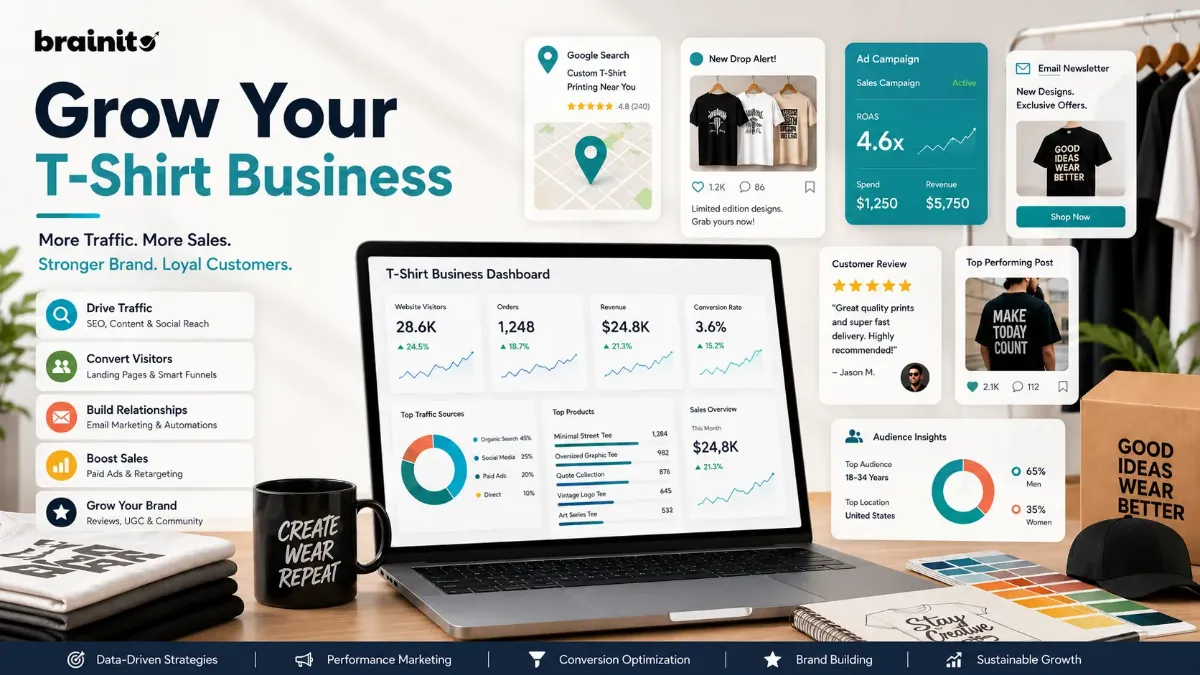
Digital marketing gives a small t-shirt business the reach of a much larger competitor without the overhead. The channels are measurable, the audiences are targetable, and the feedback loop is fast. The catch is that you need a coherent strategy rather than a scattershot of random posts and boosted ads. Below is a practical framework built for how customers actually discover and buy apparel in 2026.
If you want a clear-eyed starting point, run your store through our free marketing audit. It scores your website across 77 factors and hands back a prioritized action plan, so you know which of the tactics below to fix first instead of guessing.
Build a Brand and Product Worth Buying
Before a single ad runs, your product and brand identity have to give people a reason to choose you. A plain shirt with a generic slogan competes only on price, and price wars are unwinnable for small sellers. Distinctiveness is your cheapest marketing asset.
Differentiate the design and the story
Pick a niche and own it. A brand built for trail runners, indie musicians, or dog owners will always out-convert a store that sells "cool shirts for everyone." Pair a recognizable logo, a consistent color palette, and photography that shows the shirt on real people. The story around the brand, why it exists and who it is for, is what turns a one-time buyer into a repeat customer.
Study competitors without copying them
Map out three to five rivals in your niche. Note their price points, their bestsellers, the language in their reviews, and the channels where they post most. The gaps you find, an underserved sub-audience, a design style nobody is doing, a shipping promise nobody makes, become your positioning. When you turn that research into a repeatable plan, a structured DIY marketing plan keeps the work focused instead of endless.
Price for Profit, Then Market Around It
Pricing is a marketing decision as much as a financial one. Set it too low and you signal cheap quality while starving yourself of ad budget. Set it too high without justification and conversions stall.
Start with your true cost per shirt, blank cost, printing, packaging, platform fees, and shipping, then build in a target margin of at least 40 percent so you have room to advertise. From there, consider psychological pricing (24.99 rather than 25) and value-based tiers such as premium fabric or limited drops that let you charge more to customers who want more.
Once your margins can support acquisition spend, the rest of your marketing has fuel. If you are unsure whether your numbers can carry paid channels, our pricing overview shows how brands map budget to growth stages before scaling ads.
Get Found: SEO and Keyword Strategy for Apparel
Paid traffic stops the moment you stop paying. Organic search compounds. For a t-shirt store, search engine optimization is the difference between renting attention and owning it.
Optimize product and collection pages
Every product title, description, and image alt text is a ranking opportunity. Write descriptions that read naturally while including the phrases shoppers actually type, like "funny gym t-shirt for men" or "vintage band tee women's." Collection pages should target broader terms, and a blog can capture intent your product pages cannot. Spin up supporting articles fast with our blog content generator and sharpen headlines with the blog titles generator.
Find the terms worth targeting
Guessing keywords wastes effort. Use our Google keyword research tool to uncover the exact phrases in your niche, along with volume and competition, and if you sell on Amazon, layer in the Amazon keyword research tool to win product-listing search too. Prioritize longer, specific phrases first: they convert far better than broad head terms and are far easier to rank for.
Paid Ads and Influencers That Actually Convert
SEO builds over months. Paid channels and influencer partnerships create demand now, which matters when you are validating designs or pushing a seasonal drop.
Run structured paid campaigns
Google Shopping puts your shirts in front of people actively searching to buy, which is the highest-intent traffic you can get. Social ads on platforms where your niche already hangs out are ideal for discovery and retargeting. The mistake most sellers make is a messy account structure that burns budget on the wrong searches. Plan campaigns properly with our Google ad structure generator, and write scroll-stopping social creative using the Facebook ad copy generator.
Partner with the right creators
Influencer marketing works for apparel because a shirt is inherently visual and social. You do not need a celebrity. Micro-creators with a few thousand engaged followers in your niche often deliver better cost per sale and more authentic content. Send product, agree on clear deliverables, and use unique discount codes so you can measure exactly what each partnership returns.
Turn One-Time Buyers Into Repeat Customers
Acquiring a new customer costs far more than selling to an existing one, so retention is where t-shirt margins are quietly won. Your goal is to make the second and third purchase easy and inevitable.
Email, loyalty, and referrals
Build an email list from day one and use it for new drops, restocks, and win-back offers. A subject line is the first thing that determines whether the email gets opened, so refine yours with our email subject line generator. Layer in a simple loyalty program, occasional giveaways, and an affiliate or referral incentive so happy customers bring you new ones.
Stay consistent with a plan
Consistency beats intensity. A steady posting and promotion rhythm outperforms occasional bursts of effort. Map your drops, emails, and social posts ahead of time with our content calendar generator, and brief each piece cleanly using the content brief generator. If executing all of this solo feels like too much, you can always hire a marketer to run the engine while you focus on designs.
Want more tactical guides like this one? Browse the Brainito blog for playbooks on every channel mentioned here.
Frequently Asked Questions
What is the best marketing channel for a new t-shirt business?
Start where intent is highest and cost is lowest for your stage. Google Shopping captures people ready to buy, while SEO on your product pages compounds for free over time. Pair one paid channel with strong organic optimization, then add micro-influencers once you know which designs convert. Running a free marketing audit first tells you where your current site is leaking sales so you invest in the right channel.
How much should I budget for marketing a t-shirt brand?
Price your shirts for at least a 40 percent margin so a portion can fund acquisition. Many small apparel brands reinvest 10 to 20 percent of revenue into marketing early on. Begin with a small test budget on paid ads, measure cost per sale with unique discount codes, and scale only the campaigns that stay profitable.
Do I really need SEO if I am running paid ads?
Yes. Paid traffic disappears the moment you pause spending, while SEO keeps delivering visitors long after the work is done. The two work best together: ads drive immediate sales while your optimized product pages and blog content build a compounding stream of free, high-intent traffic.