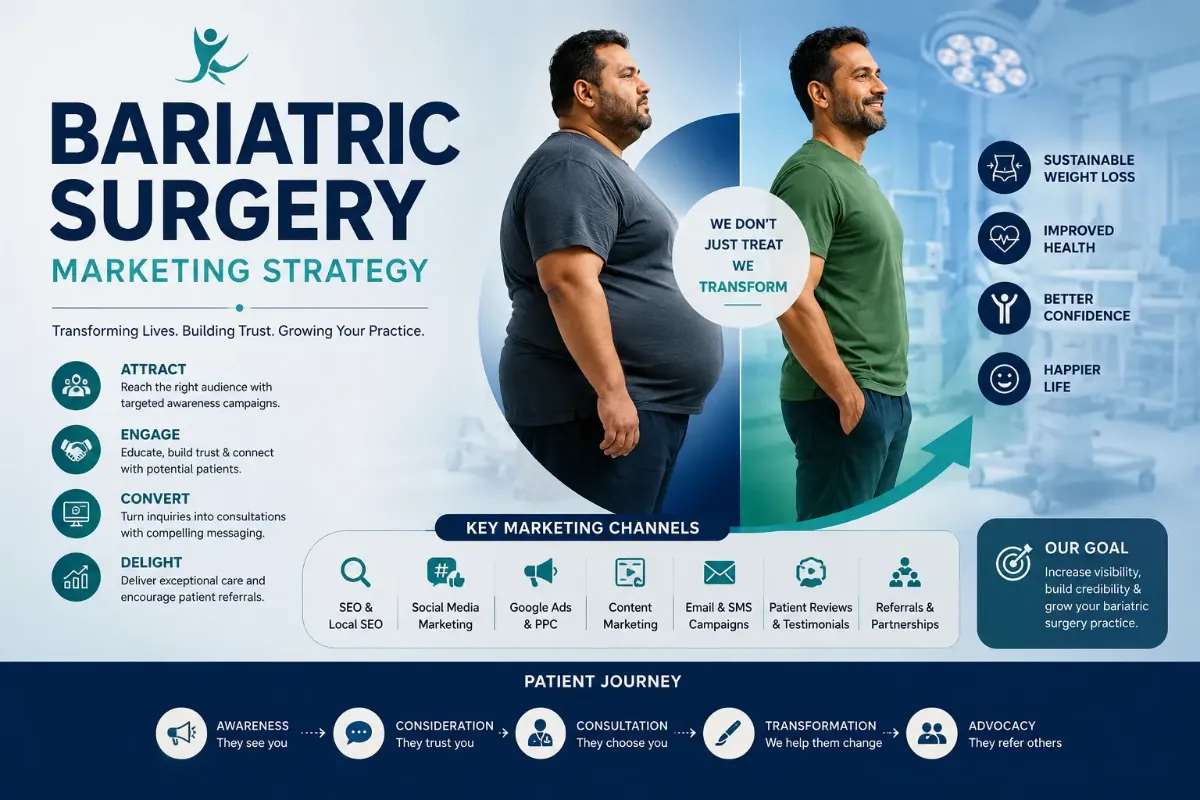
Build a bariatric surgery marketing strategy that earns trust, ranks locally, and fills your calendar with qualified weight-loss patients in 2026.
Why Bariatric Marketing Needs Its Own Playbook
Bariatric surgery is a high-consideration, high-emotion decision. Prospective patients spend weeks (sometimes months) researching procedures, weighing risks, checking insurance, and quietly hoping someone will make them feel understood. That long, anxious buying journey is exactly why a generic medical marketing plan falls flat here. You are not selling a quick service. You are building enough trust for someone to hand you a life-changing surgery.
The patient is researching, not impulse-buying
By the time a patient books a consultation, they have usually read a dozen articles, watched recovery vlogs, and compared two or three surgeons. Your marketing has to show up at every one of those touchpoints with clarity, empathy, and proof. A strong bariatric surgery marketing strategy connects clinical credibility with genuine human reassurance, and it does so consistently across search, social, and your own website.
If you want a fast read on where your current presence is strong and where it leaks patients, start with a free marketing audit. It scores your site across 77 factors and hands back a prioritized action plan so you fix the highest-impact gaps first.
Build a Website That Converts Anxious Researchers
Your website is the hub every other channel points to. For bariatric practices, it has one job: turn cautious researchers into booked consultations. That means fast load times, a clear path to scheduling, and content that answers the questions patients are too nervous to ask out loud.
Lead with proof and outcomes
Patient stories do more selling than any feature list. Pair before-and-after journeys with short video testimonials and honest recovery timelines. Add surgeon credentials, accreditation badges, and insurance information near the top of key pages so trust signals land before a visitor scrolls away.
Make booking effortless
Every extra click between interest and appointment costs you patients. Offer online scheduling, a visible phone number, and a simple "request a consultation" form. Test the experience on mobile first, since most weight-loss research happens on a phone late at night. If you are mapping the full plan yourself, our DIY marketing plan walks through structuring a site that converts.
Win Local Search With SEO and Google Business Profile
Most bariatric patients search with intent like "weight loss surgery near me" or "gastric sleeve surgeon in [city]." Ranking for those local terms is the single most cost-effective channel you have, because the people searching are already considering surgery.
Target the right keywords
Go beyond broad terms and capture procedure-specific, location-specific phrases: gastric bypass, sleeve gastrectomy, revision surgery, and the insurance questions tied to each. Use a tool like our keyword research tool to find mid-volume phrases you can realistically rank for, then build a dedicated page for each major procedure.
Optimize your Google Business Profile
Your Google Business Profile often makes the first impression before anyone reaches your site. Keep hours, services, and photos current, and actively earn reviews from happy patients. Run a quick check with our GMB audit tool to see what is missing. Reviews and accurate listings directly influence how often you appear in the local map pack.
Earn Trust With Patient-First Content Marketing
Content is where you prove expertise without sounding like a textbook. A consistent blog and resource library answers real patient worries, captures search traffic, and gives your sales conversations a head start. Write in a warm, plain-spoken voice rather than clinical jargon. The goal is to reduce fear, not to impress peers.
Cover the questions patients actually ask
Think recovery timelines, diet stages, insurance approval steps, cost breakdowns, and "am I a candidate" guides. Each of these is a search query and a real anxiety. Map topics in advance with a content calendar generator so you publish steadily instead of in bursts, and use a content brief generator to keep every article focused on a single keyword and patient question.
Repurpose across formats
One strong article becomes a short video, an email, and a handful of social posts. That repetition is what builds familiarity over the long research cycle bariatric patients go through.
Run Paid Ads and Social That Respect the Patient
Organic growth compounds slowly, so paid channels fill the gap while your SEO matures. The key in healthcare is precision and compliance. You are reaching sensitive demographics, and both Google and Meta enforce strict rules around weight-loss and health claims.
Search and social ads
Google Search Ads put you in front of people actively looking for surgery, which makes them some of the highest-intent clicks you can buy. Structure campaigns tightly by procedure using our Google ad structure generator. On social, Facebook and Instagram let you reach local adults by interest and life stage. Keep creative empathetic and policy-safe with help from a Facebook ad copy generator.
Show up where patients spend time
Instagram, YouTube, and TikTok reward authentic, visual storytelling. Share recovery milestones (with consent), myth-busting clips, and behind-the-scenes glimpses of your team. This humanizes the practice and lowers the barrier to that first call.
Nurture Leads and Build Community Authority
A consultation request is the start of the relationship, not the finish line. Many bariatric patients need months and several touchpoints before they commit. A simple nurture system keeps you top of mind without feeling pushy.
Email and follow-up
Send a short series after someone downloads a guide or requests info: what to expect, financing options, real patient stories, and a gentle prompt to book. Sharpen open rates with an email subject line generator. Pair email with a quick call from your team for warm leads.
Lead the local conversation
Host free educational seminars, sponsor community wellness events, and partner with primary care providers for referrals. These efforts build the kind of local authority and backlinks that strengthen your search presence too. If your team is stretched thin, you can hire a marketer to run the program, or compare options on our pricing page. For more tactical guides, browse the Brainito blog.
Frequently Asked Questions
How long does bariatric surgery marketing take to show results?
Paid search can drive consultation requests within days, but the highest-value channel, local SEO, typically takes three to six months to compound. Most practices see the strongest return when ads, SEO, and patient-story content run together. Running a free marketing audit first tells you which lever will move fastest for your specific site.
What is the most cost-effective channel for a bariatric practice?
Local SEO paired with an optimized Google Business Profile usually delivers the best long-term return, because it captures patients already searching with intent. Paid ads fill the gap while organic rankings build, and patient testimonials lift conversion across every channel.
How do I market weight-loss surgery without violating ad policies?
Avoid before-and-after weight claims in ad creative, skip personal-attribute targeting that platforms restrict, and focus messaging on education, support, and credentials rather than guaranteed outcomes. A DIY marketing plan can help you keep campaigns compliant while still compelling.