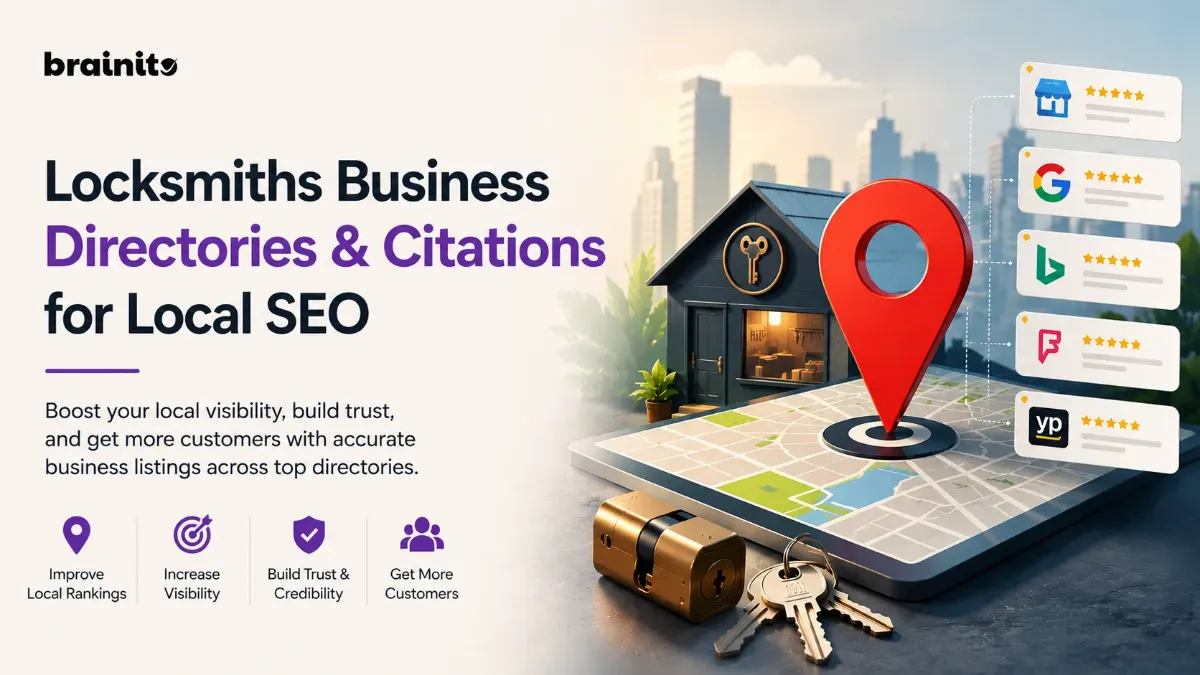
Build locksmith local SEO with the right business directories and consistent citations. Learn which listings drive rankings, calls, and emergency jobs.
Why Citations Still Power Locksmith Local SEO
When someone is locked out of their car at midnight or needs a new deadbolt installed before a move, they reach for their phone and search. That single moment of intent is where a locksmith business wins or loses the job. Showing up in the local pack and on trusted directories is the difference between getting the call and watching it go to a competitor three miles away.
Citations are online mentions of your business name, address, and phone number (NAP). Search engines treat consistent citations across reputable directories as votes of confidence that your locksmith business is real, established, and located where you say it is. For a service that depends on proximity and trust, that signal is enormous.
Citations Validate Your Local Footprint
Google cross-references your business details against directory data to confirm legitimacy. When your name, address, and phone number match everywhere, you earn ranking strength. When they conflict, Google hesitates, and hesitation pushes you down the results. Before you chase new listings, run a free marketing audit to see how your current citation profile stacks up against the factors that actually move local rankings.
How Directories Influence Rankings and Revenue
Not every directory carries the same weight. Search engines weigh authority, relevance, and trust. A listing on a respected locksmith or home services directory passes more value than a thin, spammy aggregator that nobody visits. Two metrics worth understanding are Domain Authority, which estimates how strongly a site ranks overall, and Trust Flow, which measures the quality of the sites linking to it.
Authority Plus Relevance Wins
A general directory with high authority helps, but a locksmith-specific or security-focused directory combines authority with topical relevance, which is the sweet spot. Industry directories also tend to send warmer traffic, because the person browsing is already looking for exactly what you offer.
Citations Feed the Whole Funnel
Beyond rankings, directories are discovery channels in their own right. A homeowner comparing locksmiths on a niche listing site can call you directly from that page. Treat each citation as both an SEO asset and a lead source, and prioritize the ones that do both. If you want a structured way to sequence this work, our DIY marketing plan lays out the steps in priority order.
The Directories Worth Your Time
Start with the foundational platforms every local business needs, then layer in locksmith and security niche listings. Quality beats quantity. Ten accurate, authoritative listings outperform fifty inconsistent ones.
Foundational Listings First
Claim and complete your Google Business Profile, Bing Places, and Apple Business Connect. These power the maps and voice results customers use during emergencies. Add the major aggregators that feed data across the web, including Yelp, Facebook, Apple Maps, and the leading data providers that distribute your NAP to hundreds of downstream sites.
Niche and Industry Directories
Once the foundation is solid, pursue locksmith and home services directories that prospects actually use to vet providers. Look for listings that let you describe services such as automotive lockouts, rekeying, commercial master key systems, and emergency callouts. The more specific your listing, the better it matches high-intent searches. Want to surface the exact keywords those customers type? Our keyword research tool reveals the phrases driving local demand in your area.
Keeping NAP Data Clean and Consistent
The single most common reason locksmiths underperform in local search is inconsistent business information. A suite number on one listing, a missing one on another, an old phone line still floating around from a number you ported years ago: every mismatch chips away at trust.
Lock Down a Single Source of Truth
Decide on one canonical format for your business name, address, and phone number, then apply it everywhere with zero deviation. Spell out or abbreviate consistently. Use the same suite designation. Use one primary tracking-free phone number across citations so call data and SEO signals stay aligned.
Audit on a Schedule
Citations decay. Directories merge, data gets overwritten, and duplicates appear when someone re-adds your business. Review your listings quarterly, hunt down duplicates, and correct drift before it compounds. A free marketing audit can flag inconsistencies fast and return a prioritized fix list so you tackle the highest-impact errors first.
Turning Listings Into Booked Jobs
A citation that ranks but never converts is only half the win. Optimize each listing so it earns the click and the call. Fill in every field: hours, service areas, payment methods, and a clear list of services. Add real photos of your vehicle, team, and completed work to build instant credibility.
Reviews Are Your Conversion Engine
For a trust-sensitive service like locksmithing, reviews carry outsized weight. A steady stream of recent, detailed reviews lifts both your ranking and your booking rate. Ask every satisfied customer, respond to every review, and address negatives professionally. Pair strong listings with helpful content on your own site to deepen authority. Our blog content generator can spin up locksmith guides that attract searchers and earn links, and the Brainito blog has more local SEO playbooks to borrow from.
Connect Listings to Your Site
Link directory profiles to relevant landing pages, not just your homepage. Send automotive locksmith searches to an automotive page and commercial searches to a commercial page. Tighter relevance means higher conversion. If executing all of this in-house feels like too much, you can hire a marketer to own your local SEO end to end.
Building a Repeatable Local SEO System
The locksmiths who dominate their market do not treat citations as a one-time chore. They build a system: claim foundational listings, layer in niche directories, enforce NAP consistency, gather reviews continuously, and audit on a cadence. Done consistently, this compounds into durable visibility that outlasts any single algorithm update.
Start Small, Then Scale
You do not need fifty listings this week. Secure the foundational platforms, add three to five strong niche directories, and lock your NAP data. Then expand methodically. To see exactly where your business stands today and what to fix first, run a free marketing audit that scores your site across 77 ranking factors and returns a prioritized action plan you can work through step by step.
Frequently Asked Questions
Quick answers to the questions locksmith owners ask most about directories and citations.
How many business directories should a locksmith be listed on?
Prioritize quality over a fixed number. Start with foundational platforms like Google Business Profile, Bing Places, Apple Business Connect, and the major data aggregators, then add five to ten reputable locksmith or home services directories. Ten accurate, authoritative listings outperform fifty inconsistent ones.
Do citations still matter for local SEO in 2026?
Yes. Consistent NAP citations remain a core trust signal that helps search engines confirm your business is legitimate and locally relevant. While reviews and on-site content carry growing weight, accurate citations are still foundational, especially for proximity-driven services like locksmithing.
What hurts a locksmith's citation profile the most?
Inconsistent business information. Mismatched names, addresses, suite numbers, or old phone numbers across listings erode trust and suppress rankings. Pick one canonical NAP format, apply it everywhere, and audit quarterly to catch duplicates and data drift before they compound.