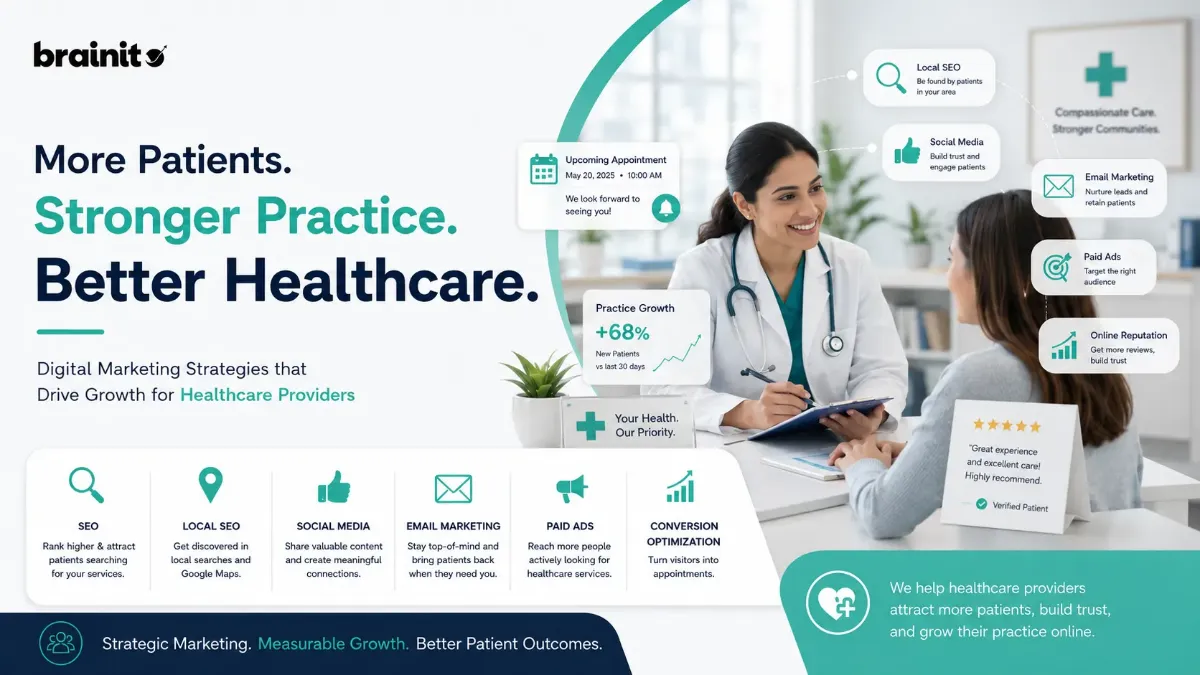
Proven digital marketing strategies for healthcare providers in 2026. Grow patient acquisition, retention, and trust with SEO, content, and paid channels.
Why Healthcare Marketing Is Different in 2026
Healthcare marketing is not selling a product. It is earning permission to be part of someone's most personal decisions. Patients research symptoms, compare providers, and read reviews long before they ever call your front desk. In 2026, the practices winning new patients are the ones showing up with clarity, compassion, and credibility at every one of those digital touchpoints.
The stakes are also higher than in most industries. Trust is fragile, privacy rules are strict, and a single confusing web page can send a prospective patient to a competitor. That is why relationship building sits at the center of every strategy below. You are not chasing clicks. You are nurturing a connection that may last years.
Meet Patients During the Healthy Moments
Most practices only communicate when something is wrong. The strongest brands stay present during healthy stretches too, sharing preventive tips, reminders, and reassurance. That consistent presence improves compliance, boosts satisfaction, and keeps you top of mind when a real need arises. Before you build anything new, run a free marketing audit to see exactly where your current digital presence is helping or hurting that relationship.
Understand What Patients Actually Expect
Every effective healthcare marketing plan starts with empathy, not tactics. Patients consistently express five expectations from the providers they choose and stay loyal to.
- Attentive listening. They want to feel heard, not processed.
- Genuine compassion. Warmth signals safety, especially when the news is uncertain.
- Adequate time. Rushed interactions erode trust faster than almost anything else.
- Clear communication. Plain language beats jargon at every stage.
- Respect for their intelligence. Patients research. Talk with them, not down to them.
These expectations should shape your website copy, your social posts, and your email tone. When your marketing mirrors the care experience you promise in person, conversion becomes a natural extension of trust. Not sure how to translate empathy into a concrete plan? A structured DIY marketing plan helps you map patient expectations to specific channels and messages.
Build a Website That Earns Trust
Your website is the credibility hub every other channel points back to. If it loads slowly, hides your phone number, or reads like a legal disclaimer, even great ads will leak patients. A trustworthy healthcare site is fast, clearly organized around services, and honest about who you are and how you help.
The Non-Negotiables
Prioritize clear service pages, easy appointment booking, provider bios with real credentials, and transparent contact details. Add authentic patient stories where compliance allows, and make sure every page answers the question a worried patient is silently asking. To find the specific gaps holding your site back, the free marketing audit scores a website across 77 factors and returns a prioritized action plan, so you fix what moves the needle first instead of guessing.
Mobile First, Always
Most patients will find you on a phone. If tapping to call, filling a form, or reading a service page is clumsy on a small screen, you lose them. Test every core journey on mobile and treat any friction as a leak worth sealing.
Get Found With Local SEO and Content
Search is where patient journeys begin. When someone types "pediatric dentist near me" or "urgent care open now," you either appear or you do not exist. Local SEO and helpful content are how you become the answer.
Own Your Local Search Presence
Your Google Business Profile is often the first impression a patient gets. Accurate hours, services, photos, and steady reviews directly influence whether you show up in the local map pack. Run a GMB audit to catch missing or inconsistent details, and use a keyword research tool to learn the exact phrases patients search in your area.
Answer Real Patient Questions
Educational content builds authority and captures search traffic at the same time. Blog posts that explain conditions, prep steps, and recovery expectations reassure patients while earning rankings. Speed the process along with a blog content generator and sharpen your headlines using a blog titles generator so more people click through.
Convert and Retain With Paid Ads, Email, and Live Chat
Once patients can find you, layered channels turn interest into booked appointments and repeat visits.
Targeted Paid Advertising
Paid search and social ads put you in front of patients at the exact moment of need. The key is disciplined structure and message match so you never waste budget. Plan campaigns with a Google Ad structure generator and, where appropriate, craft compassionate social creative with a Facebook ad copy generator.
Email That Nurtures
Email is your retention engine. Appointment reminders, seasonal health tips, and personalized follow-ups keep patients engaged between visits. Higher open rates start with better subject lines, so test variations using an email subject line generator.
Live Chat and Referrals
Real-time chat answers hesitant questions before they become lost leads, and it signals responsiveness that builds trust. Pair it with a simple referral program, since a recommendation from a satisfied patient carries more weight than any ad. Together, these tactics compound your growth over time.
Turn Strategy Into an Action Plan
A stack of tactics is not a strategy. The practices that grow steadily in 2026 sequence their efforts: fix the website foundation, win local search, publish helpful content, then amplify with paid and email. Trying everything at once usually means doing nothing well.
Start by benchmarking where you stand. The free marketing audit gives you a prioritized roadmap so you invest effort where returns are highest. If you would rather hand execution to specialists, you can hire a marketer to run the plan, or explore pricing to see what fits your practice. For ongoing ideas and deeper guides, keep the blog bookmarked. Consistency, not intensity, is what compounds patient trust into lasting growth.
Frequently Asked Questions
What is the most important digital marketing channel for healthcare providers?
There is no single winner, but your website and local SEO are the foundation everything else relies on. Patients find you through search and judge you on your site within seconds. Get those right first, then layer content, paid ads, and email. A free marketing audit shows which foundation gaps to close before you spend on ads.
How can a small practice compete with larger healthcare systems online?
Focus locally and personally. Big systems struggle to feel warm and specific, which is exactly where a smaller practice wins. Strong local SEO, genuine patient stories, responsive live chat, and content that answers real questions let you outperform larger competitors in your own community. A focused DIY marketing plan keeps your limited resources aimed at the highest-impact moves.
How long does healthcare digital marketing take to show results?
Paid advertising can drive inquiries within days, while SEO and content typically build momentum over three to six months. Email and referral programs compound gradually as your patient base grows. The most reliable results come from consistency, so set a sustainable pace and review your progress regularly rather than expecting instant wins.