Build a DIY marketing plan that drives real growth. Learn the 7-step framework for demand research, SEO, content, ads, and budget without agency fees.
Why a DIY Marketing Plan Beats Guesswork
Most small businesses do not fail because their product is weak. They fail because they market without a map. They post to social media when they remember to, boost a random ad, and hope something sticks. A DIY marketing plan replaces that guesswork with a repeatable system you actually control, and it does it without the retainer fees that drain an early budget.
The goal of a self-built plan is not to do everything an agency does. It is to focus your limited time and money on the few moves that compound. In 2026, with AI tools handling the heavy lifting on research and drafting, a founder can build a plan that would have cost thousands just a few years ago.
This guide walks through a seven-step framework: understand demand, fix your website, grow organically, build authority through SEO, layer in paid ads, run a content engine, and set a realistic budget. If you would rather see exactly where your site stands first, start with a free marketing audit that scores your website across 77 factors and hands you a prioritized action plan.
Step 1: Research Real Demand, Not Interest
The most common mistake in a marketing plan is confusing interest with demand. Plenty of people might think your product is neat. The number that matters is how many are actively searching for the solution you sell, right now, with intent to buy.
Find the searches people already make
Start with keyword data. Tools like a Google keyword research tool show you the exact phrases your buyers type, how often, and how competitive each term is. If you sell on marketplaces, an Amazon keyword research tool reveals the same intent on the platform where shoppers are ready to check out.
Study the competitors who already rank
Search your top keywords and study the businesses on page one. What do they promise in their headlines? What objections do they answer? You are not copying them. You are mapping the conversation your customer is already having so your plan speaks to the right need.
Step 2: Turn Your Website Into a Conversion Machine
Traffic is wasted if your site cannot hold attention. Visitors decide in roughly five seconds whether to stay or bounce, and if your core message is not obvious in that window, most leave. Before you spend a dollar driving traffic, make the destination worth arriving at.
Lead with one clear message
Your homepage hero should answer three questions instantly: what you offer, who it is for, and why it beats the alternative. Cut clever taglines that require a second read. Clarity converts; cleverness usually does not.
Remove friction from the path to action
Audit every step between landing and converting. Slow load times, buried calls to action, and confusing navigation all leak customers. A structured review removes the guesswork: a free marketing audit flags exactly which on-site issues to fix first so you spend effort where it moves the needle.
Step 3: Build Organic Growth Before You Pay for Reach
Paid ads are an accelerator, not a foundation. If you scale ads before your organic channels and messaging are dialed in, you simply pay to amplify a leaky funnel. Smart DIY marketers earn momentum first, then pour fuel on it.
Publish content that answers buyer questions
Every question your customer asks before buying is a piece of content waiting to be written. A consistent blog builds trust, ranks in search, and gives you something to share across channels. If a blank page slows you down, a blog content generator and a blog titles generator help you ship drafts faster without losing your voice.
Use the free channels you already have
Your email list, social profiles, and Google Business Profile cost nothing to run. Optimizing them often returns more than a new ad budget would. They are the compounding base every paid campaign should sit on top of.
Step 4: Earn Authority With On-Site and Off-Site SEO
Search engine optimization is where a DIY plan quietly outperforms paid budgets over time. Rankings you earn keep delivering traffic long after the work is done, while ads stop the moment you stop paying.
Win the on-page basics
Target one primary keyword per page, write a compelling title and meta description, and structure content with clear headings. Internal links between related posts help search engines and readers navigate, and they keep visitors on your site longer.
Build backlinks that signal trust
Off-site SEO comes down to credible sites linking to yours. Guest posts, partnerships, and genuinely useful resources earn links naturally. Audit your current profile with a backlink audit tool to see which links help and which may hurt. If local customers matter, a GMB audit tool checks the local signals that decide map-pack rankings.
Step 5: Add Paid Ads and Set a Realistic Budget
Once your site converts and your organic engine runs, paid ads multiply what already works. The mistake is treating ads as a magic switch. They reward businesses that already understand their message and their numbers.
Start small and structured
Begin with one platform, not five. A clean account structure matters more than budget size at the start. A Google ad structure generator helps you organize campaigns and ad groups so your spend stays focused, while a Facebook ad copy generator gives you variations to test.
Plan a 12-month budget you can actually sustain
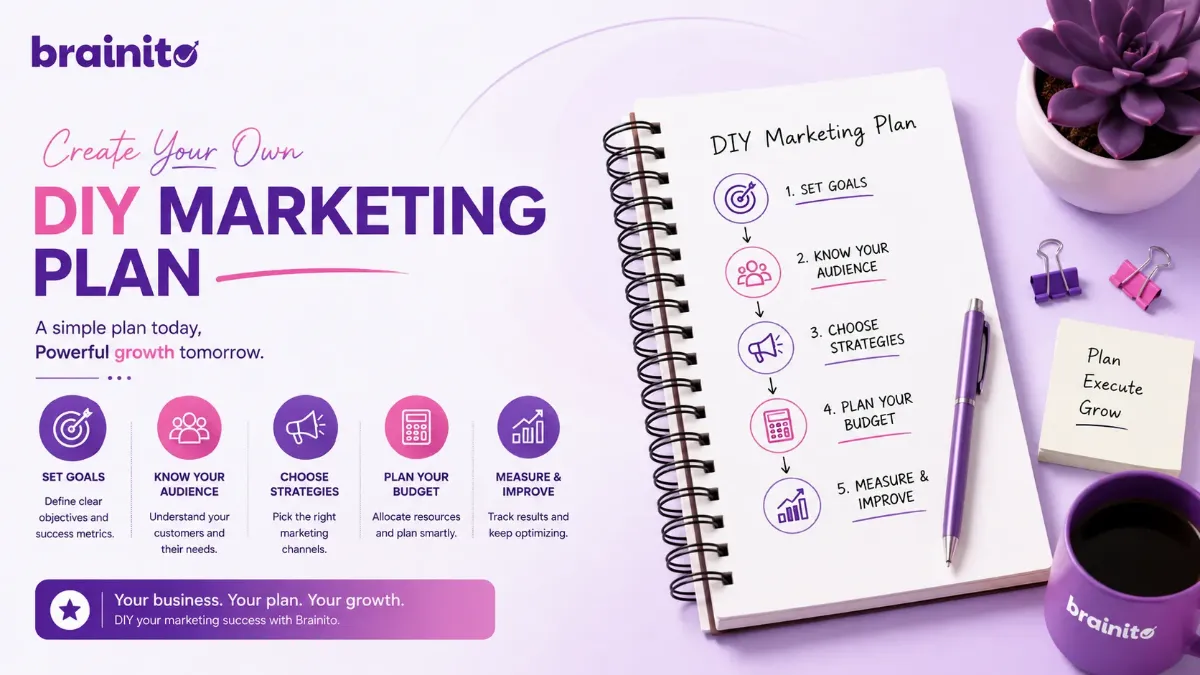
Map spending across the year with honest ROI expectations. Remember that buyers often need many touchpoints, sometimes twenty or more, before they convert. Budget for repetition, not a single lucky impression. If you want a structured roadmap to follow, our DIY marketing plan resource lays out the sequence step by step, and a content calendar generator keeps your organic and paid efforts aligned month to month.
Step 6: Run a Content and Email Engine on Repeat
A plan only works if it keeps running after the initial excitement fades. The businesses that win build simple systems they can sustain for a year, not a heroic month that burns out.
Plan content in batches
Sit down once a month and map every post, blog, and email in advance. Starting from a content brief generator keeps each piece on-message, and batching protects you from the scramble of daily decisions.
Nurture leads through email
Email remains the highest-return channel in most plans because you own the audience. Strong subject lines decide whether anything else gets read, so test them deliberately with an email subject line generator. If your team is stretched thin, you can also hire a marketer to run the engine while you focus on the business.
Frequently Asked Questions
Can I really build an effective marketing plan myself?
Yes. With today's research tools and AI drafting assistants, a focused founder can build a plan that rivals agency output for a fraction of the cost. The key is sequence: understand demand, fix your site, grow organically, then scale with ads. Start with a free marketing audit to know exactly which steps to prioritize, then follow the framework above in order.
How long before a DIY marketing plan shows results?
Paid ads can produce leads within days, but the durable wins from SEO and content usually take three to six months to compound. That is normal. The plan is designed so quick wins fund the slower, higher-value channels while they mature.
What if I do not have time to execute everything?
Prioritize ruthlessly. Pick the two or three steps with the biggest gap between effort and reward, often website clarity and one organic channel. When you are ready to move faster, you can hire a marketer or explore our pricing to add support without losing control of your strategy.