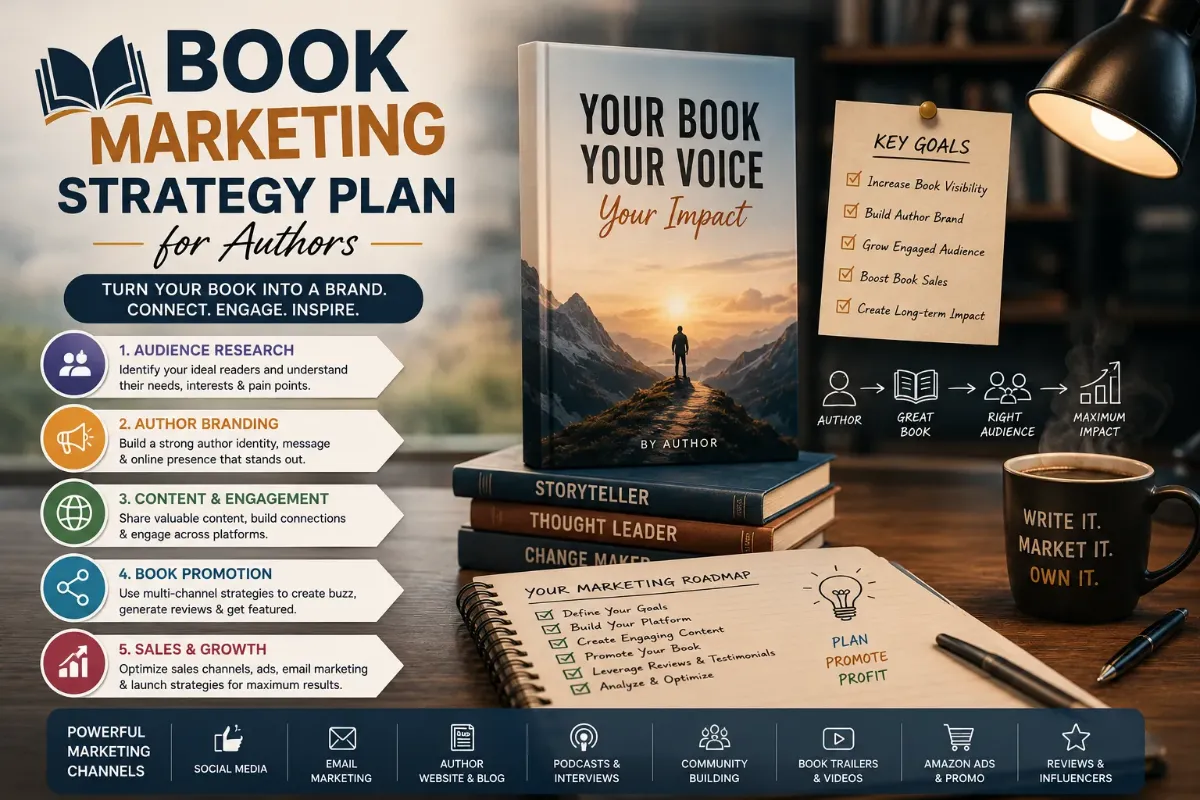
Learn how digital marketing for authors builds a reader audience, drives book sales, and grows a lasting author platform with proven 2026 tactics.
Why Digital Marketing Matters for Authors Today
Writing the book is only half the work. In 2026, readers discover new titles through search results, social feeds, email newsletters, and recommendation algorithms long before they ever wander into a bookstore. If you want your book to find its audience, you need a deliberate digital marketing plan that runs alongside the writing itself.
Digital marketing for authors is not about shouting "buy my book" into the void. It is about building visibility, trust, and a community of readers who care about your work. The authors who sell consistently treat their marketing like a long-term platform, not a one-week launch sprint.
The Author Platform Mindset
Think of every blog post, email, and social update as a brick in a foundation that outlasts any single release. The earlier you start, the larger your warm audience will be when your next title ships. If you are unsure where your current online presence stands, a free marketing audit scores your website across 77 factors and hands back a prioritized action plan so you know exactly what to fix first.
Know Your Reader Before You Write a Single Ad
Every effective marketing decision starts with audience clarity. A literary memoir and a fast-paced thriller attract very different readers, and those readers gather in different corners of the internet. Before you spend a dollar or write a caption, define who your ideal reader is.
Build a Simple Reader Profile
Answer a few practical questions: What genres do they already love? Which authors do they follow? Where do they spend time online, on BookTok, Goodreads, niche Reddit threads, or email newsletters? What problem does your book solve or what feeling does it deliver? These answers shape your title, your cover, your ad targeting, and your content.
Turn Insights Into a Plan
Once you understand your reader, you can map a repeatable strategy instead of guessing. A structured DIY marketing plan helps you sequence the work so your launch does not become a last-minute scramble. Clarity here saves you from wasting budget on the wrong platforms later.
Optimize Your Book Listing: Title, Cover, and Blurb
Your book's product page is the single most important conversion point in your entire funnel. Readers arrive from a search or an ad, scan for a few seconds, and decide. Three elements carry most of that weight.
Titles and Keywords
A strong title is memorable, genre-appropriate, and discoverable. On retail platforms, the words in your title and subtitle directly influence whether your book surfaces in search. Researching the phrases readers actually type is worth the effort. Tools like an Amazon keyword research tool reveal the demand behind specific terms so you can position your book where buyers are already looking.
Covers and Blurbs That Convert
Your cover signals genre instantly, so study the bestsellers in your category and match their visual conventions while standing out. Your blurb should read like ad copy, not a synopsis: open with a hook, build tension, and end with a reason to click. Write several versions and test which resonates. The same discipline that makes a blurb work also makes ad copy work, which is why many authors reuse their strongest lines across both.
Content Marketing: Blog, Email, and SEO
Paid ads stop the moment you stop paying. Content marketing keeps working for years. A blog and an email list are the two assets authors most often underinvest in, and they are exactly the assets that compound over time.
Blogging for Discovery
Writing about the themes, research, or world behind your book attracts readers through search engines and gives you something valuable to share. If staring at a blank page slows you down, a blog content generator can draft a first version you refine in your own voice, and a blog titles generator helps you find headlines readers actually click.
Build the Email List Early
Social platforms change their rules constantly, but an email list is an audience you own. Offer a free chapter, a short story, or a companion guide in exchange for an address, then nurture that list with genuine updates. When launch day arrives, those subscribers become your most reliable buyers and reviewers. To plan a consistent publishing rhythm across blog and email, a content calendar generator keeps you from going quiet for months at a stretch.
Social Media and Paid Advertising That Actually Sell Books
Social media works best when you pick one or two platforms and commit, rather than spreading yourself thin across every network. Choose where your readers already gather and show up consistently with content that entertains, informs, or connects, not just promotes.
Organic Social Strategy
Share behind-the-scenes glimpses, reader questions, short readings, and the human story behind your work. Engagement, replies, comments, and shares, signals the algorithm that your content deserves reach. Build relationships with reviewers, book clubs, and fellow authors in your genre; cross-promotion is one of the most cost-effective channels available.
Paid Ads With a Clear Structure
When you are ready to spend, start small and measure. A well-structured campaign beats a big budget poured into a vague target. A Google ad structure generator helps you organize campaigns and ad groups around reader intent, while a Facebook ad copy generator gives you tested angles for social placements. Track cost per click and conversions so you can double down on what works and cut what does not.
Plan Your Launch and Sustain Momentum
A launch is a sequence, not a single day. The weeks before release set up the spike, and the weeks after determine whether your book keeps selling. Coordinate every channel so they reinforce each other.
The Pre-Launch Runway
Distribute advance copies to a launch team and early reviewers so you have social proof on day one. Schedule blog posts, line up podcast or media interviews, and tease the cover and release date across your channels. Reviews and visible enthusiasm early on influence both retail algorithms and undecided readers.
Keep Selling After Launch Week
Momentum fades fast if you stop. Keep publishing content, running modest evergreen ads, and engaging your community. If marketing all of this alone feels overwhelming, you can hire a marketer to handle execution while you focus on writing. Whichever path you choose, revisit your strategy regularly, and let a free marketing audit flag the gaps holding your visibility back.
Frequently Asked Questions
When should authors start digital marketing for their book?
As early as possible, ideally months before launch. Building an email list, growing a social following, and publishing blog content all take time to compound. Starting early means you have a warm audience ready to buy and review the moment your book goes live, rather than launching to silence.
Do authors really need a website and a blog?
Yes. A website is the one platform you fully control, and a blog drives discovery through search while giving you content to share everywhere else. Social accounts can change their rules or vanish, but your own site and email list are assets you keep. A quick free marketing audit shows how well your current site performs and what to improve.
How much should an author spend on book ads?
Start small, often just a few dollars a day, and scale only what proves profitable. The goal early on is learning which audiences and ad angles convert, not maximizing spend. Once you find a combination that returns more than it costs, you can confidently increase the budget behind it.