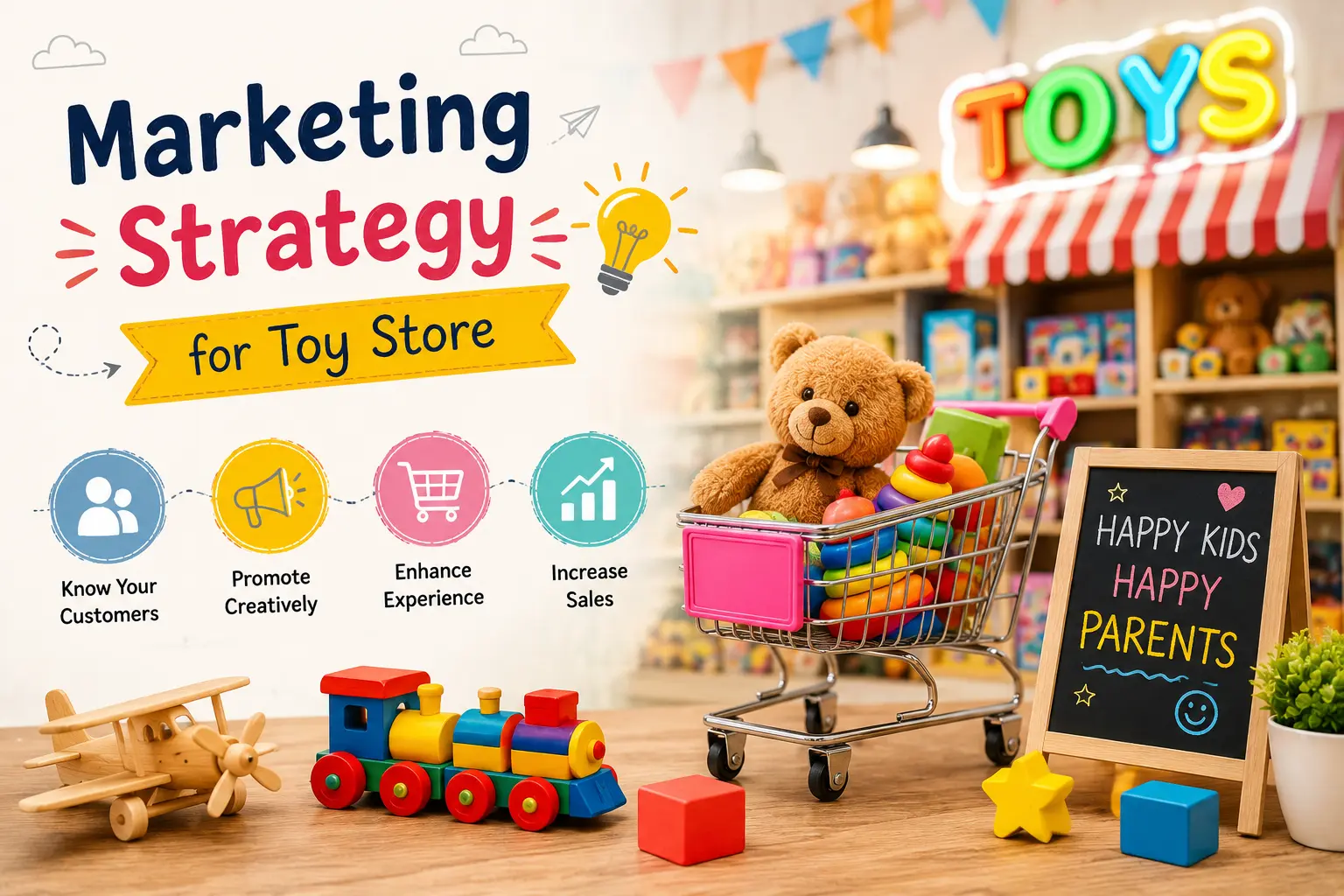
Build a winning marketing strategy for your toy store in 2026. Learn local SEO, social, ads, email, and loyalty tactics that drive real toy sales.
Why Toy Stores Need a Modern Marketing Strategy
Selling toys is no longer just about stacking shelves with the latest action figures and waiting for parents to walk in. Today's toy buyers research online, compare prices on their phones, and trust a friend's recommendation more than any billboard. A toy store that wants to grow in 2026 needs a marketing strategy that meets shoppers where they already spend their attention.
The good news is that toys are inherently shareable, visual, and emotional products. A clever display, a delighted child, or a clever bundle deal practically markets itself when you give it the right platform. The challenge is connecting the right message to the right audience at the right moment, and doing it consistently.
Three Audiences, One Strategy
Every toy store actually serves three distinct groups: the children who want the toys, the parents and grandparents who pay for them, and the gift-givers who need help deciding. Your messaging should speak to all three. Show the fun to delight kids, highlight safety and educational value to reassure parents, and make gift selection effortless for everyone else.
Before you spend a dollar, it helps to know where your current marketing stands. A free marketing audit scores your website across 77 factors and hands you a prioritized action plan, so you fix the highest-impact gaps first instead of guessing.
Get Found Locally With Local SEO
Most toy purchases still happen close to home, especially for last-minute birthdays and holiday gifts. That makes local search your single most valuable channel. When a parent types "toy store near me" or "educational toys [your city]," you want to be the first result they tap.
Optimize Your Google Business Profile
Claim and fully complete your Google Business Profile. Add accurate hours, your full product categories, high quality photos of the storefront and displays, and post regular updates about new arrivals or events. Encourage happy customers to leave reviews, and respond to every one. A polished, active profile signals both Google and shoppers that you are open, trusted, and worth visiting. Not sure how yours measures up? A quick GMB audit reveals what is holding your listing back.
Win the Keyword Game
Build pages around the terms parents actually search, such as "wooden toys," "STEM kits for 6 year olds," or "baby shower gifts." Use a keyword research tool to find the phrases with real demand in your area, then create helpful content around them. If you also sell online, an Amazon keyword research tool can sharpen your product listings for marketplace shoppers.
Make Social Media Do the Selling
Toys are made for social media. Bright colors, smiling kids, and playful unboxings stop the scroll. Instagram, TikTok, and Pinterest are where parents discover what to buy next, so these platforms deserve a central place in your toy store marketing strategy.
Show, Don't Just Sell
Post short videos of toys in action, behind-the-scenes looks at new shipments, and quick play ideas that parents can recreate at home. User-generated content is gold here. Reshare photos and clips from customers whose kids are enjoying your products, always with permission, to build social proof that feels authentic.
Partner With Micro-Influencers
You do not need a celebrity. Local parenting accounts and family micro-influencers often deliver better engagement and trust at a fraction of the cost. Send them a popular toy, ask for an honest review, and watch the referrals roll in. Pair this with a steady content rhythm, and your store stays top of mind. If creating a consistent stream of posts feels overwhelming, our content calendar generator maps out what to publish and when.
Run Paid Ads That Convert
Organic reach takes time, and sometimes you need traffic now, especially during the holiday rush. Paid advertising lets you put your best toys in front of ready-to-buy shoppers immediately.
Google Search and Shopping Ads
Search ads capture high intent shoppers who already know what they want. Shopping ads go a step further by showing your product image, price, and store name right in the results. Structure your campaigns tightly around product categories so your budget goes to the keywords that convert. A Google ad structure generator helps you organize campaigns and ad groups the right way from day one.
Facebook and Instagram Retargeting
Most visitors will not buy on their first visit. Retargeting ads bring them back by showing the exact toys they browsed. Build a product catalog and let the platform serve dynamic ads to people who viewed but did not purchase. Strong ad copy makes the difference between a scroll-past and a click, and a Facebook ad copy generator gives you a fast head start on punchy, parent-friendly messaging.
Build Loyalty With Email and Promotions
Acquiring a new customer costs far more than keeping an existing one, and toy buyers are wonderfully repeat-friendly. Kids grow, birthdays come around, and the holidays return every year. Email and loyalty programs turn one-time buyers into regulars.
Grow and Segment Your Email List
Offer a small discount or a free gift guide in exchange for an email signup, both in store and online. Then segment your list by interests, such as parents of toddlers, fans of building sets, or gift shoppers, and send relevant recommendations instead of generic blasts. The subject line decides whether your email gets opened, so test a few options with an email subject line generator to lift your open rates.
Use Promotions and Referrals Strategically
Bundle related toys, run "buy one, gift one" holiday offers, and reward referrals with store credit. A simple referral program turns happy parents into a steady source of new customers. Pair these promotions with seasonal email campaigns to maximize each peak shopping window.
Turn Strategy Into an Action Plan
A list of tactics is not a strategy until it has priorities, owners, and a timeline. The most common mistake toy store owners make is trying everything at once and burning out before any single channel gains traction. Pick two or three channels that fit your audience, commit to them for a quarter, and measure what works.
Start With Your Biggest Gaps
If your storefront is invisible in local search, fix that before pouring money into ads. If your website loses mobile shoppers, repair the checkout before launching email campaigns. To find your real weak spots quickly, run a free marketing audit and let the prioritized action plan tell you exactly where to start.
Decide How You Will Execute
Some owners thrive doing it themselves with the right roadmap. A structured DIY marketing plan walks you through each step at your own pace. If you would rather hand the work to a specialist, you can hire a marketer who has grown retail brands before. Either way, having a clear plan beats reacting week to week, and you can browse more practical guides on the Brainito blog as you go.
Frequently Asked Questions
What is the most cost-effective marketing channel for a small toy store?
For most small toy stores, local SEO delivers the best return because it captures nearby shoppers with high purchase intent at little ongoing cost. Start by fully optimizing your Google Business Profile, gathering reviews, and creating location-focused content. Once local search is working, layer in social media and email to nurture repeat business.
How much should a toy store spend on marketing?
A common benchmark for retail is 7 to 10 percent of revenue, but new stores often invest more upfront to build awareness. Rather than fixating on a number, focus the budget on the channels your audit shows are weakest, and shift spend toward whatever proves it can deliver measurable sales.
How do I know if my toy store marketing is actually working?
Track a few clear metrics: local search rankings, website traffic, email open and click rates, and in-store conversions tied to promotions. Review them monthly. If a channel is not moving the numbers after a fair test, reallocate that effort. A periodic free marketing audit gives you an objective scorecard across 77 factors so you can spot what to improve next.