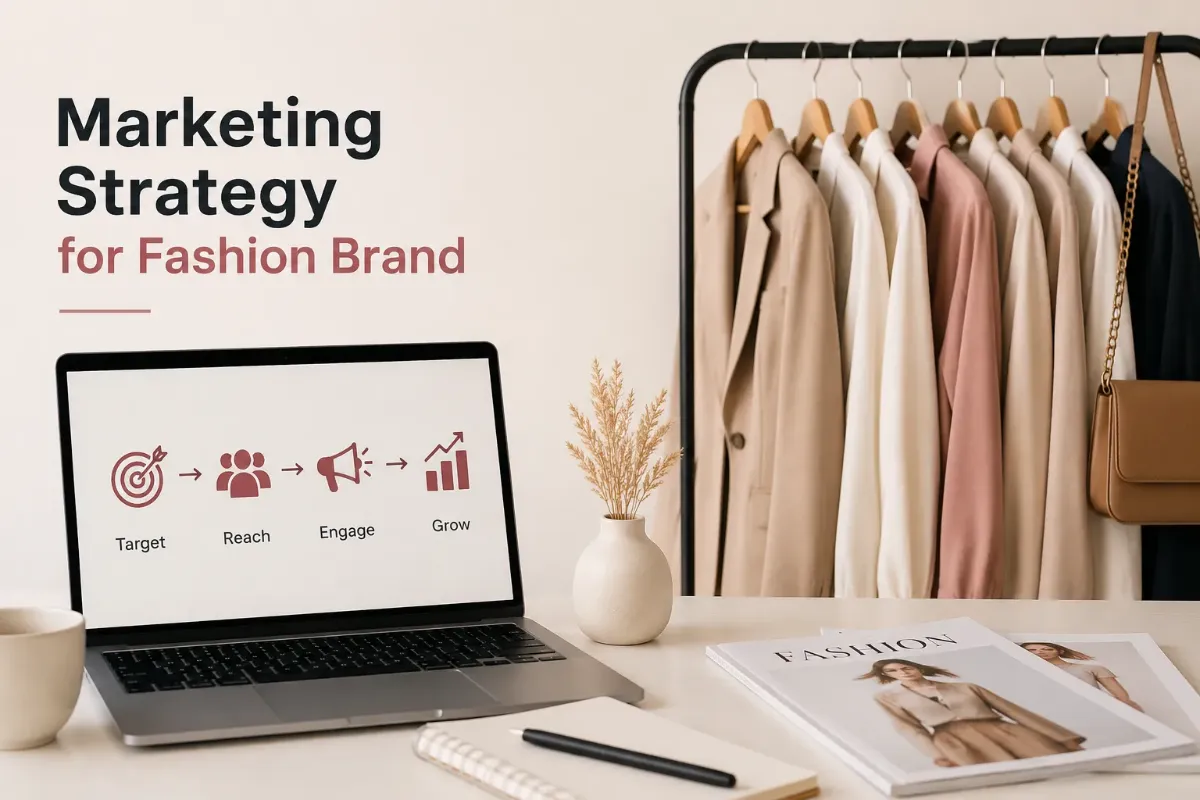
Build a marketing strategy for your fashion brand in 2026: niche positioning, influencer collabs, social commerce, paid ads, UGC, and SEO that drives sales.
Why a Fashion Brand Needs a Strategy Before a Logo
Fashion is one of the most crowded markets on the planet. New labels launch every single day, and most of them disappear within a season because they treat marketing as an afterthought. A great product is not enough. Without a clear marketing strategy for your fashion brand, you are competing on price and luck instead of positioning and story.
A strategy answers the hard questions early: Who exactly are you dressing? What do they believe? Why would they pick you over a brand with a bigger budget? When you can answer those before your first drop, every dollar you spend on ads, content, and influencers works harder.
Start With Clarity, Not Tactics
Resist the urge to jump straight to TikTok or paid ads. First nail your customer, your price point, and your point of view. If you want a structured way to map this out, our DIY marketing plan walks you through building a plan step by step, even if you have never written one before.
Find Your Niche and Own a Point of View
The fastest way to get lost in fashion is to try to dress everyone. The brands that break through pick a lane and become unmistakable inside it. Think sustainable activewear for runners over 40, modest workwear for professionals, or streetwear rooted in a specific subculture. A tight niche makes your marketing cheaper and your fans louder.
Define Your Brand Identity
Identity is more than a logo and a color palette. It is your tone of voice, your values, the way your packaging feels, and the kind of person who proudly wears your tag. Write a one-sentence brand promise and hold every campaign against it. If a piece of content does not reinforce that promise, cut it.
Audit Where You Stand Today
Before you scale, know your starting line. A free marketing audit from Brainito scores your website across 77 factors and returns a prioritized action plan, so you can see exactly which gaps are costing you sales before you spend on growth.
Influencer Partnerships That Actually Convert
Influencer marketing remains one of the highest-leverage channels in fashion, but the playbook has matured. Mega-influencers are expensive and increasingly ignored. In 2026, micro and nano creators (5,000 to 50,000 followers) drive better engagement and trust because their audiences feel like a real community.
Pick Creators by Fit, Not Follower Count
Look for creators whose aesthetic, values, and audience overlap with your niche. A creator with 12,000 deeply engaged followers in your exact category will outperform a generalist with a million. Send product, build genuine relationships, and let them style your pieces their way.
Structure Deals Around Outcomes
Mix flat fees with affiliate codes so creators have skin in the game. Track which partnerships drive real revenue, then double down. If you are deciding whether to build this in-house or bring in help, our guide on when to hire a marketer can save you an expensive mis-hire.
Social Commerce and the Channels That Matter
Your customers now discover, browse, and buy without ever leaving social apps. Instagram Shopping, TikTok Shop, and Pinterest have collapsed the gap between inspiration and checkout. The brands winning in 2026 treat each platform as a storefront, not just a billboard.
Match Content to Platform
Short vertical video is the heartbeat of fashion discovery: get-ready-with-me clips, styling tips, fabric close-ups, and behind-the-scenes from your studio. Pinterest works as a long-tail search engine for outfit ideas, while Instagram carousels still convert browsers into followers. Repurpose one shoot into a dozen formats.
Build a Frictionless Path to Purchase
Tag products in every post, keep your catalog synced, and make sure the buying flow takes two taps, not ten. A responsive, fast e-commerce site is still the foundation; social is the funnel, your store is the close. Plan your posting cadence with a content calendar generator so you never go dark during a launch window.
Paid Ads, Catalog Campaigns, and Retargeting
Organic reach gets you started, but paid amplifies what already works. The mistake most fashion founders make is boosting random posts. Instead, build structured campaigns around your catalog and let the platforms find buyers for you.
Use Product Feeds, Not One-Off Creatives
Google Shopping and Meta catalog ads pull directly from your product feed, showing the right item to the right shopper with price and image included. These dynamic formats consistently beat static ads for ecommerce because they match intent. Keep titles, descriptions, and images clean so the algorithm understands your inventory. Our Google ad structure generator and Facebook ad copy generator help you launch tighter campaigns faster.
Retarget the Window Shoppers
Most first-time visitors do not buy. Retargeting brings them back with the exact products they viewed, often at a fraction of cold-traffic cost. Pair it with abandoned-cart emails and your return on ad spend climbs without raising your budget.
UGC, SEO, and Content That Compounds
Paid traffic stops the moment you stop paying. Content and community keep working for years. Two channels give fashion brands compounding returns: user-generated content and search-driven blogging.
Turn Customers Into Your Best Marketers
Authentic photos and reviews from real customers convert better than any polished campaign because shoppers trust people who look like them. Run hashtag campaigns, feature customer looks, and offer small incentives for tagged posts. This social proof reduces returns and builds loyalty at the same time.
Win Search With Helpful Blogging
Style guides, fabric care tips, trend breakdowns, and gift roundups capture shoppers who are searching long before they buy. Educational content also earns backlinks and authority. Speed up production with our blog content generator and sharpen headlines using the blog titles generator. When you are ready to fix the technical gaps holding your rankings back, start with a free marketing audit to get a prioritized list.
Frequently Asked Questions
How much should a new fashion brand spend on marketing?
There is no fixed number, but many emerging brands invest 10 to 20 percent of revenue into marketing while testing channels, then shift budget toward whatever drives profitable sales. Start small, measure ruthlessly, and scale only the campaigns that prove their return. A free marketing audit can help you decide where that first budget is best spent.
Which channel works best for a fashion brand in 2026?
It depends on your niche, but short vertical video on TikTok and Instagram drives the most discovery, while catalog ads and retargeting close sales. The strongest strategies combine social commerce, influencer collabs, paid feeds, and SEO so no single channel becomes a point of failure.
Do I need to hire an agency to run all this?
Not at first. Many founders build momentum solo using clear templates and tools, then bring in help once channels are proven. Read our guidance on when to hire a marketer and explore pricing to see what fits your stage.