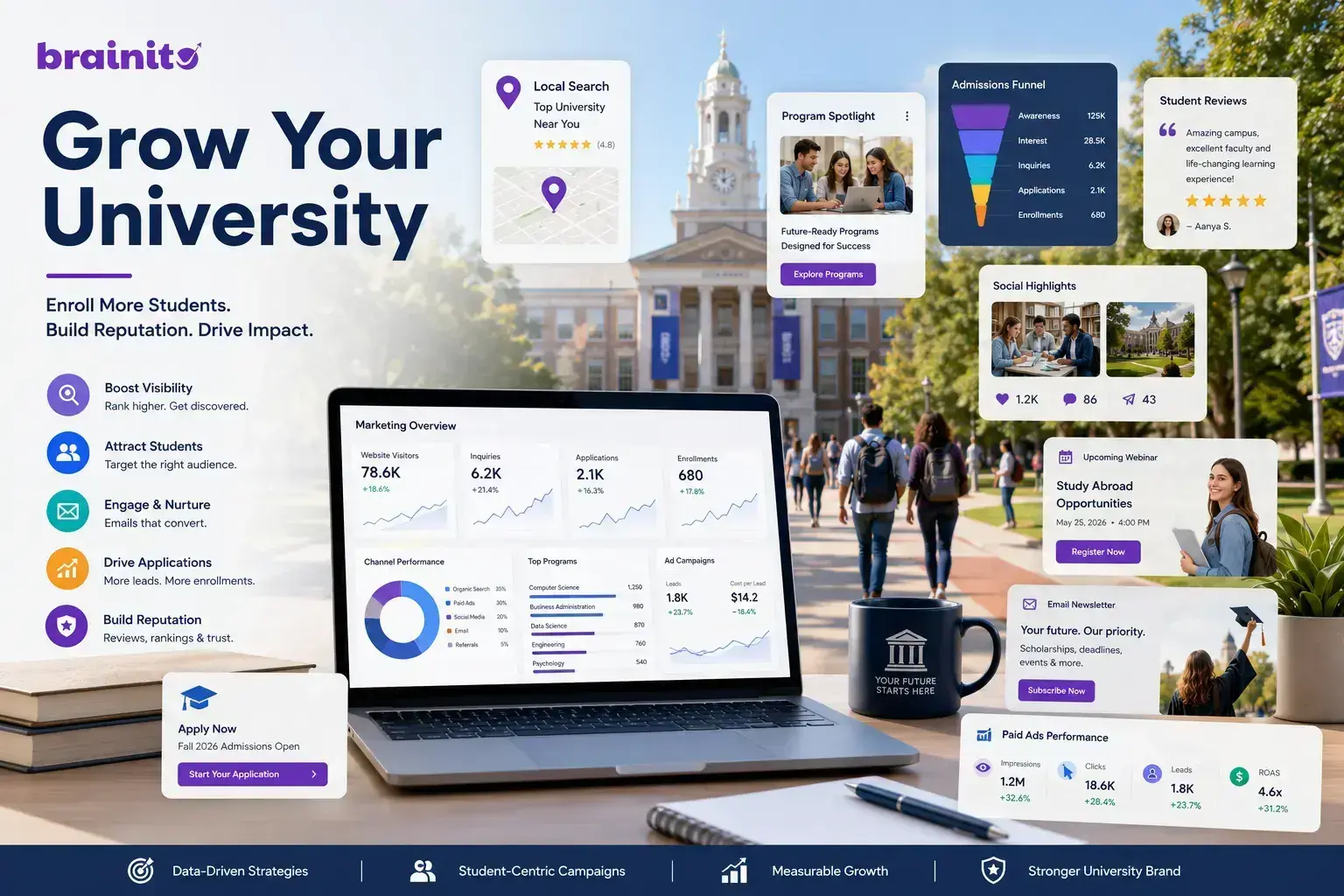
Proven marketing strategies for universities in 2026: SEO, social media, paid ads, content, and PR tactics that boost visibility and grow student enrollment.
Why University Marketing Looks Different in 2026
Higher education is one of the most competitive markets a marketer can work in. Prospective students compare dozens of institutions before they ever request a brochure, and most of that comparison happens online, on their phones, often late at night. Universities are no longer competing only with the school across town. They are competing with online degrees, bootcamps, and the growing question of whether a degree is worth the cost at all.
That shift changes the job. University marketing is no longer about glossy viewbooks and a single campus open day. It is about being visible and persuasive across search engines, social feeds, email inboxes, and review sites at every stage of a multi-year decision. The institutions winning enrollment are the ones that treat marketing as a continuous system, not a seasonal campaign.
If you want a fast read on where your institution currently stands, a free marketing audit scores your website across 77 factors and returns a prioritized action plan, so you know which of the strategies below to tackle first.
Start With a Website That Converts Prospective Students
Your website is the center of gravity for every other channel. Social posts, ads, and email all push traffic back to it, so a slow or confusing site quietly wastes every dollar you spend elsewhere. Prospective students decide within seconds whether a page is worth their attention.
What a high-performing university site needs
Mobile-first design is non-negotiable, since the majority of prospects browse on phones. Pages should load in under three seconds, program information should be easy to find, and every key page should end with a clear next step: book a tour, request information, or apply. Make the application path obvious from the homepage rather than buried three clicks deep.
Treat each program page as a landing page
Strong program pages answer real questions: career outcomes, tuition, scholarships, faculty, and admission requirements. They also include trust signals such as graduate testimonials and accreditation badges. If you are building these pages from scratch, a DIY marketing plan can help you sequence the work so the highest-demand programs get attention first.
Build SEO Visibility Where Students Search
Search engine optimization is the highest-leverage channel in higher education because intent is so strong. When someone searches "best business schools in Texas" or "online MBA admission requirements," they are actively choosing where to spend years of their life. Ranking for those queries puts you in the consideration set for free, month after month.
Target the questions prospects actually ask
Map keywords to the decision journey. Early-stage searches are broad ("is a marketing degree worth it"), while late-stage searches are specific ("application deadline 2026"). You want content for both. A keyword research tool helps you find the exact phrases prospects use and the search volume behind them, so you build pages people are genuinely looking for.
Fix the technical foundation
SEO is not only content. Site speed, clean URLs, structured data, and a healthy backlink profile all influence rankings. Run a backlink audit to see which authoritative sites already link to you and where you have gaps. For universities, links from news outlets, research partners, and education directories carry real weight.
Win Attention on Social Media and With Content
Prospective students live on Instagram, TikTok, YouTube, and increasingly LinkedIn for graduate and professional programs. Social media is where universities show the human side of campus life that no brochure can capture: students, faculty, dorm tours, club events, and graduation moments. Authentic, student-created content consistently outperforms polished institutional posts.
Match the platform to the audience
Short vertical video works for undergraduate recruitment, while LinkedIn thought leadership and webinars reach working professionals considering a master's degree. Keep a steady rhythm rather than posting in bursts only during application season.
Run a blog that answers real concerns
A blog turns search traffic into trust. Posts about financial aid, choosing a major, life in the city, and career outcomes capture students early and keep your institution top of mind. Tools like a blog title generator and a content calendar generator make it realistic to publish consistently with a small team. Plan a quarter of topics at once so the work does not stall.
Use Paid Ads and Email to Reach High-Intent Prospects
Organic channels build long-term momentum, but paid campaigns let you reach applicants right when admission cycles open. The two work best together: SEO captures people researching, ads capture people ready to act.
Google Search ads for admissions
Bidding on terms like "online nursing degree" or "MBA admission" puts your program at the top of results during peak intent. Tight ad groups and clear landing pages keep costs down. A Google ad structure generator helps you organize campaigns so each program gets focused messaging instead of one generic catch-all ad.
Social ads and retargeting
Facebook and Instagram let you target by location, age, and interests, which is ideal for recruiting in specific regions. Retarget visitors who viewed a program page but did not apply. A Facebook ad copy generator speeds up testing different angles.
Email nurtures the long decision
Enrollment decisions take months, so email keeps your institution present. Segment by program interest and send deadline reminders, scholarship news, and student stories. A sharper email subject line can lift open rates significantly across a recruitment sequence.
Strengthen Reputation With Events, Alumni, and PR
Marketing fundamentals get prospects to your door, but reputation closes the decision. Families invest heavily in a degree, and they look hard for proof that the investment pays off.
Events and webinars
Virtual info sessions, open days, and subject-specific webinars let prospects experience your faculty and community before committing. Online events especially widen your reach to out-of-region and international students who cannot visit campus.
Alumni as your best marketers
An active alumni network supplies the success stories that persuade undecided applicants. Feature graduates and their career paths across your site, social channels, and ads. Real outcomes are far more convincing than claims about your institution.
PR builds credibility you cannot buy
Earned media, research coverage, faculty expert commentary, and rankings recognition all build authority that ads cannot replicate. If your in-house team is stretched thin across all of this, it may be time to hire a marketer who can own the strategy, or explore pricing options for ongoing support.
Frequently Asked Questions
Which marketing channel delivers the most enrollment for universities?
SEO and Google Search ads tend to deliver the strongest enrollment results because they reach prospects with active intent, people already searching for programs like yours. Social media and email then nurture those prospects through a decision that often takes months. The best results come from combining channels rather than relying on one. Start by running a free marketing audit to see which channel offers your biggest opportunity right now.
How long does it take to see results from university marketing?
Paid ads can drive inquiries within days, while SEO and content marketing usually take three to six months to gain traction and continue compounding well beyond that. Because enrollment cycles are long, plan campaigns at least one full cycle ahead so your visibility peaks when applications open.
How can a small university marketing team manage all of this?
Focus on the highest-impact work first: a fast, conversion-ready website, SEO for your most in-demand programs, and one or two social platforms done well. Use a DIY marketing plan to sequence the work, lean on tools like a content brief generator to scale content, and browse the blog for tactical guides as you grow.