
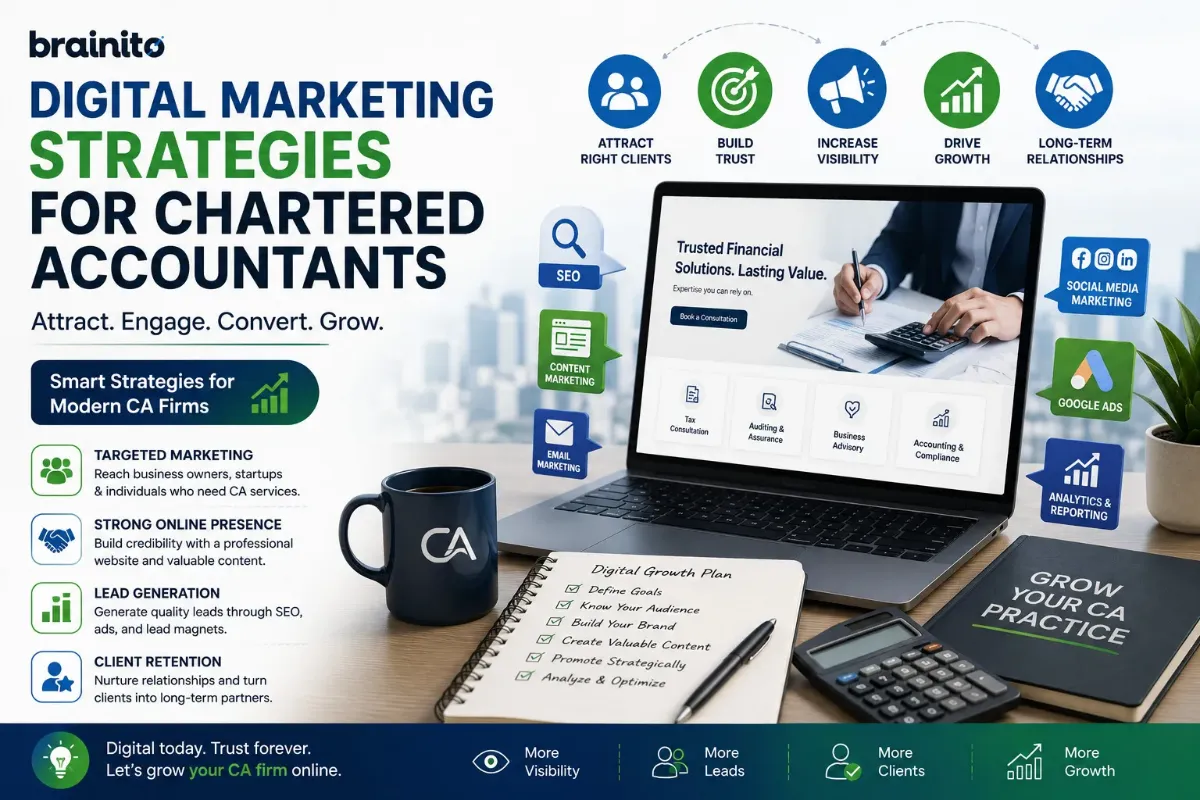
Practical marketing strategies for chartered accountants: win local clients, build authority, and grow your practice with a clear, budget-smart plan.
Why Chartered Accountants Need a Real Marketing Plan
Most chartered accountants are excellent at their craft and far less comfortable promoting it. That gap is exactly why so many talented practices stay invisible while less-skilled competitors win the clients. In 2026, prospects research an accountant the same way they research a doctor or a contractor: they search online, read reviews, scan a website, and judge credibility in seconds. If you are not showing up in those moments, you are losing work you never even knew existed.
The good news is that you do not need a huge budget or a full-time marketing team to compete. You need a focused plan that matches how your ideal clients actually find and choose an accountant. The strategies below are designed for solo practitioners and small firms who want steady, qualified leads without wasting money on tactics that do not move the needle.
If you want a clear starting point, run a free marketing audit of your practice website. It scores your site across 77 factors and returns a prioritized action plan, so you stop guessing about what to fix first.
Build a Website That Converts Visitors Into Clients
Your website is your most important marketing asset. For a chartered accountant, it has one job: convince a stressed business owner or individual that you are trustworthy, capable, and easy to work with. Vague taglines and stock photos do not do that. Specifics do.
What every accounting website needs
- Clear service pages for the things people search: tax planning, bookkeeping, audit support, business advisory, and compliance.
- Proof of credibility such as your qualifications, years in practice, client testimonials, and the industries you serve.
- An obvious next step on every page, whether that is a contact form, a phone number, or a booking link.
- Fast load times and mobile-friendly design, since most first visits now happen on a phone.
Local intent matters too. A prospect searching "chartered accountant near me" wants to see your city, your service area, and your contact details without hunting for them. If you are not sure where your site falls short, the audit mentioned above flags technical and content gaps in plain language. From there, a DIY marketing plan can help you sequence the fixes around your schedule.
Win Local Search and Google Business Profile
For accounting practices, local SEO is often the highest-return channel. When someone searches for an accountant in your area, Google shows a map pack of three nearby firms before the regular results. Landing in that pack puts you in front of high-intent prospects at the exact moment they are ready to hire.
The local SEO essentials
Start with a complete, accurate Google Business Profile: correct name, address, phone, hours, services, and a steady stream of recent reviews. Reviews are not just social proof; they are a ranking factor. Ask every satisfied client for one, and respond to each review you receive.
Next, make sure your business details are consistent everywhere they appear online, from directories to professional listings. Inconsistent information confuses search engines and erodes trust. You can check the health of your profile with a GMB audit tool to spot missing fields, weak categories, and review gaps before they cost you visibility.
Pair this with location-focused content on your site, such as pages or articles answering local questions like deadlines, regional compliance, or small-business tax relief. Use a keyword research tool to find the exact phrases prospects in your area are typing.
Use Content to Become the Trusted Expert
Accounting is a trust business, and content is how you earn trust at scale. Every confusing tax rule, deadline, or compliance question is an opportunity to publish helpful, plain-language answers that pull prospects toward you. When you consistently solve small problems for free, people assume you can solve the big ones for a fee.
Content that works for accountants
- Seasonal guides tied to tax deadlines, year-end planning, and filing windows.
- Explainers that translate jargon for business owners who feel lost in the numbers.
- Checklists and templates that prospects can download in exchange for their email.
- Short LinkedIn posts sharing one practical tip at a time.
Consistency beats intensity here. A single strong post each week compounds over a year. To keep momentum without burning out, plan ahead with a content calendar generator, sharpen your angles with a blog title generator, and brief each piece quickly using a content brief generator. These tools turn a vague intention to "post more" into a repeatable system.
Referrals, Partnerships, and Paid Ads That Pay Off
Word of mouth has always driven accounting practices, but you can make it deliberate instead of accidental. Build referral relationships with professionals who serve the same clients you do: lawyers, bankers, insurance advisors, and business consultants. A simple, mutual introduction agreement can become a steady source of warm leads.
When to add paid advertising
Once your website converts and your local profile is solid, paid ads can accelerate growth. Search ads capture people actively looking for an accountant, while social ads build awareness with business owners in your area. The key is tight targeting and clear messaging so you are not paying for clicks that never convert.
Structure matters more than budget. A well-organized campaign with relevant keywords and dedicated landing pages will outperform a bloated one every time. Use a Google ad structure generator to map clean campaigns and ad groups, and a Facebook ad copy generator to draft messaging that speaks to a specific pain point, such as missed deadlines or messy books. If you would rather not manage all of this yourself, you can always hire a marketer to run it for you.
Retain Clients and Turn Them Into Advocates
The cheapest client to win is the one you already have. For chartered accountants, retention is a marketing strategy in its own right. A client who feels looked after stays for years and refers others without being asked. One who feels forgotten quietly drifts to a competitor at renewal time.
Stay proactive between engagements. Send deadline reminders, share relevant rule changes, and check in before the busy season rather than during it. Thoughtful, well-timed emails keep you top of mind. A strong subject line decides whether those emails get opened at all, so test your options with an email subject line generator.
Finally, make asking for referrals a habit, not an afterthought. The moment a client thanks you for solving a problem is the perfect time to invite an introduction. Pair that with the review requests covered earlier and you create a flywheel where good service feeds visibility, and visibility feeds growth. For more ideas across channels, browse the Brainito blog, and when you are ready to commit to a structured approach, the free marketing audit will tell you which lever to pull first.
Frequently Asked Questions
What is the most effective marketing strategy for a chartered accountant?
For most practices, local SEO combined with a credible, conversion-focused website delivers the best return. Prospects search for an accountant nearby, judge you in seconds, and choose based on reviews and clarity. Get those two channels right before spending on ads. A free marketing audit will show you exactly where your foundation is weak.
How much should an accounting firm spend on marketing?
There is no fixed figure, but small firms often start by investing time rather than large budgets: optimizing their Google Business Profile, publishing helpful content, and nurturing referral relationships. As leads grow, you can layer in paid ads. A DIY marketing plan helps you allocate effort sensibly before scaling spend.
Do chartered accountants really need to be on social media?
You do not need every platform, but a presence on LinkedIn is valuable because business decision-makers are active there. Sharing one practical tip a week builds authority and keeps you visible to the exact people who hire accountants. Quality and consistency matter far more than posting volume.