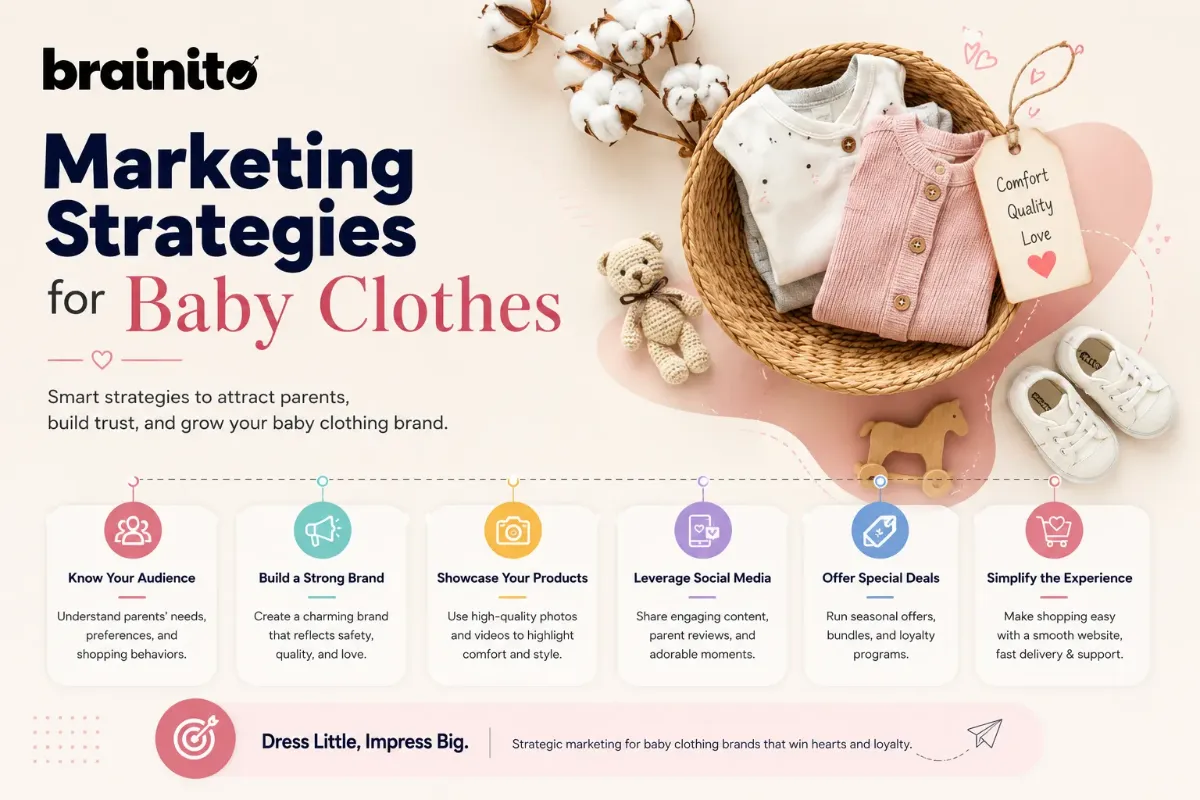
Proven marketing strategies for baby clothes brands: SEO, social proof, influencer partnerships, and paid ads that turn first-time parents into loyal buyers.
Why Baby Clothes Marketing Needs Its Own Playbook
The baby apparel market is one of the most emotionally charged corners of retail. Parents are not just buying onesies and sleepers, they are buying softness, safety, and a tiny milestone they will photograph a hundred times. That emotional weight changes how you market. A generic ecommerce strategy will leave money on the table because it ignores the trust, urgency, and gifting behavior that define this category.
The global baby apparel market is projected to push past $88 billion in 2026, and the buyers are overwhelmingly mobile, social, and review-driven. Roughly 80 percent of new parents research products on their phones before purchasing, often late at night while holding a sleeping newborn. Your marketing has to meet them there.
Who You Are Actually Selling To
Your primary buyer is rarely the end user. You are selling to first-time parents, grandparents shopping for gifts, baby-shower attendees, and aunts who want to look thoughtful. Each group searches differently and responds to different messaging. Before you spend a dollar on ads, map these segments. If you want a fast, structured read on where your current marketing is leaking, our free marketing audit scores your site across 77 factors and returns a prioritized action plan.
Build a Website That Converts Anxious First-Time Buyers
For baby clothes, trust is the conversion bottleneck. Parents worry about fabric safety, sizing, and whether the brand is legitimate. Your storefront has to answer those fears before they are even spoken.
Lead With Trust Signals
Put fabric details (organic cotton, OEKO-TEX certification, GOTS standards) high on the product page. Add clear sizing charts with weight and age ranges, because nothing kills a baby-apparel sale faster than uncertainty about fit. Real customer photos and reviews matter more here than in almost any other category. A study of ecommerce conversion repeatedly shows that product pages with reviews convert noticeably better, and for baby goods the effect is amplified by safety concerns.
Optimize for Mobile Speed
Most of your traffic is mobile. A page that loads in under two seconds keeps tired, distracted parents from bouncing. Compress images, use lazy loading, and keep checkout to as few steps as possible. If you are unsure how to translate these fixes into a roadmap, a DIY marketing plan can structure the work into weekly priorities.
Win Search With Intent-Driven SEO
SEO is the highest-leverage channel for baby clothing because parents search with very specific intent: "organic newborn sleepers," "gender-neutral baby gifts," or "0-3 month winter onesie." These long-tail queries have lower competition and higher purchase intent than broad terms like "baby clothes."
Map Keywords to the Buyer Journey
Build content around questions parents actually ask: what size to buy for a newborn, how many onesies a baby needs, or how to dress a baby for sleep safely. Each answer becomes a blog post that captures search traffic and builds authority. Use our keyword research tool to find the exact phrases your audience types, then prioritize by volume and difficulty. If you sell through Amazon as well, the Amazon keyword research tool helps you optimize listings for that very different search algorithm.
Don't Skip Local and Technical SEO
If you have a physical boutique, claim and optimize your Google Business Profile. Run a quick GMB audit to spot missing categories, photos, and review gaps that suppress local visibility. On the technical side, structured data for products and reviews helps your listings earn rich results in search.
Turn Social Proof and Influencers Into a Growth Engine
Parenting is communal. New parents trust other parents far more than they trust brands, which makes social proof and influencer marketing disproportionately effective in this niche.
Partner With Parent Creators
Micro-influencers in the parenting space (5,000 to 50,000 followers) often deliver better engagement and lower cost than large accounts. A relatable parent unboxing your sleepers on Instagram Reels or TikTok feels authentic in a way a polished ad never will. Send seeding packages, offer affiliate codes, and let creators show your products in real daily life: tummy time, first walks, messy mealtimes.
Make Pinterest and User Content Work
Pinterest is a quiet powerhouse for baby apparel because parents plan nurseries, registries, and seasonal wardrobes there. Create keyword-rich boards (newborn essentials, baby capsule wardrobe, gender-neutral nursery) and pin lifestyle imagery that links back to product pages. Encourage customers to tag your brand, then re-share their photos. This user-generated content compounds trust and gives you a steady stream of authentic creative.
Use Paid Ads, Email, and Retargeting to Close the Gap
Organic builds a foundation, but paid channels accelerate growth and recapture lost sales. The key is precise targeting, because baby-clothes audiences are easy to define and reach.
Run Shopping and Social Ads
Google Shopping puts your products in front of high-intent searchers with images and prices upfront, which is ideal for a visual category. On Meta and TikTok, target by life events (expecting parents, recently became a parent) and interests like baby registries and parenting groups. Strong ad copy is half the battle. Our Facebook ad copy generator and Google ad structure generator help you launch tighter campaigns faster.
Recover Abandoned Carts and Build Loyalty
Cart abandonment is high in baby apparel because parents get interrupted constantly. A three-email recovery sequence with a gentle reminder, a trust nudge (reviews, safety details), and a small incentive recovers a meaningful share of those carts. Compelling subject lines lift open rates, and our email subject line generator takes the guesswork out. Because babies outgrow clothes every few weeks, you have a built-in reason to email regularly with the next size up, seasonal collections, and replenishment reminders.
Plan Seasonal Campaigns and Repeat-Purchase Loops
Baby clothing has natural buying cycles that smart brands turn into predictable revenue. Babies grow fast, holidays drive gifting, and seasons demand new wardrobes. Build a calendar around these moments instead of reacting to them.
Build a Content and Promotion Calendar
Map your year around baby shower season, back-to-daycare, holiday gifting, and seasonal weather shifts. Curate themed collections (first Christmas, summer essentials, gender-neutral gifts) with limited-time urgency to drive action. A content calendar generator keeps your blog, email, and social posts aligned so every campaign reinforces the others. When you need full briefs for that content, the content brief generator speeds up production without sacrificing SEO structure.
Engineer Repeat Purchases
Loyalty programs, size-based reorder reminders, and bundle offers (buy the set, save) increase lifetime value in a category where customers naturally return every few months. Giveaways tied to milestones also build community and email subscribers at low cost. If executing all of this feels like too much for a small team, consider whether it is time to hire a marketer or explore done-for-you options on our pricing page. You can also browse the Brainito blog for deeper tactical guides on each channel.
Frequently Asked Questions
What is the most effective marketing channel for a baby clothes brand?
There is no single winner, but SEO combined with parent-focused social proof tends to deliver the best long-term return. Intent-driven search captures buyers who already want what you sell, while reviews and influencer content remove the trust barrier that stops first-time parents from purchasing. Paid ads then amplify both. Start by fixing the foundation with a free marketing audit before scaling spend.
How do I market organic or premium baby clothes without competing on price?
Lead with the story and the proof. Highlight certifications (GOTS, OEKO-TEX), fabric sourcing, and safety testing prominently, and use parent testimonials that speak to softness and durability. Premium baby brands win on trust and emotion, not discounts, so invest in lifestyle photography, education content, and a polished site experience that justifies the price.
How often should I email customers who bought baby clothes?
Because babies outgrow sizes every few weeks, a cadence of one to two thoughtful emails per week works well when the content is useful: size-up reminders, seasonal collections, restocks, and parenting tips. Segment by the baby's age where possible so timing feels personal rather than promotional. A DIY marketing plan can help you structure the full lifecycle flow.