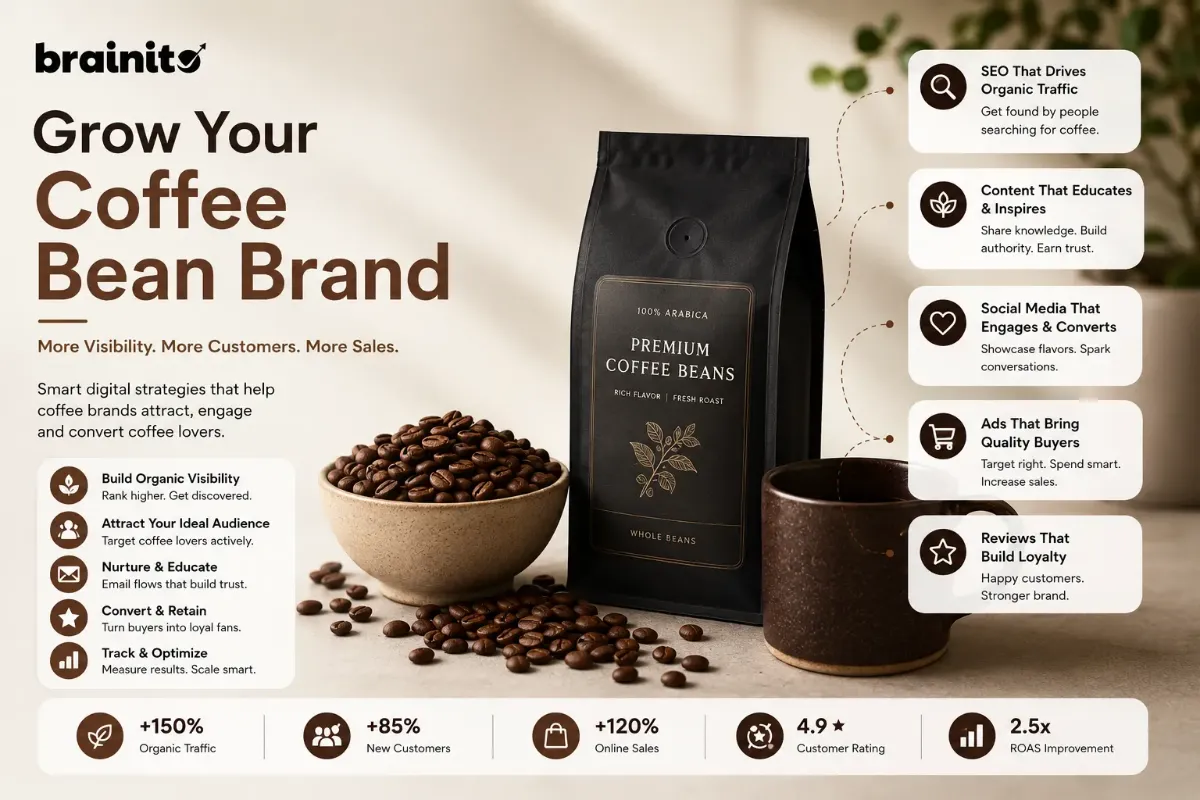
Grow your coffee bean brand with 2026 digital marketing strategies: SEO, social media, email, paid ads, and content that turns beans into loyal buyers.
Why Coffee Bean Brands Need a Sharper Digital Strategy
The coffee market is crowded, loyal, and deeply emotional. People do not just buy beans, they buy a morning ritual, an origin story, and a flavor they trust. That emotional pull is your biggest advantage online, but only if your digital marketing actually reaches the right cup-holders at the right moment.
In 2026, roasters compete with global brands, grocery private labels, and thousands of direct-to-consumer subscriptions. Winning is less about outspending everyone and more about being consistently visible where coffee lovers already search, scroll, and shop. A tight strategy across search, social, email, and content lets a small roaster punch far above its weight.
Before you pour money into any single channel, it helps to know where your brand actually stands. A free marketing audit scores your website across 77 factors and hands you a prioritized action plan, so you fix the weakest links first instead of guessing.
Build an SEO Foundation That Sends Buyers to Your Beans
Search is where high-intent coffee buyers begin. Someone typing "single origin Ethiopian beans" or "best espresso beans for home" is ready to purchase. If your site does not appear, a competitor pockets that sale.
Target the Keywords Coffee Drinkers Actually Use
Map keywords to buyer intent: roast level, origin, brew method, and grind type. Blend broad terms like "whole bean coffee" with specific long-tail phrases like "low-acid dark roast for cold brew." A quick pass through a keyword research tool reveals volume and competition so you prioritize the phrases worth ranking for.
Fix the Technical Basics
Fast load times, clean product URLs, descriptive alt text on those gorgeous bean shots, and structured data for product reviews all help search engines understand and rank you. If your site sells everywhere but your local roastery, do not ignore your Google Business Profile. A GMB audit can surface gaps hurting your local visibility.
Turn Social Media Into a Flavor-Driven Storefront
Coffee is visual, sensory, and shareable, which makes social media a natural home for your brand. The goal is not to post for the sake of posting, it is to make people crave a cup.
Lead With Craft and Origin
Show the roasting process, the farmers you source from, latte art, and packaging reveals. Short-form video of beans tumbling in the roaster or a slow pour builds appetite better than any static ad. Facebook and Instagram catalogs let followers buy without leaving the feed.
Partner With Creators Your Audience Trusts
Micro-influencers in the coffee, food, and lifestyle niches often deliver stronger engagement than celebrities. Send samples, co-create brew guides, and let authentic taste-tests do the selling. Pair this with local tasting events and cafe collaborations to build word-of-mouth on the ground. If you are unsure which channels deserve your time, a DIY marketing plan maps effort to payoff.
Use Email and Content to Turn One-Time Buyers Into Regulars
Coffee is a repeat-purchase product, which makes retention marketing incredibly profitable. A customer who loves your house blend will reorder for years if you stay top of mind.
Email That Refills the Cart
Set up welcome flows, restock reminders timed to when a bag typically runs out, and subscriber-only roast drops. Compelling subject lines decide whether these get opened, so test them with an email subject line generator before you hit send.
Content That Builds Authority
Brew guides, origin deep-dives, and pairing suggestions position you as the expert, not just a seller. This content also feeds SEO and social. Speed up production with a content brief generator to plan each piece and a blog content generator to draft it, then keep a steady cadence using a content calendar generator.
Run Paid Ads That Pay for Themselves
Organic growth is powerful but slow. Paid advertising gives coffee brands immediate reach, especially around launches, holidays, and gifting season when demand spikes.
Start With Shopping and Retargeting
Google Shopping puts your beans in front of shoppers comparing options, while retargeting brings back visitors who browsed but did not buy. Structure campaigns cleanly so budget flows to your best performers, not scattered guesses. A Google ad structure generator helps you organize campaigns and ad groups the right way from day one.
Make the Creative Match the Craving
Ad copy should sell the feeling, aroma, warmth, ritual, not just the price. Test multiple angles quickly with a Facebook ad copy generator and let performance decide the winner. Keep an eye on cost per acquisition against your average order value so paid stays profitable.
Differentiate, Package, and Measure Your Way to Loyalty
Great marketing amplifies a great product and a clear identity. If your beans, packaging, and brand promise all say the same thing, your campaigns compound instead of confusing people.
Study competitors to find the white space: maybe it is transparent sourcing, a bold roast profile, or unbeatable freshness dating. Then let your packaging carry that story, because the unboxing moment is prime social content and a reason to reorder. Price with confidence, but back it up with obvious value in every bag.
Finally, measure what matters: traffic sources, conversion rate, repeat purchase rate, and lifetime value. When you are stretched thin or ready to scale, you can hire a marketer to run the channels for you, or browse the Brainito blog for more playbooks. Either way, start by running a free marketing audit so every next move is guided by data, not hunches.
Frequently Asked Questions
Which digital marketing channel works best for selling coffee beans?
There is no single winner. SEO captures high-intent buyers searching for specific roasts, social media builds craving and brand affinity, and email drives repeat purchases. Most successful coffee brands combine all three, then add paid ads to accelerate launches. Start with the channel where your ideal customer already spends time, then expand.
How much should a small coffee roaster spend on digital marketing?
A common starting point is 7 to 12 percent of revenue, weighted toward retention since coffee is a repeat-purchase product. Rather than fix a number blindly, audit your current performance first so you invest in the gaps that will move the needle. A free marketing audit highlights exactly where to put the next dollar.
Do I need a blog to market coffee beans online?
Yes, content is one of the highest-leverage tools for coffee brands. Brew guides, origin stories, and pairing tips rank in search, feed your social calendar, and build the authority that justifies premium pricing. Tools like a blog titles generator make it faster to keep publishing consistently.