Proven digital marketing strategies for IT companies in 2026. Win B2B tech buyers with SEO, paid ads, content, referrals, and demand generation.
Why IT Companies Need a Different Marketing Playbook
Selling software, managed services, or IT consulting is nothing like selling a consumer product. Your buyers are technical, skeptical, and often part of a committee that includes a CTO, a procurement lead, and a finance stakeholder. Sales cycles stretch for months, contract values run high, and a single wrong signal can quietly disqualify you before a conversation ever starts.
That reality changes how digital marketing works for IT companies. You are not chasing impulse purchases. You are building trust, demonstrating expertise, and staying visible across a long, research-heavy buying journey. The strategies below are built for exactly that environment: they compound over time, they respect how technical buyers actually make decisions, and they turn your website into a genuine pipeline engine rather than a digital brochure.
Before you invest in any single channel, it helps to know where you stand today. A free marketing audit from Brainito scores your website across 77 ranking and conversion factors and returns a prioritized action plan, so you spend budget on the gaps that actually matter.
Build a Technical SEO and Content Foundation
Technical buyers start with search. When a systems administrator needs a backup solution or a CIO researches cloud migration partners, the journey almost always begins with a query. If your pages do not surface for those searches, your competitors capture the demand you helped create.
Target Problem-Aware and Solution-Aware Keywords
Move beyond broad terms like "IT services" and focus on the specific problems your prospects type into Google: "reduce cloud costs for SaaS", "SOC 2 compliance managed service", or "migrate on-prem ERP to Azure". These longer queries have less competition and far higher intent. Our keyword research tool helps you map the exact phrases your buyers use at each stage.
Publish Content That Proves Expertise
IT buyers judge you on depth. Detailed technical guides, architecture breakdowns, comparison articles, and case studies do more to convert a CTO than any tagline. Keep a consistent publishing cadence with a content calendar generator, and use a blog content generator to draft first versions faster. When you need sharp, clickable headlines for those pieces, a blog titles generator speeds the process without sacrificing quality.
Run Paid Campaigns That Match Buyer Intent
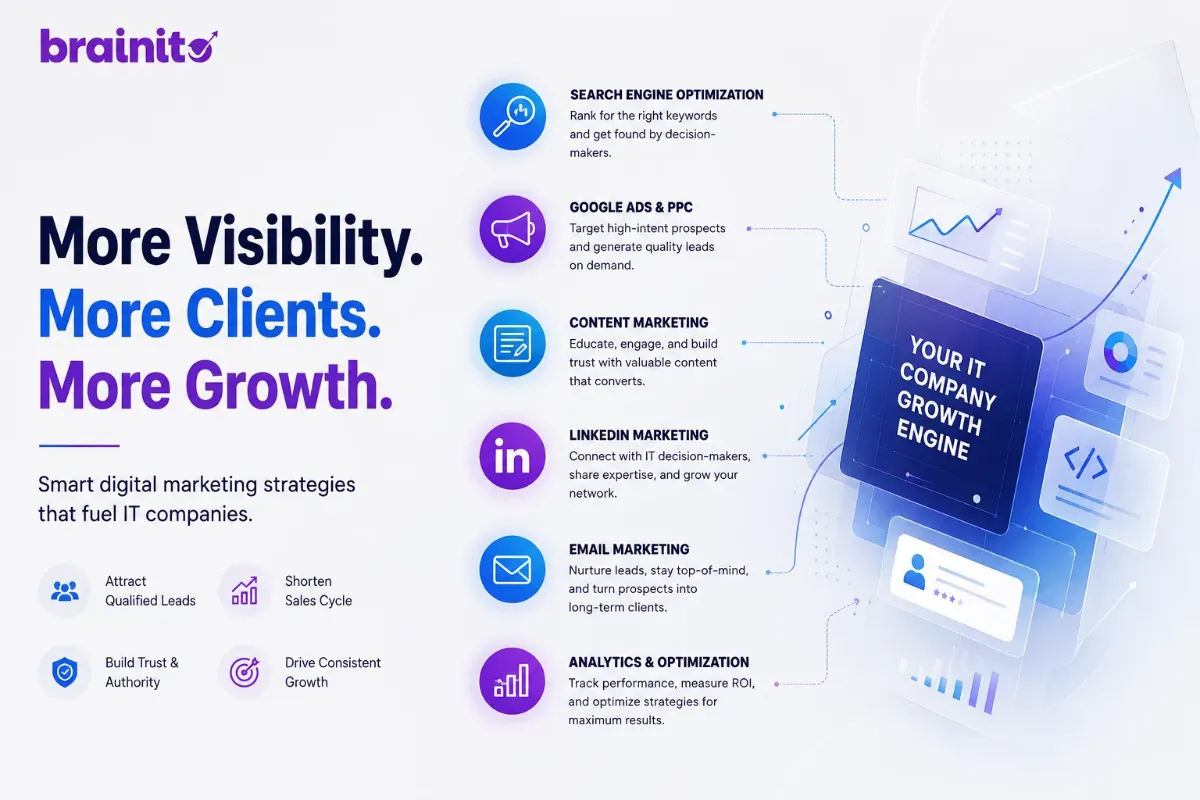
SEO builds a durable foundation, but paid advertising delivers pipeline while that foundation matures. For IT companies, paid works best when it targets high-intent moments rather than broad awareness.
Search Ads for Bottom-of-Funnel Queries
Bid on terms where the searcher is close to a decision: "best MSP for healthcare", "endpoint security vendor pricing", or competitor comparison searches. These clicks cost more, but they convert into qualified demos. A clean campaign structure keeps quality scores high and cost per lead low. Use a Google ad structure generator to organize tight, relevant ad groups from the start.
LinkedIn and Social for Account Targeting
LinkedIn lets you target by job title, company size, and industry, which is ideal for reaching the exact decision makers inside your ideal accounts. Retarget website visitors with case studies and demo offers. When you expand into other channels, a Facebook ad copy generator helps you tailor messaging to each audience quickly.
Turn Trust Signals Into Conversions
In a high-stakes B2B purchase, risk reduction closes deals. Technical buyers want proof that you have solved their exact problem before, ideally for a company that looks like theirs.
Case Studies, Testimonials, and Reviews
A specific case study, complete with metrics like "cut downtime by 40 percent" or "reduced cloud spend by six figures", is far more persuasive than a feature list. Collect reviews on trusted third-party platforms and surface them at decision points on your site. Social proof is one of the highest-return, lowest-cost marketing assets an IT company can build.
Guarantees and Clear SLAs
Money-back guarantees, transparent service level agreements, and clear onboarding timelines remove the fear of choosing wrong. When a buyer knows exactly what happens if something goes sideways, they commit faster. Make these guarantees prominent rather than buried in a contract.
Grow Through Referrals, Partnerships, and Retention
The most efficient marketing channel for IT companies is often the one you already have: satisfied clients and complementary partners. Acquiring a new logo is expensive, so compounding growth from your existing base changes the economics of the whole funnel.
Referral and Partner Programs
Give current clients a real incentive to refer you, whether that is account credit, priority support, or a straightforward finder's fee. Partner with adjacent providers, a cybersecurity firm, a cloud consultancy, or a hardware vendor, and cross-refer opportunities. These warm introductions arrive pre-qualified and close at higher rates.
Nurture With Email and Chatbots
Long sales cycles demand consistent, useful follow-up. Email nurture keeps you present without being pushy; strong subject lines matter, and an email subject line generator lifts open rates. On your site, a chatbot can qualify leads and answer common questions around the clock, so a prospect browsing at 11 PM still gets a response.
If executing all of this feels like a lot, it is. Many IT firms move faster by following a structured DIY marketing plan, or by choosing to hire a marketer who has run this playbook before.
Measure, Prioritize, and Scale What Works
Marketing for IT companies is a system, not a checklist. The firms that win treat every channel as a testable hypothesis and let data decide where the next dollar goes. Track cost per qualified lead, pipeline influenced by channel, and the conversion rate from demo to closed deal, not just traffic and clicks.
Start by fixing the highest-impact gaps first. A slow, unindexed, or poorly converting website undermines every other investment you make, so diagnose it before you scale spend. Run a free marketing audit to get a prioritized, 77-factor action plan, then double down on the channels that produce real pipeline. For deeper tactical playbooks across SEO, paid, and content, the Brainito blog is a good next stop, and a free marketing audit gives you the baseline to measure improvement against.
Frequently Asked Questions
What is the best digital marketing channel for IT companies?
There is no single best channel; the winning approach combines technical SEO for long-term visibility, high-intent paid search and LinkedIn ads for near-term pipeline, and content plus case studies to build trust across a long buying cycle. Start with a free marketing audit to see which channel has the most upside for your specific site before you commit budget.
How long does it take to see results from IT marketing?
Paid advertising can generate qualified leads within weeks, while SEO and content typically take three to six months to compound into meaningful organic pipeline. Because IT sales cycles are long, patience and consistent measurement matter more than chasing quick wins.
Should an IT company hire an agency or build in-house?
It depends on your stage and budget. Early on, a structured DIY marketing plan keeps costs low while you learn what converts. As pipeline grows, many firms choose to hire a marketer or agency to scale the channels that are already working.