
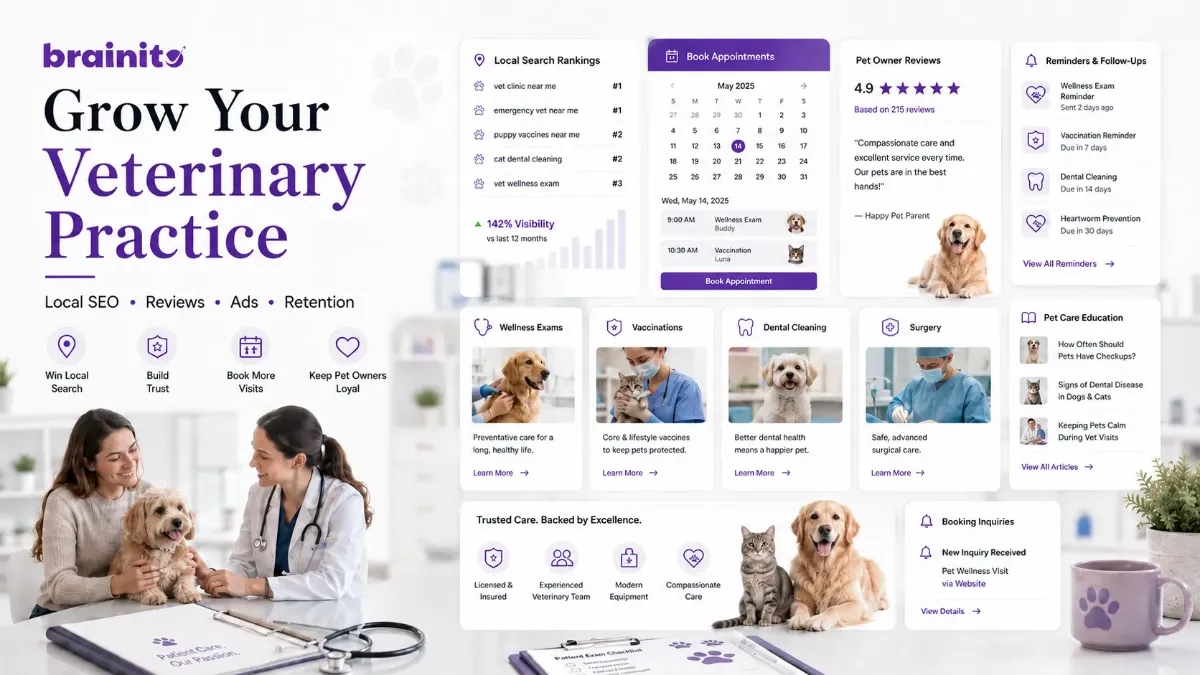
A practical 2026 digital marketing guide for veterinary practices. Win local searches, book more appointments, and keep pet owners loyal for life.
Why Veterinary Marketing Looks Different in 2026
Pet owners no longer flip through a phone book to find a vet. They pull out a phone, type "vet near me open now," and pick one of the first three clinics they see. That single behavior shift has quietly rewritten the rules for veterinary marketing. Your reputation, your visibility, and your booking flow all live online before a single paw crosses your threshold.
The good news is that a veterinary practice has natural advantages most local businesses envy. Pet owners are deeply emotional buyers, they visit repeatedly across a pet's lifetime, and they talk. A well run marketing engine turns one anxious first-time puppy owner into a decade of wellness visits, dental cleanings, referrals, and glowing reviews. This guide walks through the digital foundations that make that happen in 2026.
Start With an Honest Audit
Before you spend a dollar on ads, understand where you actually stand. Are you ranking for local searches? Is your booking page mobile friendly? Are competitors outranking you on reviews? Running a free marketing audit scores your website across 77 factors and hands back a prioritized action plan, so you fix the leaks that cost you appointments before pouring water into the bucket.
Own Your Local Search Presence
For a veterinary practice, local search is the whole ballgame. Most of your clients live within a short drive, and they are searching with urgent intent. The clinics that show up in the Google map pack capture the lion's share of new-patient calls.
Optimize Your Google Business Profile
Your Google Business Profile is your most valuable piece of digital real estate. Fill out every field: services, hours, emergency availability, accepted insurance, and species you treat. Add fresh photos of your team and facility monthly, respond to every review, and post updates about clinics, seasonal reminders, and new services. A neglected profile silently pushes you down the rankings.
Not sure how your listing stacks up? A quick pass through a GMB audit tool surfaces the gaps that keep you out of the map pack, from missing categories to thin review velocity.
Target the Right Local Keywords
Rank for the phrases pet owners actually type: "emergency vet in [city]," "cat dental cleaning near me," "puppy vaccinations [neighborhood]." Use a Google keyword research tool to find the terms with real search volume, then build service pages around them. If your website is thin on content, a structured DIY marketing plan gives you a step-by-step roadmap for filling the gaps.
Build Trust With Reviews and Reputation
Choosing a vet is choosing who to trust with a family member. That is why reviews carry enormous weight in this industry. Studies consistently show that a strong review profile influences both your search rankings and the click-through rate once you appear.
Make review collection systematic, not accidental. Send a friendly text or email after every appointment with a direct link to leave feedback. Train your front desk to mention it warmly at checkout. Respond to every review, especially the critical ones, with empathy and professionalism. A calm, caring reply to a frustrated client often does more for your reputation than the complaint itself.
Turn Emotion Into Content
Veterinary practices sit on a goldmine of shareable moments: recovery stories, adoption partnerships, senior pets, and the occasional adorable patient photo (with owner permission). This content builds the emotional connection that keeps clients loyal and encourages sharing, which quietly expands your reach at zero ad cost.
Content That Educates and Converts
Pet owners are anxious and curious. They search endlessly about symptoms, nutrition, behavior, and preventive care. When your practice answers those questions clearly, you become the trusted authority long before they need to book. Educational content is the single most sustainable way to attract organic traffic in 2026.
Blog With Purpose
Write posts that match real search queries: "signs your dog is in pain," "how often should cats have dental cleanings," "what to expect at a first puppy visit." Each post is a doorway from Google to your booking page. To move faster, a content brief generator maps out what each article should cover, and a blog content generator helps you draft it without staring at a blank page.
Stay Consistent
Consistency beats intensity. One quality post a week compounds over a year into a library that ranks and converts. Plan it out with a content calendar generator so your team never scrambles for ideas, and use a blog titles generator to sharpen headlines that earn the click.
Paid Ads and Email for Steady Bookings
Organic growth takes time, so pair it with paid channels that deliver appointments now. Done well, paid advertising fills your schedule while your content and reviews mature in the background.
Run Focused Google and Social Ads
Google Ads capture high-intent searches like "emergency vet open now." Facebook and Instagram ads work for awareness, new-client offers, and seasonal campaigns such as heartworm season or dental month. Keep your campaigns tightly structured. A Google ad structure generator helps you organize ad groups by service, and a Facebook ad copy generator speeds up writing offers that resonate with pet parents.
Nurture With Email
Email is where retention lives. Automated reminders for vaccinations, wellness exams, and prescription refills keep clients coming back on schedule. A monthly newsletter with seasonal care tips keeps your practice top of mind. Strong subject lines decide whether any of it gets opened, so lean on an email subject line generator to lift your open rates. If managing all of this feels like a second job, it might be time to hire a marketer who can run the engine while you focus on patients.
Turning Strategy Into an Action Plan
Reading about tactics is easy. Sequencing them so they actually move the needle is the hard part. Trying to do everything at once usually means doing nothing well, so prioritize based on where you are losing the most opportunity today.
A sensible order for most practices: lock down your Google Business Profile and reviews first, since they drive immediate local visibility. Next, build out core service pages targeting your top local keywords. Then layer in consistent content and a simple email reminder system. Only after those foundations are solid should you scale paid advertising.
To know exactly which lever to pull first, start with a free marketing audit. It benchmarks your site across 77 factors and returns a ranked list of fixes, so you invest your limited time where it pays off fastest. If you want to explore more tactics and tools, the Brainito blog covers local growth in depth, and reviewing pricing options can help you decide between doing it yourself and getting hands-on help.
Frequently Asked Questions
How much should a veterinary practice spend on digital marketing?
A common benchmark is 3 to 7 percent of gross revenue, weighted toward local SEO and reputation early on since those deliver the highest return for veterinary practices. Start lean, measure which channels book appointments, and reinvest in the winners. A free marketing audit can show you where your current spend is leaking before you increase it.
What is the single most important channel for vets?
Local search, anchored by an optimized Google Business Profile and a steady stream of positive reviews. Most new clients find their vet through a "near me" search, so ranking in the map pack matters more than almost anything else you do online.
Should I outsource veterinary marketing or do it in-house?
It depends on your time and skill set. A structured DIY marketing plan works well if you or a staff member can dedicate consistent hours each week. If not, you will get faster results by choosing to hire a marketer who already knows local healthcare marketing.