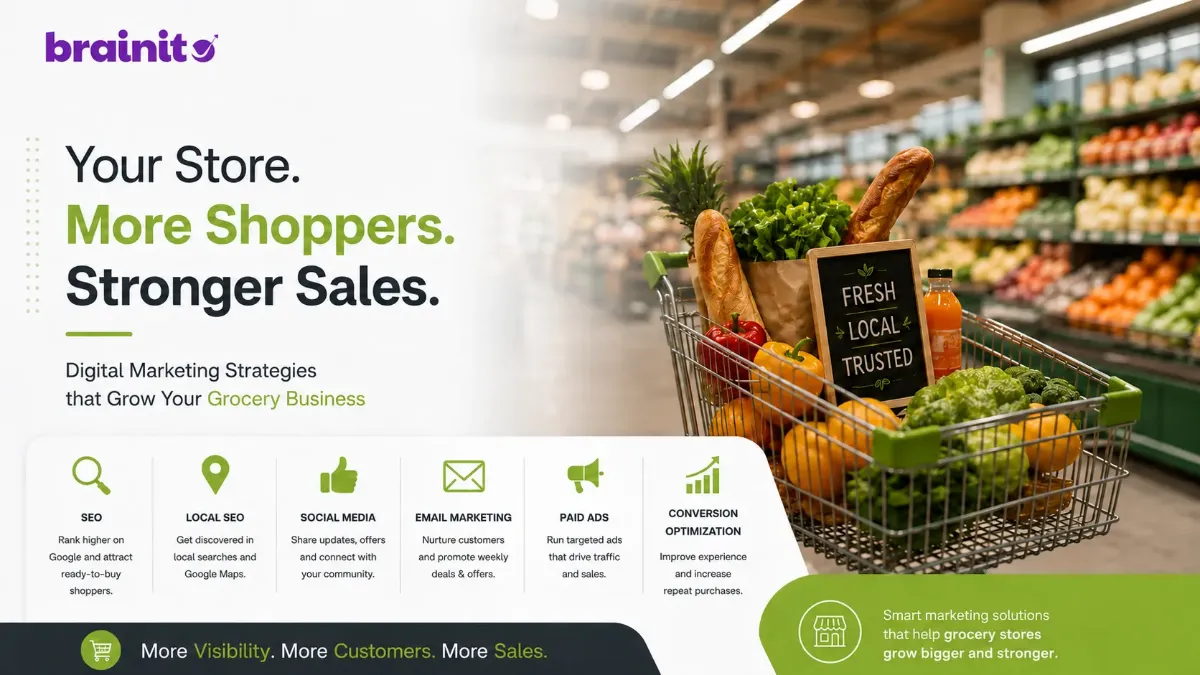
Grow your grocery store with digital marketing that fills carts. Local SEO, loyalty apps, email, and paid ads that turn foot traffic into repeat sales.
Why Grocery Stores Need a Real Digital Strategy
Grocery is a thin-margin, high-frequency business. The winners are not the stores with the flashiest ads. They are the ones customers think of first when they run out of milk, plan a weekend cookout, or search "grocery store near me" on a Tuesday night. Digital marketing is how you own that moment of intent.
Shoppers now research produce quality, weekly deals, and delivery windows online before they ever push a cart. If your store is invisible in local search, absent from social feeds, and silent in inboxes, you are handing those trips to the chain three blocks away. A focused digital presence closes that gap without a big-box budget.
Before you spend a dollar on ads, get an honest read on where you stand. A free marketing audit scores your website across 77 factors and returns a prioritized action plan, so you fix what actually moves sales instead of guessing.
Dominate Local Search and Google Business Profile
For a grocery store, local SEO is the single highest-leverage channel. Most grocery searches carry immediate intent, and the map pack is prime real estate. Your job is to be the obvious answer.
Optimize Your Google Business Profile
Your Google Business Profile is your digital storefront. Keep hours accurate (especially holidays), post weekly specials, add fresh photos of produce and aisles, and respond to every review. Stores that treat the profile as a living channel consistently outrank those that set it and forget it. Run a quick check with a GMB audit tool to spot missing fields and ranking gaps.
Target Neighborhood Keywords
Build pages and content around terms real shoppers use: "organic produce in [neighborhood]," "same-day grocery delivery," or "halal meats near me." A keyword research tool helps you find the phrases with genuine local volume and low competition.
Earn Local Citations and Links
Get listed in local directories, partner with neighborhood blogs, and sponsor community events. A healthy backlink profile signals authority. Use a backlink audit tool to see who links to you and where the gaps are.
Build Loyalty With Email and a Store App
Acquiring a new grocery shopper is expensive. Keeping one is cheap, and the lifetime value is enormous when someone shops weekly. Loyalty is where digital marketing quietly prints money.
Personalized Email Campaigns
Segment your list by shopping behavior. Send weekly flyers, restock reminders, and category deals to the people most likely to buy them. A strong subject line decides whether the email gets opened at all, so test variants with an email subject line generator before you send.
A Loyalty App That Earns Its Place on the Home Screen
A simple app with digital coupons, points, and a running shopping list gives customers a reason to choose you every trip. Push notifications for flash sales and personalized recommendations based on past purchases turn a passive shopper into a regular. Even a lightweight loyalty program tied to a phone number beats no program at all.
The data these tools collect is a gift: it tells you what sells, when, and to whom, so every future campaign gets sharper.
Content and Social Media That Sells Groceries
Groceries are visual and emotional. People shop with recipes in mind and appetites in play. Content marketing lets you meet them there instead of only shouting about price.
Recipe and Seasonal Content
Publish weekly recipes built around what is fresh and on sale, then link to the ingredients in your store. A "back to school lunchbox" or "holiday roast" guide drives both search traffic and basket size. Speed this up with a blog content generator and plan a steady cadence using a content calendar generator.
Instagram and Facebook Engagement
Show behind-the-scenes clips of deliveries, staff picks, and new arrivals. Run simple contests ("tag a friend you'd share this cheese board with") to expand reach cheaply. User-generated photos of customer meals are social proof money cannot buy.
Structure Your Editorial Effort
Do not create content at random. Start each piece with a clear content brief and headline options from a blog titles generator, so every post targets a keyword and a shopping outcome.
Paid Ads and Promotions That Actually Convert
Organic reach builds over time, but paid advertising delivers immediate visibility for weekly deals and delivery pushes. The key is precision: grocery ads work best when they are local, timely, and tied to a real offer.
Google and Facebook Ads
Use Google Ads to capture high-intent searches for delivery and specific products, and structure campaigns cleanly with a Google ad structure generator. On social, run geo-targeted Facebook ads promoting weekend specials. Craft scroll-stopping copy fast with a Facebook ad copy generator.
Promotions and Loyalty Offers
Digital coupons, bundle deals, and "spend $50, save $10" thresholds increase basket size while feeling generous. Time your biggest giveaways around peak shopping seasons and holidays when trips and budgets are largest.
Cross-Promotion Partnerships
Partner with local restaurants, meal-kit brands, or fitness studios for co-marketing. A shared audience means shared acquisition cost and a warmer introduction than a cold ad.
Not sure whether to build this in-house or bring in help? You can hire a marketer to run the channels, or follow a structured DIY marketing plan if you'd rather keep it lean.
Measure, Learn, and Scale
The stores that pull ahead are relentless about measurement. Track which channels drive trips, which offers lift basket size, and which content ranks. Then double down on what works and cut what does not.
Watch a short list of metrics: online orders, coupon redemptions, email open and click rates, local search ranking, and repeat-purchase rate. These tell you far more than vanity follower counts. Review the numbers monthly and let them dictate next month's budget.
If you want a clear starting point, run your site through a free marketing audit to see your biggest opportunities scored and prioritized. Compare that against your goals, and when you are ready to invest, our pricing options and the Brainito blog can guide the next step.
Frequently Asked Questions
What is the most important digital marketing channel for a grocery store?
Local SEO and your Google Business Profile deliver the highest return, because most grocery searches carry immediate intent to buy nearby. Accurate hours, weekly posts, fresh photos, and review responses help you win the map pack. Start with a GMB audit, then support it with email and social.
How much should a grocery store spend on digital marketing?
There is no fixed number, but a common starting point for local businesses is 5 to 8 percent of revenue, weighted toward local SEO and retention rather than broad ads. Begin with a free marketing audit to find the cheapest high-impact fixes before scaling paid spend.
Do small independent grocers really need an app?
You do not need a costly custom app on day one. A simple loyalty program tied to a phone number, plus email and digital coupons, captures most of the value. Add an app once you have proven repeat demand. If in doubt, a DIY marketing plan helps you sequence these investments sensibly.