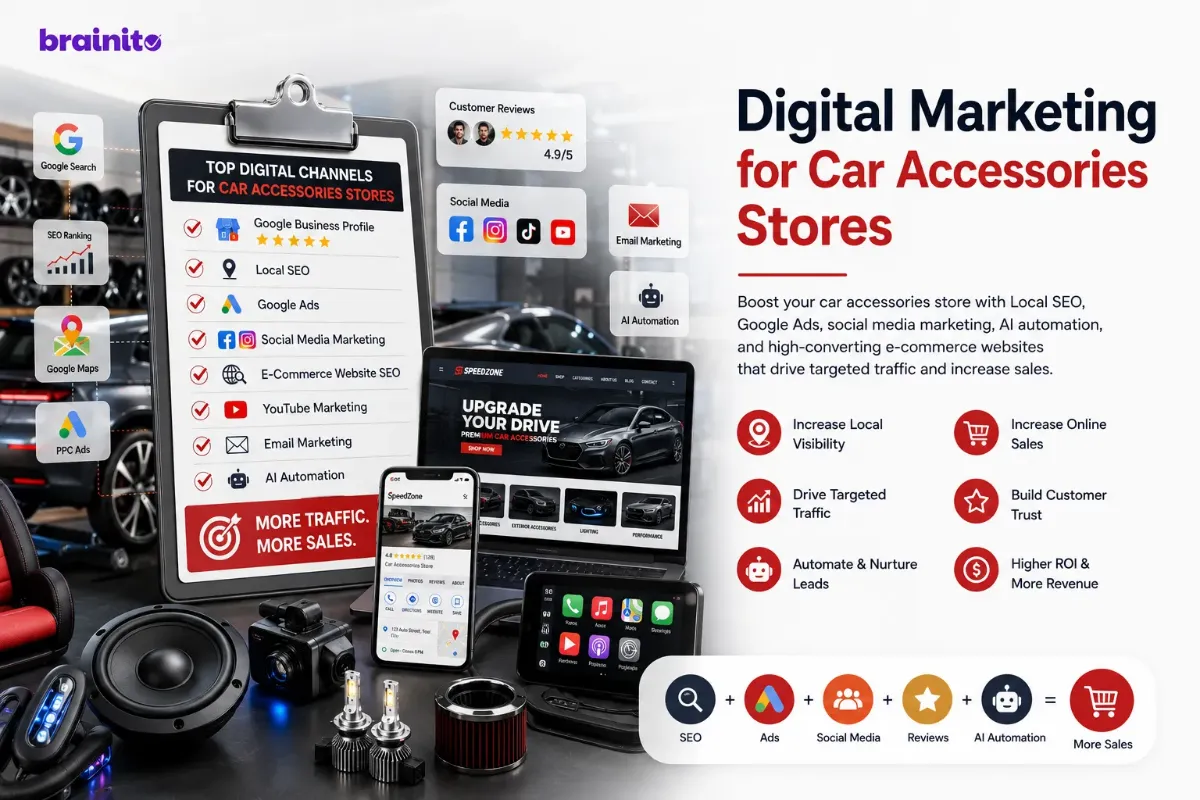
A practical 2026 digital marketing playbook for car accessories stores: SEO, paid ads, retargeting, email, marketplaces, and content that converts buyers.
Why Car Accessories Stores Need a Sharper Digital Playbook
Selling car accessories online is a crowded, fast-moving business. Shoppers arrive with very specific intent (a floor mat for a 2021 Corolla, a wireless dash cam, a roof rack that actually fits their SUV), and they will bounce the moment your store feels slow, vague, or hard to trust. The stores that win in 2026 are not the ones with the biggest ad budgets. They are the ones that connect the right product to the right buyer at the exact moment of need.
A car accessories store lives or dies on fitment, trust, and speed. Buyers want to know a part fits their vehicle, they want proof it works, and they want it fast. Your digital marketing has to answer all three before a competitor does. This guide walks through the channels that matter most and how to make them work together.
If you would rather start with a diagnosis than a guess, run a free marketing audit first. It scores your store across 77 factors and hands back a prioritized action plan, so you fix what is actually leaking revenue instead of chasing tactics at random.
Build a Store That Sells Fitment and Trust
Before you spend a dollar on ads, your store has to convert the traffic you already have. For car accessories, that means three things done well: fitment clarity, product depth, and mobile speed.
Make Fitment Impossible to Get Wrong
Add a year/make/model selector near the top of every product page and category page. Show compatible vehicles in plain language. Nothing kills conversion (and drives returns) like a buyer guessing whether a part fits. When fitment is obvious, hesitation drops and average order value climbs because shoppers add matching accessories with confidence.
Go Deep on Product Detail
Include dimensions, materials, install difficulty, warranty, and real photos from multiple angles. A short install video does more for a roof rack listing than three paragraphs of copy. Pair that with genuine customer reviews and photos, which are the single strongest trust signal in automotive retail.
Win on Mobile Speed
Most accessory shoppers browse from a phone, often in a garage or parking lot. Compress images, lazy-load below the fold, and keep your checkout to as few taps as possible. If you are unsure where your store stands, a free marketing audit flags speed and mobile issues that quietly suppress sales.
SEO That Captures High-Intent Auto Shoppers
Search is where car accessory demand shows up in its purest form. Someone typing "best all-weather floor mats for Tesla Model 3" is ready to buy. Your job is to be the result they click.
Target Long-Tail, Fitment-Rich Keywords
Broad terms like "car accessories" are expensive and vague. Long-tail phrases that combine product plus vehicle (for example "LED headlights for Ford F-150" or "trunk organizer for hatchback") convert far better and cost less to rank for. Build these into product titles, descriptions, and category pages naturally. A keyword research tool helps you find the exact phrases your buyers use.
Optimize Categories and Product Copy
Write unique descriptions for each product. Duplicate manufacturer copy gets ignored by Google and by shoppers. Structure category pages around buyer questions and use clear headings. Speed up this work with a content brief generator so every page targets the right keyword with the right structure from the start.
Earn Links and Local Signals
Reviews on auto forums, partnerships with car clubs, and mentions from detailing blogs build the authority Google rewards. If you have a physical showroom, keep your Google Business Profile sharp. A quick GMB audit and a backlink audit show where your authority is strong and where it needs work.
Paid Ads and Retargeting That Recover Lost Buyers
Organic reach takes time. Paid ads bring buyers in now, and retargeting brings back the many who leave without purchasing. For car accessories, both should lean heavily on visuals and fitment.
Run Google Shopping and Catalog Ads
Product-based ads on Google Shopping and Facebook catalogs put your accessories in front of shoppers with photos, prices, and reviews already visible. Keep your product feed clean, with accurate titles, categories, and vehicle compatibility, because the feed quality drives ad performance. Tighten your search campaigns with a Google ad structure generator and sharpen social creative using a Facebook ad copy generator.
Retarget by Behavior, Not in Bulk
Segment your retargeting. Someone who viewed a specific dash cam should see that dash cam again, ideally with a review or a small incentive. Someone who abandoned a cart should get a gentle reminder plus free shipping if it moves the needle. Behavior-based retargeting converts far better than showing everyone the same generic banner.
Watch Your Numbers, Not Just Your Spend
Track return on ad spend by product category. Accessories have very different margins, so a blended number hides the truth. Double down on the categories that earn and pause the ones that drain budget.
Email, Content, and Marketplaces to Grow Repeat Revenue
Acquiring a customer once is expensive. The stores that thrive turn one purchase into many through owned channels and smart expansion.
Email That Adds Value First
Do not blast discounts every week. Send maintenance tips, seasonal accessory guides (winter tires, summer sun shades), and helpful how-tos, then weave in relevant products. Strong subject lines decide whether any of it gets opened, so test them with an email subject line generator.
Content That Educates and Ranks
Buying guides, install walkthroughs, and comparison posts ("ceramic vs. carbon window tint") pull in search traffic and build trust. This content also fuels your email and social channels. Speed up production with a blog content generator and plan a steady cadence using a content calendar generator so publishing never stalls.
Expand to Marketplaces
Amazon and eBay put your accessories in front of enormous, ready-to-buy audiences. Use them to reach new customers, then bring repeat buyers back to your own store with better prices, bundles, and loyalty perks. Research demand there with an Amazon keyword research tool before you list.
Turn This Into a Plan You Can Execute
Reading tactics is easy. Sequencing them into a plan that fits your budget and team is the hard part. Start with the highest-leverage fixes: store speed, fitment clarity, and your best-selling categories. Then layer in paid ads, retargeting, email, and content in that order, measuring as you go.
If you want a clear, prioritized starting point, run a free marketing audit to see exactly where your store is losing customers and what to fix first. From there you can follow a structured DIY marketing plan to execute in-house, or hire a marketer to run it for you. Compare what fits your stage on the pricing page, and keep learning on the blog.
Frequently Asked Questions
Which digital marketing channel works best for a car accessories store?
There is no single best channel. High-intent SEO and Google Shopping ads usually deliver the fastest returns because shoppers search with clear fitment intent. Retargeting and email then maximize the value of that traffic by recovering abandoned carts and driving repeat purchases. The right mix depends on your margins and budget, which a free marketing audit can help you prioritize.
How important is fitment information for online sales?
It is critical. Accurate year/make/model compatibility is the biggest driver of conversion and the biggest reducer of returns in automotive retail. Adding a clear fitment selector and compatibility details to every product page often lifts sales more than any ad campaign.
Should I sell on Amazon or focus on my own store?
Do both. Amazon and eBay reach huge ready-to-buy audiences and are great for discovery, but their fees and limited customer relationships make them costly long term. Use marketplaces to acquire new buyers, then pull repeat customers back to your own store with bundles, loyalty perks, and better email engagement.