Learn how business blogging drives organic traffic, builds authority, and converts readers into customers in 2026, plus a practical workflow to start.
Why Business Blogging Still Wins in 2026
Every year someone declares that blogging is dead, and every year the businesses that quietly publish useful content keep climbing the search results. In 2026, a blog remains one of the highest-leverage assets a company can own. It compounds. A single well-researched article can attract qualified visitors for years, while a paid ad stops working the moment you stop paying for it.
The reason is simple. Search engines and AI-powered answer tools reward sites that demonstrate genuine expertise, and a consistent blog is how you prove it. When you publish thoughtful, original content on the topics your customers care about, you signal authority to algorithms and humans alike.
Blogging Is an Asset, Not an Expense
Think of each post as a small piece of digital real estate. Once it ranks, it works around the clock to bring in readers who may become leads. That is a fundamentally different economics than renting attention through ads. If you want to see how your current content stacks up, a free marketing audit evaluates your site across 77 factors and hands you a prioritized action plan.
The Four Outcomes a Strong Blog Delivers
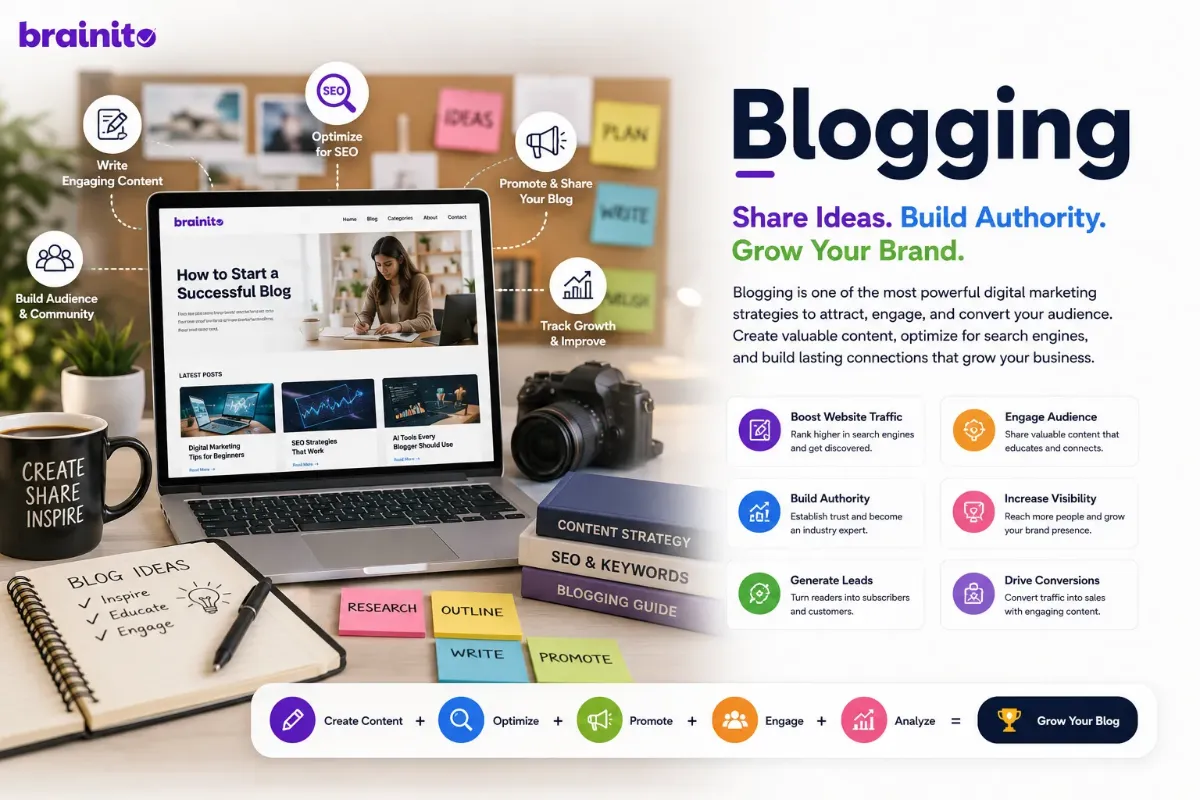
A business blog is not about vanity metrics. It is about moving the needle on outcomes that matter. When done well, blogging delivers four concrete results.
Higher Search Visibility
Every post is a new opportunity to rank for the questions your audience is typing into search engines. More indexed pages targeting real keywords means more doorways into your site. Pair your writing with solid keyword research so you target terms with genuine demand and realistic difficulty.
Authority and Trust
Publishing consistently positions you as the credible expert in your niche. Readers who learn something from you are far more likely to buy from you. Trust is the currency that turns traffic into revenue.
Stronger Internal and External Links
Each article creates natural places to link to your service pages and to earn backlinks from other sites. A healthy link profile lifts your entire domain. A backlink audit can show you where you stand today.
Lead Generation
With the right calls to action, a blog post quietly guides readers toward becoming customers. Content is the top of a funnel that ends in a sale.
Finding Topics Your Audience Actually Searches For
The biggest mistake businesses make is writing about what they find interesting instead of what their customers are searching for. Your blog should answer real questions, solve real problems, and target real search demand.
Start with your customers. What do they ask before they buy? What confuses them? What objections come up on sales calls? Each of those is a blog post waiting to be written. Layer in keyword data to confirm there is search volume, then map topics to stages of the buyer journey.
Build a Repeatable Topic Pipeline
Rather than scrambling for ideas every week, build a backlog. Tools like a blog title generator can spark angles quickly, and a content brief generator turns each idea into a clear outline before you write a single word. This keeps quality consistent even when you publish often.
A Blogging Workflow That Scales
Consistency beats intensity. One excellent post per week for a year will outperform a frantic burst of ten posts followed by silence. The key is a workflow you can sustain.
Plan With a Calendar
Map your topics across the months ahead so you always know what comes next. A content calendar removes the guesswork and keeps your team aligned on deadlines, themes, and seasonal pushes.
Write, Optimize, Then Repurpose
Draft the article, optimize it for your target keyword, and add internal links and a clear call to action. Then repurpose. One blog post can become several social posts, an email, and a short video. If drafting is your bottleneck, a blog content generator can accelerate the first draft so your team focuses on editing and adding genuine insight.
If building this engine in-house feels overwhelming, you can hire a marketer to run it for you, or follow a structured DIY marketing plan to do it yourself.
Measuring Whether Your Blog Is Working
If you cannot measure it, you cannot improve it. Track the metrics that connect content to business results, not just surface-level numbers.
The Metrics That Matter
Watch organic traffic growth, keyword rankings, time on page, and most importantly conversions from blog readers. A post that brings 10,000 visitors but zero leads is less valuable than one that brings 500 visitors and 20 qualified inquiries. Always tie content back to revenue.
Audit and Refresh Regularly
Old posts decay. Rankings slip, statistics go stale, and competitors publish fresher content. Set a schedule to revisit your best performers and update them. To get an objective starting point, run a free marketing audit that scores your site and returns a prioritized list of fixes, so you spend your effort where it counts. You can also browse the blog for more tactical guides as you build momentum.
Frequently Asked Questions
How often should a business blog publish?
Consistency matters more than frequency. For most businesses, one to four high-quality posts per month is a sustainable starting point. It is better to publish one excellent, well-researched article every week than to flood your site with thin content. Pick a cadence you can maintain for a full year, then increase it once the workflow feels effortless.
How long until blogging produces results?
Blogging is a compounding investment, not an instant win. Most businesses begin to see meaningful organic traffic growth within three to six months of consistent publishing, with results accelerating after that. The earlier you start, the sooner that compounding begins, which is why the best time to launch a blog is now.
Should I write blog posts myself or hire help?
It depends on your time and expertise. If you have deep knowledge and some writing skill, a structured DIY marketing plan can guide you. If your schedule is full, hiring a marketer to run the strategy and production frees you to focus on your business while the content engine keeps running.