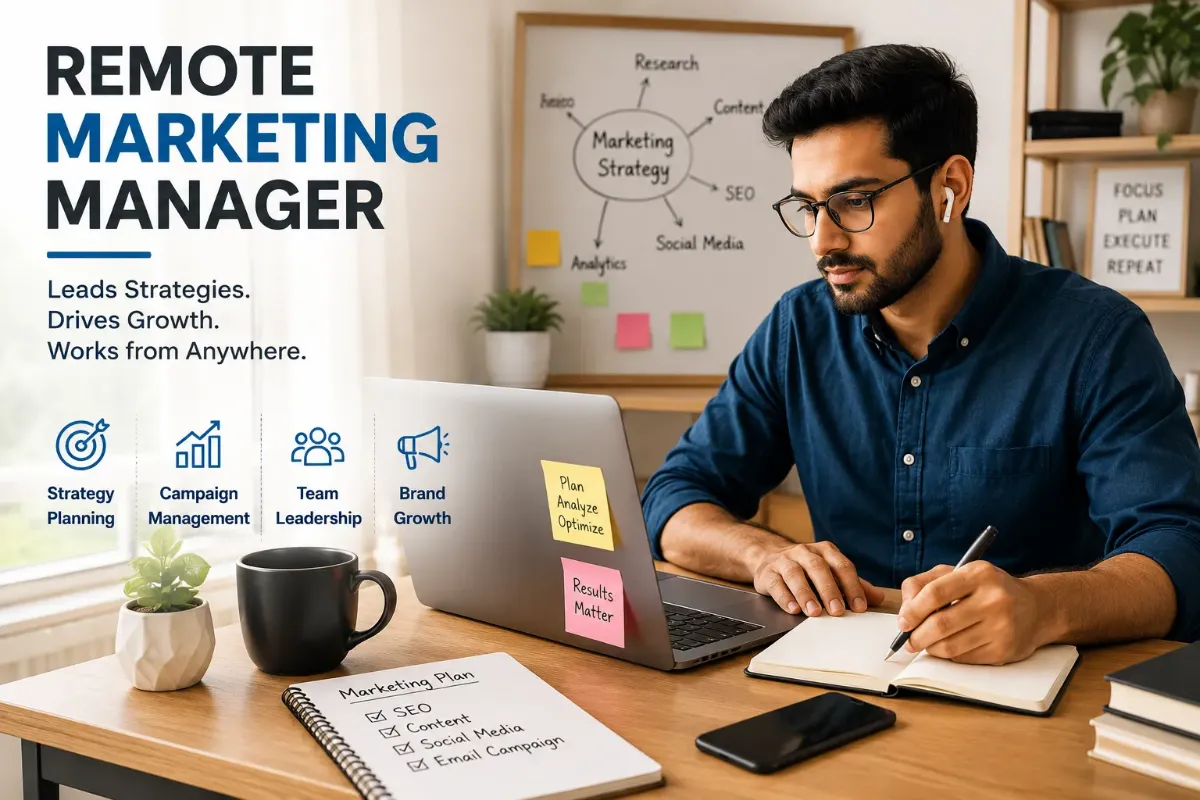
Learn how a remote marketing manager drives growth, what they cost, and how to hire one in 2026 without the overhead of a full-time in-house hire.
What a Remote Marketing Manager Actually Does
A remote marketing manager owns your growth engine without sitting in your office. They set strategy, run the channels, manage the budget, and report on what is working, all from wherever they happen to be based. In 2026, this model has gone from a workaround to a default. Distributed teams are normal, the best marketing talent is rarely in your zip code, and the tools that make remote work seamless are now standard.
The role is broader than a single specialist. A good remote marketing manager connects the dots between paid ads, SEO, email, content, and your website so the pieces reinforce each other instead of competing for budget. Think of them as the person who turns scattered tactics into a coherent plan.
Strategist, operator, and analyst in one
The strongest hires wear three hats. As a strategist, they decide where to invest. As an operator, they execute or coordinate the people who do. As an analyst, they read the numbers and adjust. If you only need one of those hats, you may want a specialist or a tool instead. If you need all three, a remote marketing manager is usually the most efficient way to get them. Not sure which gaps you have? A free marketing audit scores your site across 77 factors and shows exactly where a manager would create the most lift.
Why Companies Hire Remotely in 2026
The math is simple. A senior in-house marketing leader in a major metro can cost well into six figures once you add benefits, payroll taxes, equipment, and office space. A remote marketing manager, whether contract, fractional, or full-time, removes most of that overhead while giving you access to people who have run campaigns in far more industries than any local pool could offer.
Access to a wider talent pool
When you stop limiting yourself to commuting distance, you can hire the person who has already scaled three businesses like yours. That depth of pattern recognition is worth more than physical proximity.
Flexibility that matches your stage
Early-stage companies rarely need a full-time marketing chief. They need someone senior for ten or twenty hours a week. A remote arrangement makes that fractional model practical. As you grow, you can expand the engagement instead of rehiring. If you are weighing this against building everything yourself, our DIY marketing plan walkthrough helps you decide what to keep in-house and what to delegate.
Skills and Tech Stack to Look For
A capable remote marketing manager in 2026 is fluent across a modern stack. On paid media, that means Google Ads and Meta. On organic, it means technical and content SEO. On retention, it means email and lifecycle marketing. And increasingly, it means using AI tools to move faster without sacrificing quality.
The tools that matter
Look for comfort with platforms like Google Ads, Meta Ads Manager, an analytics suite, a CMS such as WordPress or Shopify, and email tools. Just as important is fluency with AI assistants for research, drafting, and analysis. The right manager will lean on tools like our blog content generator and keyword research tool to scale output, then apply human judgment on top.
Soft skills you cannot skip
Remote work rewards clear writers and proactive communicators. A manager who documents decisions, sends crisp weekly updates, and flags problems early will outperform a more technical hire who goes quiet. Communication is the difference between a remote relationship that thrives and one that quietly drifts.
A Realistic 12-Month Growth Roadmap
Good remote marketing managers do not promise overnight results. They build in phases. Here is what a sensible first year looks like.
Months 1 to 3: foundation
Strategy, audience research, messaging, and channel setup come first. Your manager audits what exists, fixes the obvious leaks, and launches a small set of focused campaigns. This is groundwork, not fireworks. Want a head start before they even begin? Run a free marketing audit so day one starts with a prioritized action plan instead of a blank page.
Months 4 to 6: expansion
With early data in hand, your manager scales what works and adds new channels carefully. A second paid platform, a content engine, or an email nurture sequence might come online here. A content calendar generator keeps the cadence consistent as output grows.
Months 7 to 12: optimization and profit
The final phase is about efficiency. Conversion rate work, audience refinement, and budget reallocation push your cost per acquisition down while revenue climbs. By month twelve, you should have a documented, repeatable system rather than a pile of one-off wins.
Remote Manager vs. Agency vs. Full-Time Hire
You have three real options, and each fits a different situation. A full-time in-house hire makes sense once marketing is core to your model and you can keep a senior person fully busy. An agency suits companies that want a whole team and have the budget to match. A remote marketing manager sits in the middle, offering senior ownership at a fraction of the cost and commitment.
When the middle path wins
If you want one accountable person who actually owns outcomes, communicates directly, and adapts the plan to your reality, a remote manager usually beats an agency where you are one account among many. If you are still comparing approaches and budgets, our pricing overview lays out what different engagement levels include. And if you decide you are ready to bring someone on, you can hire a marketer through Brainito and skip the long search.
Whichever route you choose, start from data. Reading more on growth tactics in our blog and running a free marketing audit first means you brief your new hire with a clear plan instead of a guess.
Frequently Asked Questions
How much does a remote marketing manager cost in 2026?
It varies widely by scope and seniority. Fractional engagements often run a few thousand dollars a month for senior strategy and oversight, while full-time remote managers command salaries comparable to in-office roles minus the overhead. The right number depends on how many hours and how much hands-on execution you need. Start by mapping your gaps with a free marketing audit, then match the engagement to the work that actually moves the needle.
Can a remote marketing manager really replace an in-house team?
For many small and mid-sized businesses, yes. A skilled remote manager sets strategy and either executes directly or coordinates a lean network of specialists. They will not replace a ten-person department, but they often outperform an underutilized single in-house hire, especially in the first few years of growth.
How do I keep a remote manager accountable?
Agree on clear metrics and a regular reporting rhythm before you start. Weekly written updates, a shared dashboard, and monthly strategy reviews keep everyone aligned. The best managers volunteer this structure themselves. If you want help building the plan they report against, our DIY marketing plan guide is a solid starting point.