
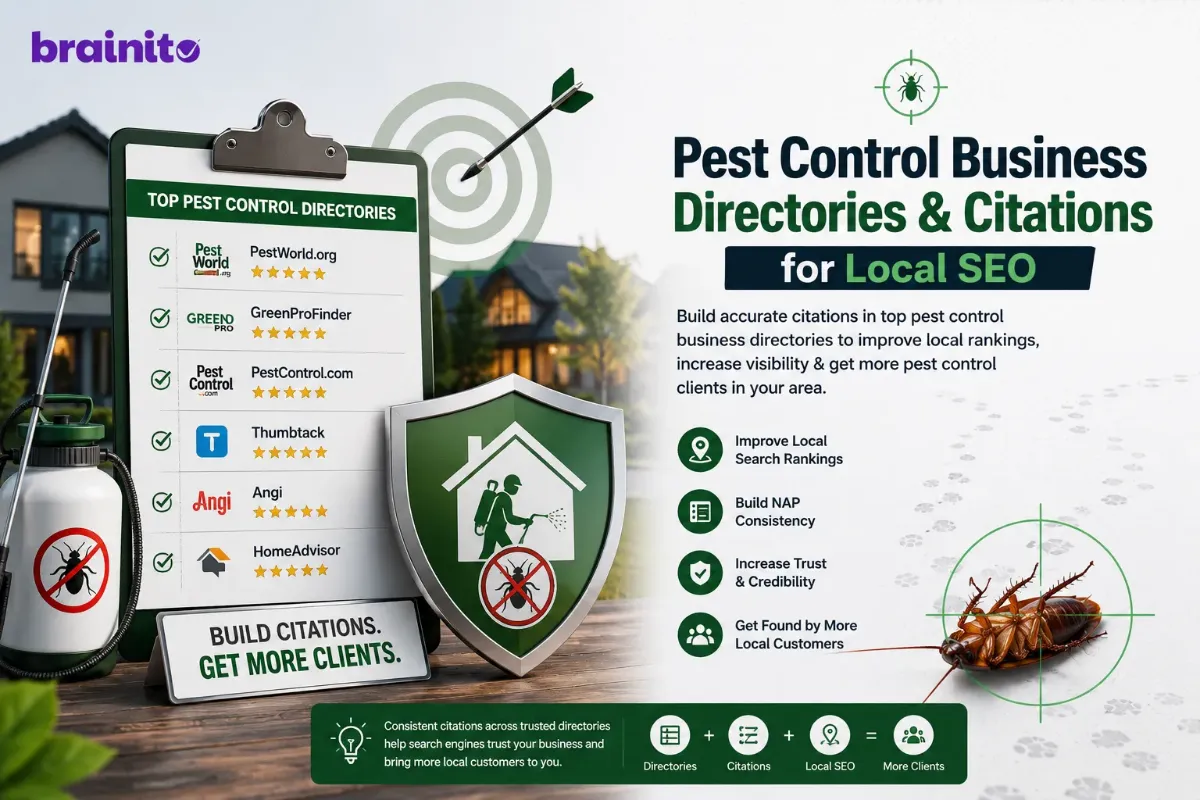
Build local SEO for your pest control business with consistent citations and the right directories. Get the listings, NAP rules, and a free audit plan.
Why Citations Still Drive Pest Control Local SEO
When a homeowner spots a wasp nest or a trail of ants, they do not browse for hours. They search "pest control near me," tap one of the first map results, and call. Winning that moment is what local SEO is about, and for pest control companies, business directories and citations remain one of the most reliable levers you can pull.
A citation is any online mention of your business name, address, and phone number (your NAP). Search engines treat these mentions as votes of confidence. When your details appear consistently across trusted directories, Google gains confidence that your business is real, established, and located where you say it is. That confidence feeds directly into your ranking in the local map pack.
The best part is the effort-to-reward ratio. Most foundational directories are free or low cost, and a single afternoon of setup can keep paying off for years. If you want to see where your current local presence stands before you start, run a free marketing audit to benchmark your visibility against competitors in your service area.
NAP Consistency: The Rule That Beats Volume
New pest control owners often assume more listings automatically means better rankings. The truth is more nuanced. One inconsistent detail across fifty directories can do more harm than fifty perfect listings do good. Search engines look for agreement, and conflicting information creates doubt.
What "consistent" actually means
Your business name, address, and phone number should be byte-for-byte identical everywhere. "Suite 200" in one place and "Ste. 200" in another counts as a mismatch. A tracking phone number on your site but a different number on Yelp counts as a mismatch. Pick one canonical format and enforce it across every profile.
Build a master NAP sheet
Before you create a single new listing, document your exact business name, full address, primary phone, website URL, and service categories in one document. Treat it as the single source of truth. Every directory submission copies from that sheet, never from memory. This small discipline prevents the slow drift that quietly erodes local rankings over time.
The Pest Control Directories Worth Your Time
Not every directory deserves the same attention. Focus first on the platforms that carry weight with both search engines and actual customers, then expand into niche and regional listings.
Start with the non-negotiables
Your Google Business Profile is the single most important listing you own. It feeds the map pack directly and lets you collect reviews, post updates, and answer questions. Claim and fully complete it before anything else. Then secure Bing Places, Apple Business Connect, and your Yelp listing, since these power the maps and assistants millions of people use daily.
Add the broad local players
General directories like Angi, Thumbtack, HomeAdvisor, Better Business Bureau, Nextdoor, and the Yellow Pages still pull real pest control searches and pass authority. Many homeowners specifically browse these platforms when vetting a contractor.
Layer in industry and regional listings
Pest control specific directories and trade association profiles signal topical relevance. Combine them with chamber of commerce pages and local news business directories in your city. These hyper-local citations are gold for ranking in a specific service area. Want a structured rollout instead of a scattershot approach? A DIY marketing plan can sequence your directory work alongside the rest of your local strategy.
Optimizing Each Listing Beyond the Basics
Claiming a profile is step one. A bare listing rarely converts. The directories that move rankings and win calls are the ones you treat like mini landing pages.
Fill every field
Add your full service list (termite treatment, rodent removal, bed bug heat treatment, mosquito control, and so on), service area zip codes, hours, payment methods, and a keyword-aware business description. Completeness is a ranking signal, and empty fields are missed opportunities to match a searcher's intent.
Use real photos and categories
Upload genuine photos of your trucks, technicians, and treatments rather than stock images. Choose the most specific primary category available ("Pest Control Service") and add relevant secondary categories. Specific categories help search engines match you to the exact query a customer types.
Make reviews part of the routine
Reviews influence both rankings and click-through. Build a simple habit of asking every satisfied customer for a review on Google, then a rotating second platform. Respond to every review, positive or negative, with a professional tone. To turn happy customers into reviews and referrals, a few well-timed email subject lines can dramatically lift your request open rates.
Avoiding the Mistakes That Quietly Sink Rankings
Most pest control businesses do not fail at local SEO because they did too little. They fail because a handful of avoidable errors undercut everything else.
Duplicate and abandoned listings
Over the years, businesses accumulate duplicate profiles, often created by aggregators or former employees. Duplicates split your authority and confuse customers. Audit for them, merge or claim where possible, and request removal of the rest.
Keyword stuffing your business name
Adding "Best Cheap Pest Control" to your legal business name violates Google's guidelines and risks suspension. Use your real name and let your categories and content do the keyword work.
Set it and forget it
Hours change, you add services, you move offices. Stale listings send searchers to wrong numbers and closed doors. Schedule a quarterly review of your top directories. If managing all of this feels like a second job, you can hire a marketer to own your local presence while you run the business. Either way, start by running a free marketing audit that scores your site across 77 factors and hands you a prioritized action plan, so you fix what matters first.
Turning Citations Into a Repeatable System
Directory work is not a one-time project. The companies that dominate local search treat it as an ongoing system layered on top of strong content and a fast, trustworthy website.
Pair your citation strategy with a steady stream of helpful local content. Pages on seasonal pests in your region, treatment guides, and neighborhood-specific service pages give search engines more reasons to rank you and more landing spots for your listings to link to. A content calendar generator keeps that publishing rhythm consistent without the planning overhead.
Tie it together with measurement. Track which directories actually send calls and form fills, double down on those, and prune the dead weight. When citations, content, reviews, and a solid website all reinforce each other, your pest control business stops competing for scraps and starts owning the map pack. For deeper reading on local strategy, browse the Brainito blog.
Frequently Asked Questions
How many directories does a pest control business actually need?
Quality beats quantity. Start with the core platforms (Google Business Profile, Bing Places, Apple Business Connect, Yelp), add the major home-service directories, then layer in industry and local listings. Twenty to thirty accurate, fully completed citations outperform a hundred half-finished ones. Consistency across them matters far more than the raw count.
Are paid directory listings worth it for pest control?
Sometimes. Free foundational listings should always come first because they deliver most of the SEO benefit. Paid placements can be worthwhile when a directory ranks well for your local keywords or genuinely sends qualified leads. Test one at a time, track the calls it produces, and keep only the ones that pay for themselves.
How long before citations improve my local rankings?
Local SEO is gradual. After fixing inconsistencies and building solid citations, many businesses see movement within two to three months, with stronger gains as reviews and content accumulate. Running a free marketing audit first helps you fix the highest-impact issues early, which shortens the time to results.