
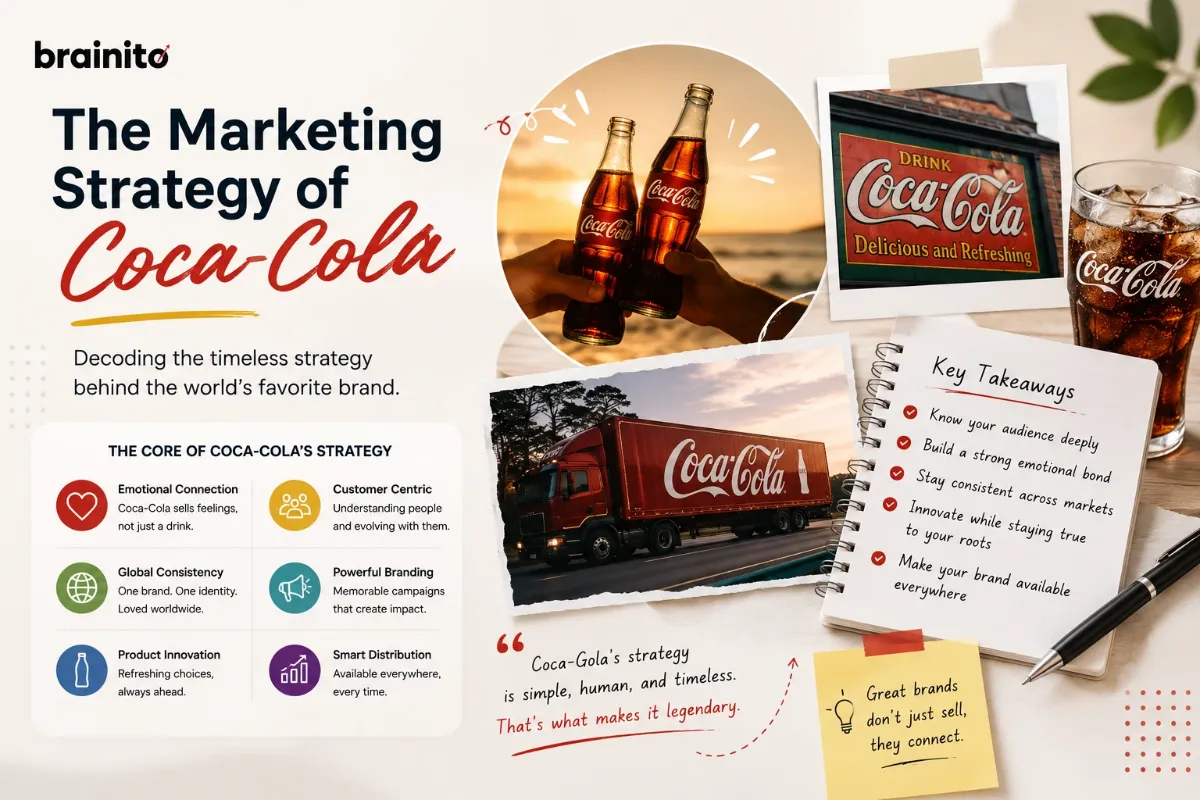
Unpack the Coca-Cola marketing strategy behind branding, emotional marketing, and distribution, plus practical lessons small businesses can use today.
Why Coca-Cola Is the Marketing Case Study Worth Studying
Few brands have shaped modern marketing the way Coca-Cola has. A simple sugary drink became one of the most recognized names on the planet, available in more than 200 countries and instantly identifiable from a single curve of red. That kind of reach is not luck. It is the result of decades of disciplined choices around identity, emotion, and availability.
The good news for smaller businesses is that the principles behind the Coca-Cola marketing strategy are not locked behind a billion dollar budget. The mechanics scale down. You can apply the same thinking to a local cafe, a SaaS startup, or an online store. This guide breaks the strategy into the pieces that actually matter, then translates each one into something you can act on this month.
If you want a fast read on where your own brand stands first, our free marketing audit scores your website across 77 factors and hands back a prioritized action plan.
Branding: Consistency Is the Real Superpower
Coca-Cola's logo, the contour bottle, and the red and white palette have stayed remarkably stable for generations. That consistency is the engine behind instant recognition. When a customer sees the color from across a store, they already know the promise before reading a single word.
What consistency actually buys you
Repetition builds trust. Every time your visuals, tone, and message line up, you reinforce a single idea in the customer's mind. Brands that constantly reinvent their look reset that memory and start from zero each time.
How a small business applies it
Lock down a simple identity: one logo, two or three core colors, one font pairing, and a short brand voice description. Then use it everywhere without exception, from your homepage to your email signature. If you do not have a documented system yet, a DIY marketing plan is a practical way to define your brand basics and keep every channel aligned.
Emotional Marketing: Sell a Feeling, Not a Formula
Coca-Cola rarely talks about taste profiles or ingredients. Instead, it sells happiness, togetherness, and shared moments. Campaigns like Share a Coke turned a bottle into a personal gift by printing names on the label, and holiday advertising tied the brand to warmth and family.
This is the heart of emotional marketing: people remember how a brand made them feel far longer than they remember a feature list. A feeling is harder for competitors to copy than a price point.
Putting emotion to work
Identify the deeper outcome your product delivers. A bookkeeping tool does not really sell spreadsheets, it sells peace of mind. Write your headlines and social posts around that emotional payoff. Customer stories and before and after moments do this naturally. When you need help shaping that messaging at scale, our blog content generator can turn a single emotional angle into a steady stream of posts.
Distribution: Be Within Arm's Reach
Coca-Cola's famous internal goal was to put the product within arm's reach of desire. The company built a vast network of bottling partners, retailers, and vending machines so that wherever thirst struck, a Coke was nearby. Distribution, not just advertising, is what converts demand into sales.
For a modern small business, distribution means showing up in the channels your audience already uses. That could be your Google Business Profile, a marketplace listing, a strong email list, or the social platforms where your buyers spend time.
Make yourself easy to find
Map the moments when a customer might want what you offer, then make sure you appear there. A neglected local listing or a buried product page is the digital version of an empty shelf. Tools like our GMB audit tool help you tighten local visibility, while a clear content calendar generator keeps you consistently present across channels instead of going quiet for weeks.
Global Reach, Local Touch: Adapt Without Losing Yourself
One subtle reason Coca-Cola travels so well is its balance of global identity and local relevance. The core brand stays constant, but flavors, packaging, language, and even the names printed on bottles flex to match each market. Customers feel seen without the brand ever feeling diluted.
Small businesses can borrow this balance even within a single country. Your core promise stays fixed, but the way you phrase it can shift for different audience segments, seasons, or platforms. The message that lands on LinkedIn is not the one that lands on Instagram, yet both should clearly belong to the same brand.
The practical move is to define one fixed core, your mission and values, then allow controlled flexibility in tone and format around it. If segmenting your audience feels overwhelming, a structured plan or a conversation with a specialist through hire a marketer can help you map which messages fit which audience.
6 Coca-Cola Lessons You Can Apply This Month
Here is the strategy distilled into moves a small team can make without a global budget.
- Pick an identity and freeze it. Consistency compounds. Stop tweaking your logo and colors.
- Lead with emotion. Name the feeling your product delivers and build messaging around it.
- Show up where demand lives. Treat weak listings and dead channels like empty shelves.
- Stay flexible at the edges. Adapt tone per platform while keeping a fixed core.
- Use partnerships. Collaborations and affiliates extend reach without proportional cost.
- Compete on meaning, not price. A discount war is a race to the bottom.
Pick one of these and execute it fully rather than dabbling in all six. To find which lever will move the needle fastest for your site, run the free marketing audit and let the prioritized report decide your next step. You can also browse more practical playbooks on the blog.
Frequently Asked Questions
What is the core of Coca-Cola's marketing strategy?
At its core, the strategy combines a rigidly consistent brand identity, emotional storytelling that sells happiness and connection rather than product features, and aggressive distribution that keeps the product within easy reach everywhere. Local adaptation on top of that global core lets it feel relevant in every market.
Can a small business really copy Coca-Cola's approach?
Yes, the principles scale down. You will not match the ad spend, but you can lock a consistent identity, lead with emotion, and make yourself easy to find in your own channels. Start small with a DIY marketing plan and expand as results come in.
Where should I start if I only have limited time?
Start with visibility and consistency, since those create the foundation everything else builds on. The quickest diagnostic is our free marketing audit, which scores your site across 77 factors and tells you exactly which fix to tackle first.