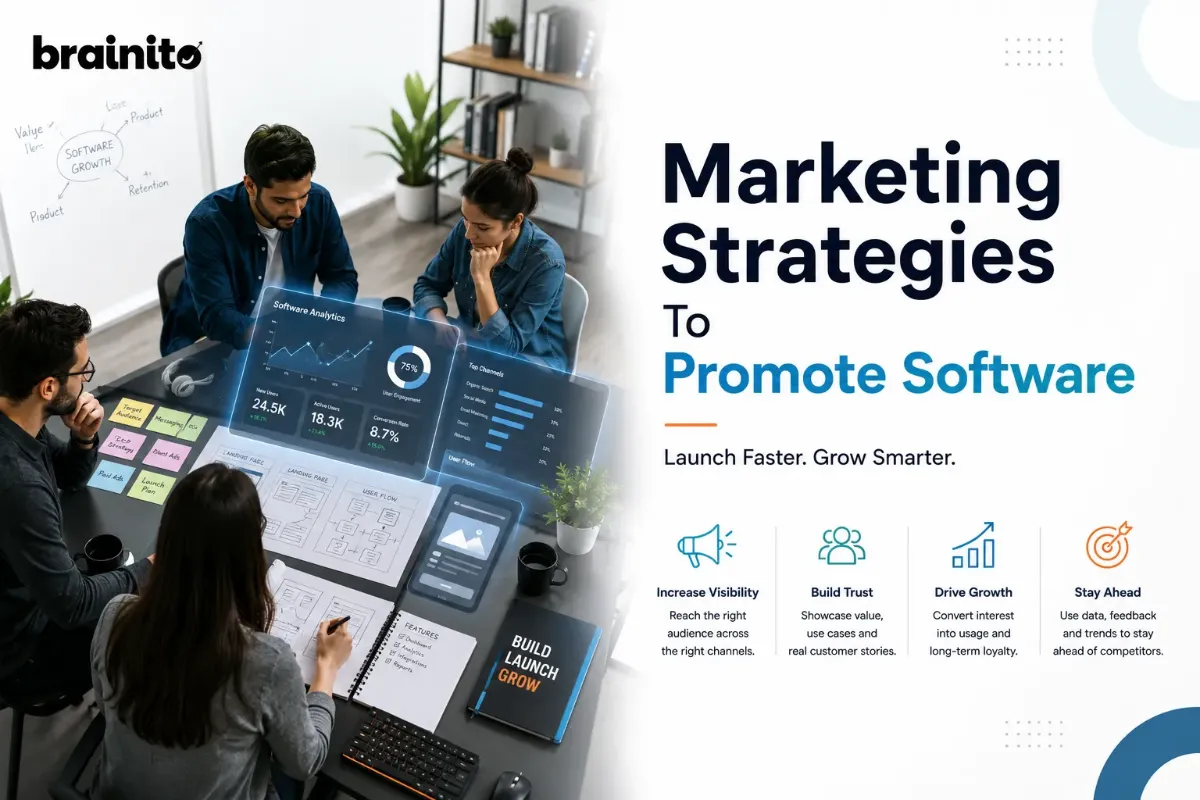
Proven marketing strategies to promote software: free trials, SEO, paid ads, case studies, and funnels that turn signups into paying customers.
Why Software Marketing Needs Its Own Playbook
Selling software is not like selling a physical product. There is no shelf, no packaging, and often no price tag the buyer can glance at before committing. Instead, you are asking people to trust an intangible tool with their workflow, their data, and sometimes their entire business. That is a harder sell, and it demands a marketing approach built around demonstration, trust, and momentum rather than hype.
The good news is that software is uniquely measurable. Every click, signup, trial start, and feature interaction can be tracked, which means you can refine your marketing with real evidence instead of guesswork. The strategies below work whether you sell a developer tool, a SaaS dashboard, or a mobile app, because they all share one goal: move a curious visitor toward an "aha" moment as quickly as possible.
Before you scale any single channel, it helps to know where your current funnel leaks. A free marketing audit grades your site across 77 factors and hands back a prioritized action plan, so you spend budget on the gaps that actually cost you signups.
Let the Product Sell Itself With Free Trials and Freemium
The fastest way to overcome skepticism is to let prospects experience the product directly. A free trial or freemium tier removes the biggest objection in software buying: "Will this actually work for me?" When someone uses your tool and hits a genuine moment of value, the purchase decision becomes far easier.
Design the trial around activation, not duration
A 14-day trial means nothing if the user never reaches the feature that proves your worth. Map the shortest path to value and remove every step that does not help the user get there. Onboarding emails, tooltips, and a clear first action all matter more than the length of the trial window.
Use freemium as a top-of-funnel engine
Freemium plans turn your product into a lead magnet. Free users become a steady pool you can nurture toward paid tiers as their needs grow. The trick is drawing the line so the free version delivers real utility while leaving clear reasons to upgrade. If you want a structured way to plan these tiers and the campaigns around them, a DIY marketing plan gives you a repeatable framework.
Build Landing Pages and Funnels That Convert
Traffic without a destination is wasted. Every campaign should point to a focused landing page built around a single action: start a trial, book a demo, or download the app. Strip away navigation clutter, lead with the outcome your software delivers, and back it up with social proof.
The anatomy of a high-converting software landing page
Strong pages share a pattern: a benefit-driven headline, a short demo video or product screenshot, three to four concrete value points, trust signals like logos or review scores, and a single obvious call to action. Resist the urge to explain every feature. Sell the transformation, then let the trial handle the details.
Connect pages with an email funnel
Most visitors will not convert on the first visit, so capture the email and keep the conversation going. A simple sequence moves prospects from awareness to interest to decision: a welcome message, a use-case story, a case study, and a time-limited nudge. Each email should earn the next open, which starts with the subject line. An email subject line generator helps you test angles before you send.
Win Organic Traffic With SEO and Content
Paid channels stop the moment you stop paying. Content compounds. A well-optimized blog and a sharp keyword strategy can deliver qualified visitors for years, and software buyers search constantly for solutions to specific problems your product already solves.
Target intent, not just volume
The phrase "best project management software for agencies" converts far better than a generic high-volume term, because it signals someone ready to choose a tool. Build clusters of content around these intent-rich queries. Start by mapping demand with a keyword research tool, then prioritize topics where you can realistically rank and where the searcher is close to a buying decision.
Turn expertise into a content engine
Comparison guides, how-to tutorials, and integration walkthroughs are perfect for software because they meet buyers mid-research. If a blank page slows you down, a blog content generator and a content brief generator help you outline and draft faster, while keeping each piece focused on a real search query. Pair that with a content calendar generator so publishing stays consistent instead of sporadic.
Drive Demand With Paid Ads and Retargeting
While organic traffic builds, paid channels give you control and speed. The goal is not to outspend competitors but to spend smarter by targeting intent and re-engaging people who already showed interest.
Capture intent on Google
Search ads put your software in front of people actively looking for a solution. Tight ad groups, problem-aware keywords, and landing pages that match the query keep your cost per signup low. A clean account structure is what separates profitable campaigns from money pits, and a Google Ad structure generator helps you organize campaigns before you spend a cent.
Reach niche audiences on social
Facebook and other social platforms let you target by role, interest, and behavior, which is ideal for reaching a specific software buyer. Lead with a hook that names the pain point, then point to a trial. A Facebook ad copy generator speeds up testing multiple angles.
Bring back the ones who left
Most visitors leave without converting. Retargeting keeps your software visible across the web and social feeds, nudging warm prospects back to finish the signup they started. It is almost always among the most cost-efficient paid tactics in a software funnel.
Build Trust With Proof, Listings, and PR
Buyers do not just want to know what your software does. They want evidence that it works for people like them. Trust signals shorten the sales cycle and justify the price.
Turn customers into case studies
A concrete case study with real numbers ("cut reporting time by 40%") is more persuasive than any feature list. Document how a customer used your tool, what changed, and the measurable result. These stories fuel landing pages, emails, and sales conversations alike.
Get listed where buyers compare
Software directories and review platforms like Capterra, G2, and Product Hunt are where buyers shop and compare. A strong listing with steady reviews builds credibility and captures high-intent traffic you would otherwise pay for. Encourage happy users to leave honest reviews as part of your onboarding flow.
Earn attention with PR
A thoughtful launch announcement, a data-driven study, or a founder story can earn coverage that paid ads cannot buy. PR builds authority and backlinks, which also strengthens your SEO. If you would rather have an expert orchestrate the launch, you can hire a marketer to manage outreach and positioning, and you can compare engagement options on the pricing page.
Frequently Asked Questions
What is the single most effective way to market software?
There is no one tactic that wins alone, but free trials and freemium offers consistently outperform because they let the product prove its own value. Pair a frictionless trial with content that ranks for buyer-intent keywords and retargeting that brings back visitors who did not convert, and you have a funnel that compounds over time. Start by finding the weak link in your current funnel with a free marketing audit.
How much should a software company spend on marketing?
Early-stage software companies often invest a larger share of revenue in marketing to build momentum, then settle into a steadier ratio as organic channels mature. Rather than fixating on a percentage, anchor spending to your cost to acquire a customer versus that customer's lifetime value. If acquisition stays well below lifetime value, you can confidently scale the channels that work.
How long before SEO and content show results?
Content marketing is a medium-term play. Most software companies see meaningful organic traffic within a few months of consistent publishing, with momentum building as pages earn authority. Use paid ads to generate signups now while your content library grows into a durable, lower-cost acquisition channel. For a structured rollout, follow a DIY marketing plan or browse more guides on the blog.