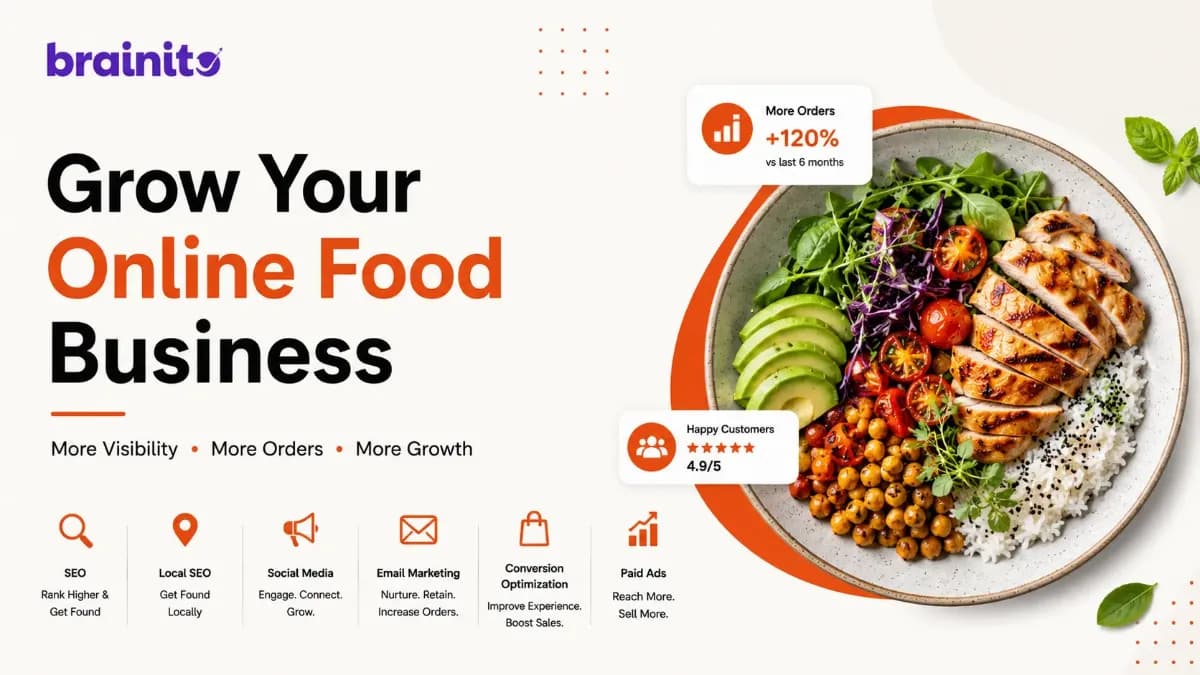
Proven marketing strategies for food delivery businesses: local SEO, paid ads, loyalty, and social tactics that win repeat orders and grow revenue fast.
Why Food Delivery Marketing Is Different
Food delivery sits at the intersection of impulse, hunger, and convenience. A customer rarely plans an order days in advance. They decide in minutes, and the brand that shows up first, looks appetizing, and promises a fast arrival usually wins the order. That immediacy changes how you market. You are not building slow brand awareness over months. You are competing for a decision that happens right now, often on a phone, often while someone is already hungry.
The good news is that this urgency rewards businesses that get the fundamentals right. A clear value proposition, fast delivery, and consistent quality turn first-time orders into a habit. The strategies below focus on attracting new customers and, just as importantly, keeping the ones you already have. If you want to know which levers matter most for your specific operation, start with a free marketing audit to see where you stand before you spend a dollar on ads.
Know Your Customer Before You Spend a Rupee
Every strong marketing plan begins with a clear picture of who orders from you and why. A late-night student craving comfort food behaves very differently from a busy family ordering dinner on a weeknight. When you understand these segments, your messaging, timing, and offers all sharpen.
Simple ways to gather customer insight
You do not need an expensive research firm. Send a short post-order survey, read your reviews carefully, and watch which menu items get reordered. Pay attention to the questions customers ask in chat or comments, because those questions reveal friction. Social media is a goldmine too. Notice which posts spark replies and which fall flat.
Once you have a clear customer profile, document it. A focused DIY marketing plan built around real customer segments will always outperform generic tactics copied from a competitor.
Win Local Search and Google My Business
When someone searches "food delivery near me" or "best biryani delivery," you want to appear at the top of the map results. Local SEO is one of the highest-return channels for delivery businesses because the intent is immediate and the customer is nearby.
Optimize your local presence
Claim and fully complete your Google Business Profile. Add accurate hours, your delivery radius, high quality food photos, and your most popular dishes. Encourage happy customers to leave reviews, and respond to every one, positive or negative. Consistent name, address, and phone details across directories signal trust to search engines.
Run a GMB audit to spot gaps in your listing, and use a keyword research tool to find the exact phrases hungry customers type when they are ready to order. Targeting those terms on your menu pages and blog content compounds over time.
Paid Ads That Drive Immediate Orders
SEO builds momentum slowly. Paid advertising buys visibility today, which is perfect for a business that depends on impulse decisions. The two workhorses for food delivery are Google Search ads and social ads on Facebook and Instagram.
Google Search ads for high intent
When a person searches for delivery, they are ready to buy. A well-structured search campaign puts you in front of that intent instantly. Keep your ad groups tight and your landing pages fast. Use a Google ad structure generator to organize campaigns so your budget goes to the searches that convert.
Facebook and Instagram for discovery
Social ads excel at reaching people before they actively search. Mouth-watering visuals, a clear offer, and tight local targeting work best here. Test a few angles with a Facebook ad copy generator and let the data tell you which message earns the cheapest order.
Keep Customers Coming Back
Acquiring a new customer costs far more than keeping an existing one. In food delivery, where repeat ordering is the whole point, retention is where the real profit lives. A customer who orders weekly is worth dozens of one-time buyers.
Loyalty and surprise-and-delight
Build a simple loyalty program: a free item after a set number of orders, or points that unlock discounts. Small unexpected gestures, like a complimentary dessert or a handwritten thank-you note, create the kind of delight that earns word-of-mouth. Speed and reliability matter too. Promise a realistic delivery window and beat it consistently.
Email and SMS that feel personal
Build a subscriber list and send relevant offers timed to ordering habits. A lunch promo at 11am lands better than a random blast. Strong subject lines decide whether your message even gets opened, so test variations with an email subject line generator before you hit send.
Social Proof, Influencers, and Content
People trust other people more than they trust ads. Reviews, user photos, and local creators carry enormous weight in the food space because eating is social and visual. Encourage customers to tag your brand, and repost their content to build a steady stream of authentic proof.
Partner with local creators
You do not need a celebrity. A neighborhood food blogger with an engaged local audience often drives more orders than a national influencer with vague reach. Offer a free tasting in exchange for an honest review and you turn one meal into dozens of new customers.
Content keeps your brand discoverable between campaigns. Recipe stories, behind-the-scenes kitchen posts, and neighborhood guides all attract organic traffic. A content calendar generator helps you stay consistent, and our marketing blog is full of frameworks you can adapt. When you are ready to pressure-test your whole funnel, the free marketing audit scores your site across 77 factors and hands you a prioritized action plan so you know exactly what to fix first.
Frequently Asked Questions
What is the most cost-effective marketing channel for a food delivery business?
Local SEO and a fully optimized Google Business Profile usually deliver the best long-term return because they capture customers at the exact moment they want to order, with no ongoing ad cost. Pair that organic foundation with targeted paid search for immediate volume, then reinvest in retention through loyalty and email. If you are unsure where your biggest gaps are, a free marketing audit will show you which channel to prioritize first.
How much should a food delivery business spend on marketing?
A common benchmark is 7 to 12 percent of revenue, weighted toward acquisition early on and shifting toward retention as your customer base grows. The right number depends on your margins and delivery radius, so start small, measure cost per order, and scale only the channels that pay back. A clear marketing plan keeps that spend disciplined.
Should I rely on third-party delivery apps or build my own ordering channel?
Third-party apps offer reach but take a heavy commission and own the customer relationship. Building your own ordering channel, even a simple website with online payment, protects your margins and your customer data. The smart approach is to use aggregators for discovery while steadily nudging repeat customers to order direct, and bringing in a marketing expert can accelerate that transition.