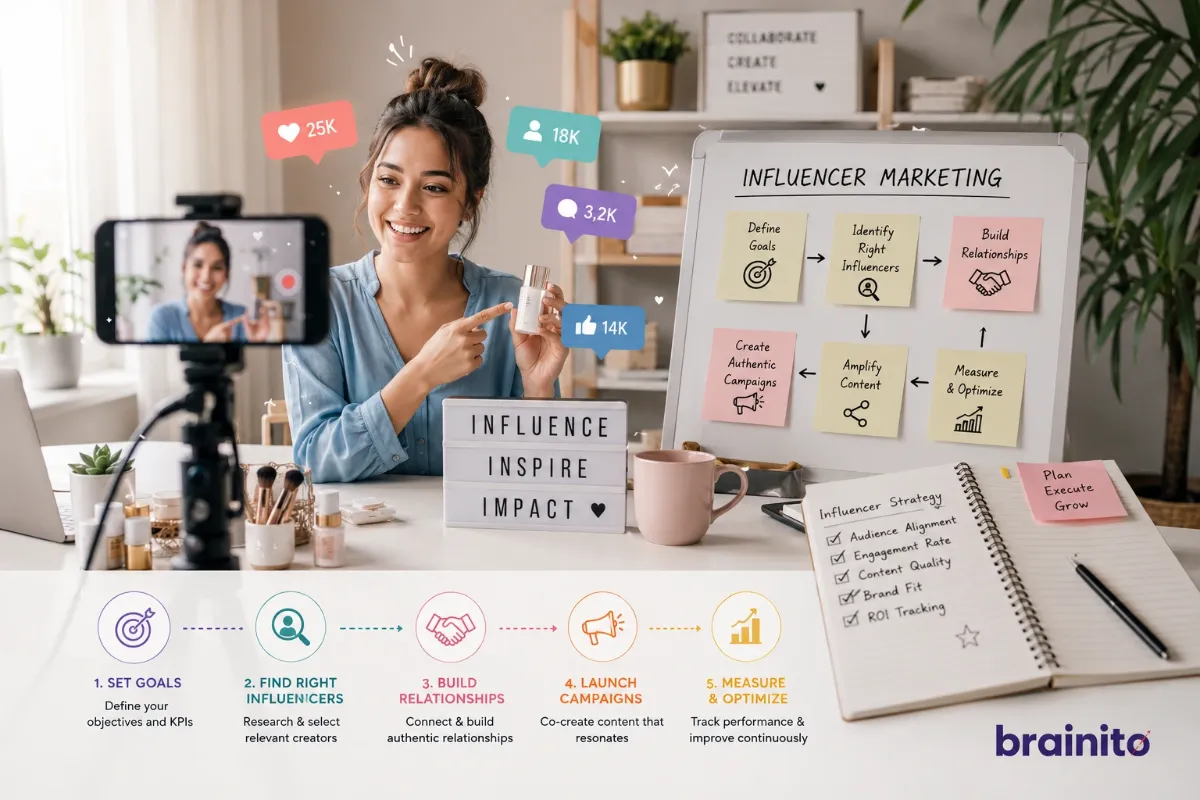
Learn how influencer marketing works in 2026, how to pick the right creator tier, negotiate deals, and measure ROI that actually grows revenue.
Why Influencer Marketing Still Wins in 2026
Influencer marketing has grown from a novelty into one of the most dependable channels a brand can run. Instead of interrupting people with ads, you borrow the trust a creator has already earned with an engaged audience. That trust translates into attention, clicks, and sales at a level traditional display advertising rarely matches.
The reason is simple: audiences follow creators because they genuinely like them. When a familiar voice recommends your product, it lands as a personal tip rather than a corporate pitch. Studies from research firms have shown brands can see meaningful revenue lifts, often in the double digits, when campaigns are matched to the right audience.
If you are still deciding where influencer marketing fits alongside your other channels, a free marketing audit can show you where your brand awareness gaps are and whether creator partnerships are the fastest way to close them.
Understanding Influencer Tiers and Reach
Not every creator serves the same goal. Choosing the right tier is the single biggest factor in whether a campaign feels expensive or efficient. Here is how the landscape breaks down.
The Five Creator Tiers
- Mega-influencers (1M+ followers): Massive reach and celebrity-level awareness, but lower engagement rates and premium pricing.
- Macro-influencers (100K to 1M): Strong reach with more topical focus, ideal for national campaigns.
- Mid-tier influencers (50K to 100K): A sweet spot balancing reach and community connection.
- Micro-influencers (10K to 50K): High engagement, niche trust, and budget-friendly rates.
- Nano-influencers (1K to 10K): Small but deeply loyal audiences that convert well for local or specialized products.
Bigger Is Not Always Better
Many brands assume the largest following delivers the best return. In practice, micro and mid-tier creators often outperform on engagement and cost per conversion. Their audiences trust them more personally, and a recommendation feels less like an ad. For most small and mid-sized businesses, a mix of micro-influencers usually beats a single expensive mega-partnership.
How to Find the Right Influencers
Reach means nothing if the audience does not match your buyer. Vetting is where good campaigns are made or lost.
What to Look For
- Audience alignment: Their followers should resemble your ideal customer in interests, location, and buying power.
- Genuine engagement: Look at comment quality, not just like counts. Real conversation signals real influence.
- Content fit: The creator's tone and aesthetic should feel natural next to your brand.
- Consistency: A steady posting cadence and stable follower growth beat sudden, suspicious spikes.
Start by searching hashtags in your niche, reviewing who your competitors partner with, and checking which creators your existing customers already follow. Keyword research can sharpen this by revealing the exact topics your audience searches for. Our keyword research tool helps you map those interest signals before you outreach.
Once you have a shortlist, cross-check it against your broader plan. A structured DIY marketing plan keeps influencer picks aligned with your positioning instead of chasing whoever has the biggest number.
Negotiating Deals and Setting Clear Terms
Once you have identified the right creators, the conversation turns to scope and price. Clear terms upfront prevent misunderstandings and protect your budget.
Elements Worth Defining
- Deliverables: Number of posts, stories, reels, or videos, and which platforms they run on.
- Usage rights: Whether you can repurpose the content in your own ads or on your site.
- Timeline: Posting dates, review windows, and any exclusivity period.
- Compensation: Flat fee, free product, affiliate commission, or a hybrid model.
Micro and nano creators are often open to product-plus-commission deals, which lowers your upfront risk. Larger creators typically want flat fees. Always request a media kit with past performance so you can benchmark expectations before you commit. Get every agreement in writing, even a simple email confirmation, so both sides know exactly what success looks like.
Running the Campaign and Measuring ROI
Execution is where planning becomes revenue. Give creators a clear brief, then trust their voice. Audiences can smell an over-scripted post, and authenticity is the whole point of this channel.
Track What Matters
- Unique promo codes and links: Assign each creator their own trackable code to attribute sales directly.
- Engagement metrics: Saves, shares, and comments often predict conversions better than raw reach.
- Traffic and conversions: Watch referral traffic and on-site actions during and after the campaign.
- Cost per acquisition: Divide total spend by conversions to compare creators fairly.
Keep your posting schedule organized so partnerships do not collide or leave gaps. A content calendar generator makes it easy to line up creator posts with your own promotions. After each campaign, run a quick free marketing audit to see how the added visibility affected your overall marketing health and what to prioritize next.
Common Mistakes to Avoid
Even strong campaigns stumble on avoidable errors. Watch for these traps.
- Chasing follower counts: A huge audience with weak engagement wastes budget.
- Skipping the brief: No guidance leads to off-brand or non-compliant posts.
- Ignoring disclosure rules: Sponsored content must be labeled clearly to stay compliant and trustworthy.
- One-and-done thinking: Repeat partnerships build familiarity and usually outperform single posts.
If managing all of this feels like a lot, you do not have to run it alone. You can hire a marketer to handle sourcing, outreach, and reporting, or explore transparent pricing for done-for-you support. For more tactics across channels, browse the Brainito blog.
Frequently Asked Questions
How much does influencer marketing cost?
Costs vary widely by tier. Nano and micro-influencers may accept free product or small fees, while macro and mega creators can charge thousands per post. A smart approach is to start with several micro-influencers, prove the model, then scale. Managed services can begin from as little as $100 for planning and coordination, separate from creator fees.
Which platform is best for influencer marketing?
It depends on where your buyers spend time. Instagram and TikTok dominate lifestyle, beauty, and consumer products, YouTube suits in-depth reviews, and LinkedIn works for B2B. Choose the platform where your target audience is most active rather than the one with the largest overall user base.
How do I measure whether a campaign worked?
Assign unique promo codes and tracked links to each creator, then measure conversions, referral traffic, and cost per acquisition against your goals. Engagement quality matters too, but revenue and cost per sale are the clearest signals of success.