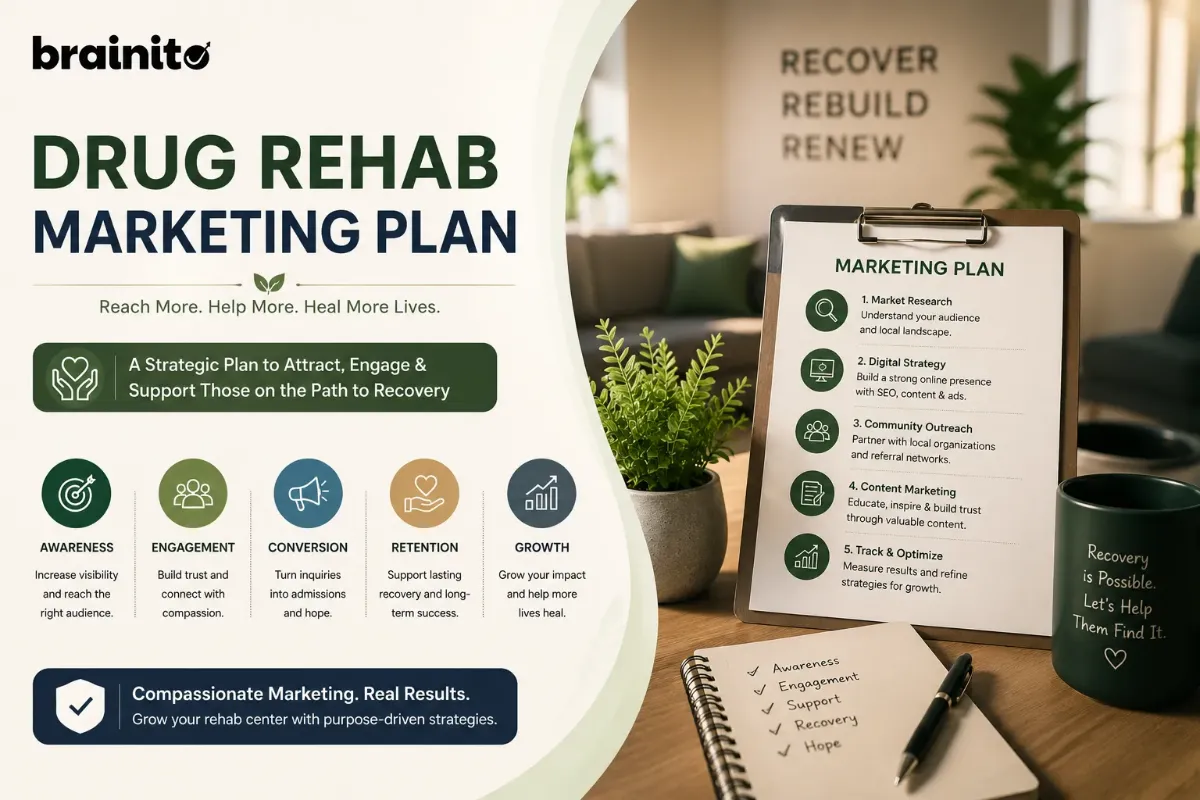
Build an ethical, high-converting drug rehab marketing plan for 2026. SEO, content, paid ads, and referrals that fill beds and build community trust.
Why Rehab Marketing Demands a Different Playbook
Marketing an addiction treatment center is unlike promoting almost any other service. The people searching for help are often in crisis, frequently looking on behalf of a loved one, and rightfully skeptical of slick sales pitches. On top of that, platforms like Google and Meta enforce strict advertising rules for substance abuse treatment, and trust signals such as accreditation and verified reviews carry enormous weight. A generic campaign that works for a gym or a restaurant will fall flat here.
The goal of a drug rehab marketing plan is not just to generate clicks. It is to build genuine credibility, reach families at the exact moment they are ready to act, and guide them toward a confidential conversation. That requires a coordinated approach across search, content, paid media, and real-world relationships.
If you are not sure where your current marketing stands, a free marketing audit is a fast way to see how your website performs against the factors that matter most: visibility, trust, and conversion readiness.
Build a Local SEO Foundation That Attracts the Right Searches
Most people looking for treatment start with a search engine, and many of those searches are local. Phrases like "inpatient rehab near me" or "alcohol detox in [city]" reveal high intent. Ranking for these terms organically gives you a steady, cost-efficient stream of inquiries that does not disappear the moment you pause ad spend.
Optimize for location and intent
Create dedicated pages for each program, level of care, and service area. Use natural, location-aware language in titles, headings, and body copy. Avoid keyword stuffing, which damages both rankings and reader trust. To find the exact phrases families are typing, run them through a keyword research tool and prioritize the terms with real search volume and treatment intent.
Claim and polish your Google Business Profile
Your local listing is often the first impression. Complete every field, add real photos of your facility, and respond to reviews thoughtfully. A quick Google Business Profile audit can surface gaps that quietly cost you visibility in the local map pack.
Use Content to Educate, Reassure, and Convert
Content marketing is where rehab brands earn trust before a single phone call. Families researching treatment have urgent, emotional questions: What does detox feel like? How long does recovery take? Does insurance cover this? Answering those questions honestly positions your center as a knowledgeable, compassionate guide rather than a pushy vendor.
Plan a content calendar around real questions
Map your topics to the journey: awareness articles for families just realizing there is a problem, comparison pieces for those weighing options, and detailed program pages for people ready to commit. Organizing this in a content calendar keeps publishing consistent, which search engines reward over time.
Lead with stories and structure
Anonymized success stories, staff introductions, and clear explanations of your clinical approach humanize your brand. To move faster without sacrificing quality, draft outlines with a content brief generator and sharpen headlines so your most important articles actually get clicked. The right framing turns a quiet blog into a referral engine.
Run Paid Ads That Respect the Rules and the Reader
Paid search and social can deliver inquiries quickly, but addiction treatment is a regulated category. Google requires LegitScript certification for many rehab advertisers, and ad copy must avoid exaggerated promises. Done correctly, pay-per-click still offers strong returns because you only pay when someone genuinely clicks, and you can target by location, device, and intent.
Structure campaigns for intent and compliance
Separate branded, treatment-type, and insurance-related keywords into distinct ad groups so your messaging stays relevant. A clean account structure also lowers cost per click. If you are building campaigns from scratch, a Google Ad structure generator helps you organize keywords and ad groups logically from day one.
Write copy that earns the click and the call
Your headlines should reassure, not oversell. Emphasize confidentiality, accreditation, and 24/7 availability. For social campaigns aimed at family members, test empathetic, supportive messaging using a Facebook ad copy generator to see which angles resonate before you scale spend.
Grow Through Referrals, Partnerships, and Community Presence
Some of the highest-quality admissions never come from an ad. They come from trusted referral relationships and a visible presence in the community. Building these channels takes time, but they compound into a durable advantage that competitors cannot simply outbid.
Develop professional referral relationships
Hospitals, therapists, primary care physicians, and even other treatment centers with different specialties can become steady referral sources. A dedicated business development representative who nurtures these relationships often pays for themselves many times over. Equip them with clear materials and a responsive intake process.
Show up offline and earn backlinks online
Host educational webinars for families, sponsor local recovery events, and partner with community organizations. These activities build reputation and frequently generate press mentions and links back to your site, which strengthen SEO. Run a backlink audit periodically to understand your link profile and spot new partnership opportunities. To pull these moving parts into one coherent roadmap, a structured DIY marketing plan keeps your team aligned on priorities and timelines.
Measure, Refine, and Decide When to Get Help
A marketing plan is only as good as the data behind it. Track which channels produce qualified inquiries, not just traffic. Monitor cost per admission, average response time to inquiries, and the keywords that drive your best calls. Small improvements in intake response speed alone can meaningfully lift your conversion rate.
Review performance monthly and reallocate budget toward what works. If your organic visibility is weak or your website is not converting visitors into calls, start with diagnosis before you spend more. A free marketing audit scores your site across 77 factors and returns a prioritized action plan, so you fix the issues that move the needle first instead of guessing.
When the workload outgrows your internal team, it can make sense to hire a marketer who understands regulated healthcare. You can also explore pricing options or browse the blog for more strategies tailored to growth-minded service businesses.
Frequently Asked Questions
Is it ethical to advertise a drug rehab center?
Yes, when it is done honestly. Ethical rehab marketing focuses on accurate information, confidentiality, accreditation, and genuine help rather than exaggerated promises or scare tactics. Platforms like Google also require certifications such as LegitScript for treatment advertisers, which adds a layer of accountability. The aim is to connect people in need with legitimate care.
How long does it take to see results from a rehab marketing plan?
Paid ads can generate inquiries within days, while SEO and content marketing typically take three to six months to build momentum. The most resilient programs combine both: paid channels for immediate volume and organic channels for long-term, lower-cost growth. Starting with a free marketing audit helps you sequence efforts for the fastest realistic impact.
Should I focus my marketing on patients or their families?
Both, with different messaging. Many treatment decisions are initiated by a spouse, parent, or close friend, so family-focused content and ads that emphasize support and confidentiality are essential. At the same time, maintain clear, dignified resources for the individuals seeking help directly. Segmenting your audience this way lets you speak to each with empathy and relevance.