
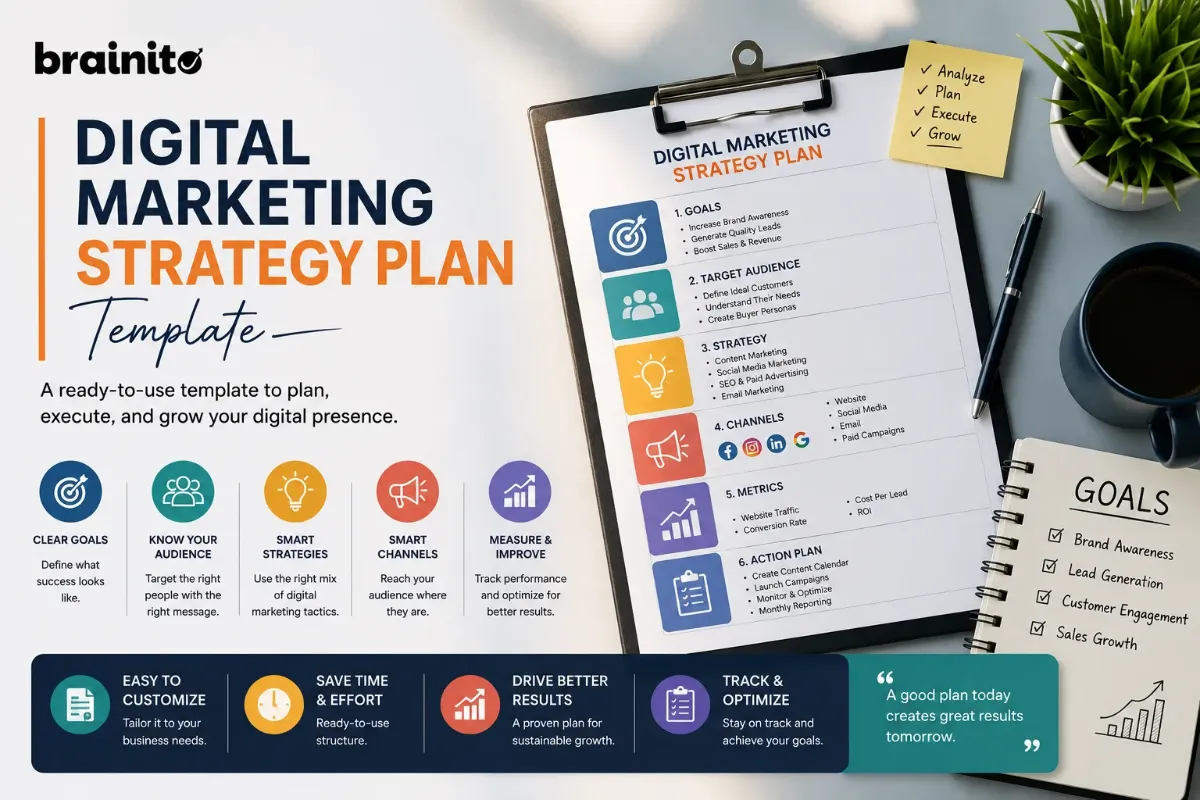
Build a winning digital marketing strategy with our free 2026 plan template. Set goals, map channels, define KPIs, and turn ideas into measurable growth.
Why You Need a Digital Marketing Strategy Plan
Most teams confuse activity with strategy. They post on social media, send the occasional email, and run a few ads, then wonder why growth stays flat. A digital marketing strategy plan fixes this by connecting every tactic to a clear business outcome. Instead of guessing, you make deliberate choices about who you serve, where you compete, and how you measure success.
A documented plan also creates alignment. When everyone on the team can see the same goals, channels, and priorities, you stop wasting budget on disconnected experiments. The template in this guide gives you a repeatable structure you can reuse every quarter.
The Cost of Working Without a Plan
Without a strategy, your marketing becomes reactive. You chase trends, copy competitors, and let the loudest opinion in the room decide the next campaign. The result is scattered spend and results you cannot explain. If you want a quick read on where your current efforts stand, our free marketing audit scores your website across 77 factors and returns a prioritized action plan you can drop straight into this template.
Step 1: Set Clear Goals and Objectives
Every strong plan starts with goals that are specific and measurable. Vague ambitions like "grow brand awareness" are impossible to track. Translate them into numbers: a 30 percent increase in organic traffic, 200 qualified leads per month, or a 15 percent lift in repeat purchases.
Use the SMART Framework
Frame each objective so it is Specific, Measurable, Achievable, Relevant, and Time-bound. For example, "Generate 150 demo signups from paid search by the end of Q3" tells everyone exactly what success looks like and when to check.
Tie Goals to Revenue
Whenever possible, connect marketing goals to revenue or pipeline. A goal of 1,000 newsletter subscribers means little on its own, but "1,000 subscribers that convert at 4 percent into paying customers" gives the number weight. If you are building your first roadmap from scratch, our DIY marketing plan walks you through goal-setting before you fill in the rest of the template.
Step 2: Define Your Audience and Positioning
You cannot market effectively to everyone. The next section of your plan defines exactly who you are trying to reach and why they should choose you. Start by documenting your ideal customer: their role, their pain points, the language they use, and the channels where they spend time.
Build a Simple Buyer Persona
Keep personas practical. Capture demographics, goals, objections, and the trigger that makes someone start looking for your solution. One or two well-researched personas beat a folder full of polished but unused profiles.
Clarify Your Positioning
Positioning answers a single question: why you, instead of the alternative? Write one sentence that states the category you compete in, the audience you serve, and the unique value you deliver. This statement becomes the backbone of every message across every channel.
Step 3: Choose Your Channels and Tactics
With goals and audience defined, decide which channels deserve your time and budget. Resist the urge to be everywhere. Pick the two or three channels where your audience already pays attention and where you can realistically win.
Map Channels to the Funnel
Different channels serve different stages. Search engine optimization and content attract people early in their research. Paid social and retargeting nurture interest. Email and remarketing close the loop. Your plan should note which channel owns which stage so nothing falls through the cracks.
Plan the Content Engine
Content fuels almost every channel, so build a system rather than relying on inspiration. A content calendar generator keeps publishing consistent, while a content brief generator ensures every piece targets a real keyword and intent. For paid channels, tools like a Google ad structure generator and a Facebook ad copy generator help you launch faster without sacrificing quality.
Step 4: Set Budget, KPIs, and a Timeline
A strategy without numbers is just a wish list. Assign a budget to each channel, define the key performance indicators you will track, and lay out a realistic timeline. This is the section that turns intentions into accountability.
Choose KPIs That Matter
Pick metrics that map directly to your goals: cost per acquisition, conversion rate, organic sessions, return on ad spend, or customer lifetime value. Avoid vanity metrics that look impressive but never move revenue. Two or three focused KPIs per channel are plenty.
Build a Quarterly Timeline
Break the year into quarters and assign milestones to each. A timeline keeps momentum and gives you natural checkpoints to review performance. Research your demand with a keyword research tool early, so your content and ad timelines target terms people actually search for.
Step 5: Execute, Measure, and Optimize
A plan only earns its keep when you act on it and refine it. Schedule a recurring review, monthly at minimum, to compare results against your KPIs. Double down on what works, pause what does not, and document the lessons so next quarter starts smarter.
Create a Feedback Loop
Treat every campaign as an experiment with a clear hypothesis. When a tactic outperforms, ask why and apply the insight elsewhere. When something underdelivers, decide quickly whether to fix it or cut it. This discipline compounds over time.
Know When to Bring in Help
If execution stalls because your team is stretched thin, it may be time to hire a marketer or explore the right plan and pricing for ongoing support. You can also browse the blog for deeper guides on each channel as you grow.
Frequently Asked Questions
How long should a digital marketing strategy plan be?
Shorter is usually better. A focused plan that fits on a few pages, covering goals, audience, channels, budget, KPIs, and timeline, is far more useful than a fifty-page document no one reads. The aim is clarity and action, not length. Start lean and expand only where detail genuinely helps execution.
How often should I update my marketing plan?
Review your plan monthly and refresh it fully each quarter. Markets, channels, and customer behavior shift quickly, so a static plan goes stale fast. Quarterly resets let you reallocate budget toward what is working. Running our free marketing audit before each review gives you fresh, prioritized data to guide the update.
What is the first thing I should put in my template?
Start with goals tied to revenue or pipeline, because every other section flows from them. Once you know what success looks like, choosing the right audience, channels, and KPIs becomes far easier. If you are unsure where to begin, the free marketing audit highlights your biggest opportunities so your first goal targets real impact.