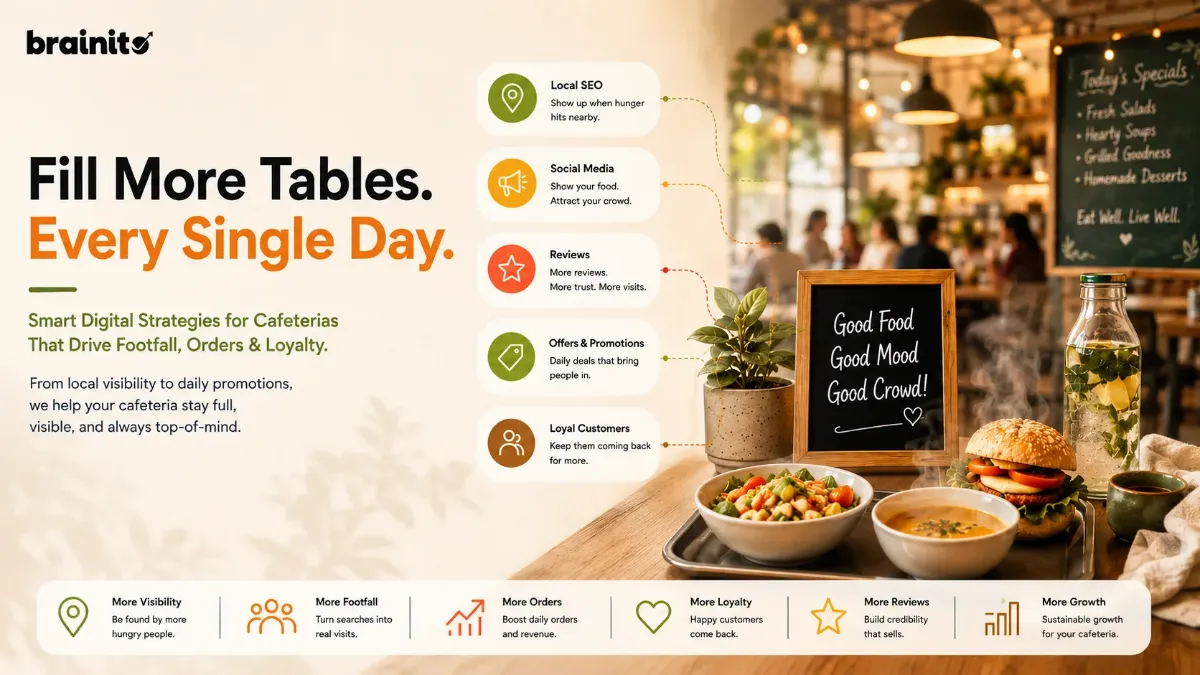
Fill more tables with proven digital marketing strategies for cafeterias: local SEO, social content, reviews, ads, and loyalty that turn foot traffic into regulars.
Why Cafeterias Need a Real Digital Marketing Plan
A cafeteria lives and dies by foot traffic, and in 2026 most of that foot traffic starts on a phone. Before someone walks through your door, they have already searched "coffee near me," scrolled a few photos, skimmed your reviews, and decided whether you are worth the walk. If your digital presence is thin, you lose that customer before they ever taste anything.
The good news is that cafeterias are perfectly suited to digital marketing. You have a physical space, appetizing visuals, a local audience, and dozens of small moments every day that make great content. The trick is turning those raw ingredients into a repeatable system instead of posting whenever you remember.
This guide walks through the digital marketing strategies that actually move the needle for cafes and cafeterias: local search, social content, reviews, paid ads, email, and loyalty. If you would rather see exactly where your current setup is leaking customers, start with a free marketing audit that scores your site across 77 factors and hands back a prioritized action plan.
Win Local Search So Hungry People Find You First
Local search is the single highest-return channel for a cafeteria, because the intent is immediate. Someone searching "breakfast near me" at 8 a.m. wants to eat in the next fifteen minutes. Show up, and you win the sale.
Optimize Your Google Business Profile
Your Google Business Profile is your most important storefront. Claim it, then fill in every field: hours, menu, phone, service options, and a category set to your primary offering. Upload fresh, high quality photos of your space, food, and drinks regularly. Post updates about specials and events, because active profiles rank higher and convert better. Run a quick GMB audit to spot missing fields and quick wins.
Nail the On-Page Local Signals
Make sure your name, address, and phone number are identical everywhere online. Add a location page to your website with embedded maps, parking notes, and neighborhood keywords. Target phrases people actually type, like "cozy cafe in downtown" or "study-friendly coffee shop." Use our keyword research tool to find the exact local terms with real search volume in your area.
Turn Social Media Into a Steady Stream of Walk-Ins
Cafeterias are inherently visual, which makes Instagram, TikTok, and short-form video your natural home. But posting pretty pictures at random is a hobby, not a strategy. You need a rhythm and a reason for people to visit.
Create a Space Worth Sharing
Design at least one photogenic corner: good natural light, a signature mural, plants, or a well-styled counter. When people can take a great photo, they become unpaid marketers who tag your location and pull their followers in. Encourage it with a subtle branded hashtag on tables and menus.
Post With a Plan, Not on a Whim
Mix content types: behind-the-counter clips, seasonal drink launches, staff picks, and quick recipes. Consistency beats perfection, so batch your content and schedule it. A simple content calendar keeps you posting steadily even during your busiest weeks, and a blog content generator can turn one idea into posts, captions, and a short article that feeds SEO too.
Local influencers deserve a line item. Invite a handful of neighborhood creators for a free tasting in exchange for an honest post. A single review from a trusted local voice often outperforms weeks of your own posts.
Build Trust With Reviews and Reputation Management
Reviews are the deciding factor for most first-time visitors. A cafeteria with 4.6 stars and 300 reviews will beat one with 4.8 stars and 12 reviews, because volume signals reliability. Reputation is a channel you have to actively cultivate.
Ask, Then Make It Easy
Train your team to ask happy customers for a review at the right moment, usually right after a compliment. Put a QR code on receipts and tables that links straight to your Google review form. The fewer taps required, the more reviews you collect.
Respond to Every Review
Reply to positive reviews with genuine thanks, and handle negative ones calmly and publicly. Prospective customers read how you respond to criticism, and a gracious reply to a bad review can win more trust than a perfect rating. Consistent responses also signal to Google that your profile is active, which supports your local rankings.
Use Paid Ads and Email to Fill Slow Hours
Organic reach builds slowly, so paid advertising and email give you control over timing. Both are ideal for smoothing out the quiet mid-afternoon lull or launching a new menu.
Run Tight, Geo-Targeted Ads
On Facebook and Instagram, target a small radius around your location with mouthwatering visuals and a clear offer, like a buy-one-get-one on pastries before noon. On Google, capture "near me" intent with search ads. Structure matters more than budget here, so a well-built campaign wastes far less money. Our Google ad structure generator and Facebook ad copy generator help you launch campaigns that convert instead of just spending.
Collect Emails and Bring People Back
Capture emails through a loyalty signup, free WiFi login, or a small first-visit discount. Then send a simple weekly note: this week's special, a new seasonal drink, or an invite to an event. Email is one of the highest-return channels in all of marketing, and it costs almost nothing. Punchy subject lines make or break open rates, so lean on an email subject line generator to write ones people actually click.
Create Experiences and Loyalty That Keep Regulars Coming
The most profitable cafeteria customer is the regular who visits three times a week. Digital marketing brings people in the door once, but experience and loyalty are what turn a one-time visitor into a habit.
Host Events and Community Moments
Open mic nights, coffee tastings, study sessions, book clubs, and weekend workshops all create reasons to visit and endless content to promote. Partner with nearby businesses to offer your space for small meetings during off-peak hours, which adds recurring revenue and cross-promotion.
Reward Repeat Visits
A digital loyalty program, even a simple punch card in an app, gives people a reason to choose you over the competitor next door. Layer in perks like pet-friendly seating, reliable fast WiFi, and a shelf of books or local art, and you become a destination rather than just another coffee stop. If you want a full roadmap tailored to your budget, a DIY marketing plan lays out the steps, or you can hire a marketer to run it for you. When you are ready to find your biggest gaps first, the free marketing audit shows you exactly what to fix and in what order.
Frequently Asked Questions
What is the most important digital marketing channel for a cafeteria?
Local search is the highest-return channel because it captures people with immediate intent to eat nearby. Start by fully optimizing your Google Business Profile with accurate hours, categories, menus, and fresh photos, then keep it active with regular posts. Pair that with strong reviews and you will capture most "near me" traffic. A quick GMB audit shows what is missing.
How often should a cafe post on social media?
Aim for three to five posts per week, mixing food photos, short videos, staff picks, and event promotions. Consistency matters far more than volume, so batching and scheduling content with a content calendar is more sustainable than sporadic bursts. Encourage customers to tag your location so their posts extend your reach for free.
Do paid ads work for small cafeterias on a tight budget?
Yes, if they are tightly targeted. A small geo-radius around your location with a clear offer can drive real foot traffic for a modest spend, because you are only paying to reach nearby people who can actually visit. Well-structured campaigns waste far less budget, so use tools like our ad copy generator and start small. Read more tactics on the Brainito blog.