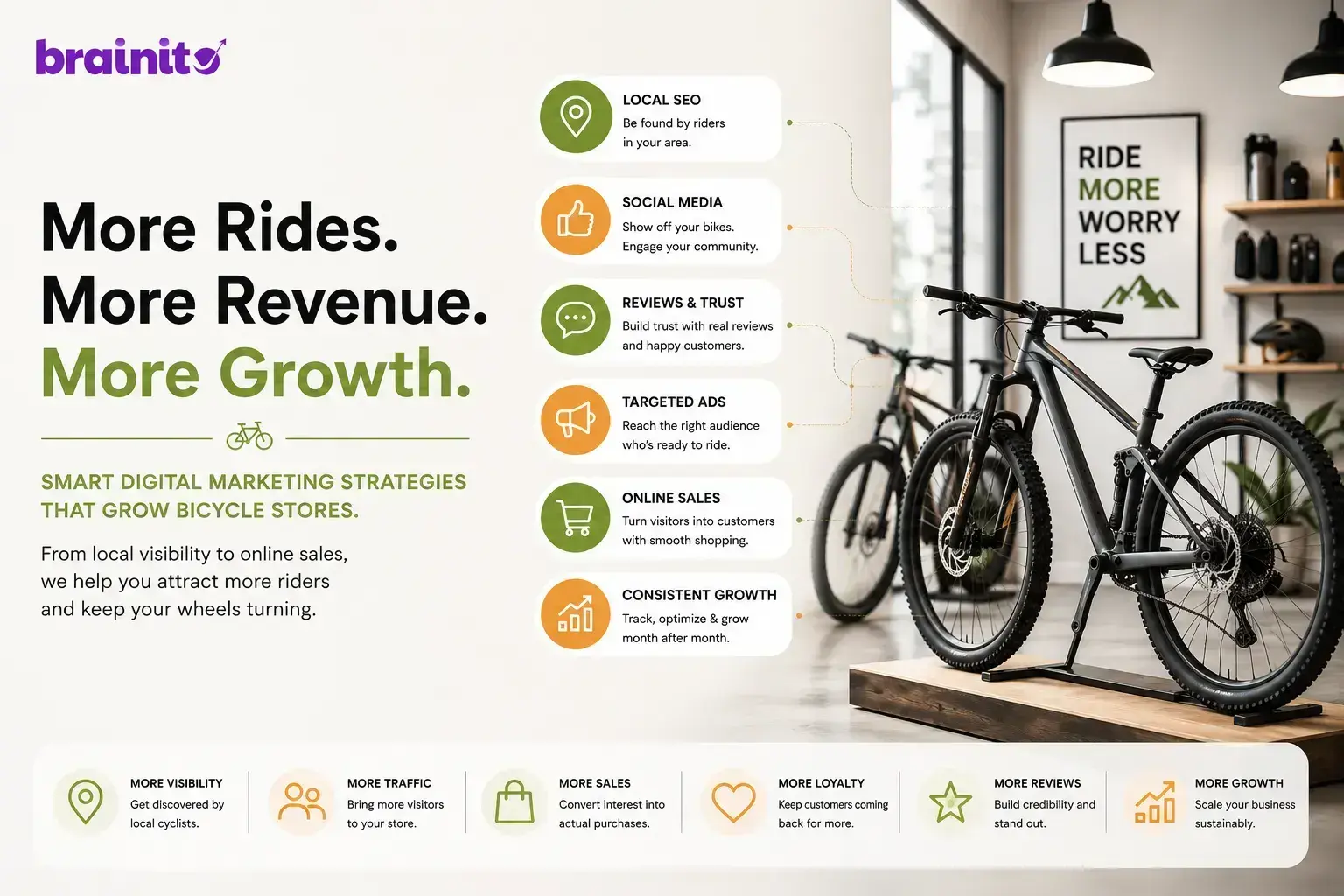
Practical digital marketing strategies for bicycle stores in 2026: local SEO, social media, paid ads, retargeting, and loyalty tactics that drive sales.
Why Bicycle Stores Need a Sharper Digital Playbook
The bicycle market keeps expanding as more people ride for fitness, commuting, and adventure. That growth is good news, but it also means more competition, including direct-to-consumer brands that never touch a physical showroom. To stay ahead, an independent bicycle store has to be visible exactly where riders are searching, scrolling, and comparing.
Digital marketing gives you that visibility without the cost of a national ad budget. The trick is knowing which channels move the needle for a bike shop and how to connect them into one system. This guide walks through the strategies that consistently generate foot traffic, online orders, and repeat customers in 2026.
If you want a fast read on where your current marketing stands, start with a free marketing audit. It scores your website across 77 factors and hands you a prioritized action plan, so you can see your biggest gaps before you spend a dollar on ads.
Build a Brand Riders Actually Remember
Bicycles are an emotional purchase. People buy into a lifestyle, a community, and a feeling of freedom, not just a frame and two wheels. Your brand has to reflect that. Decide what your shop stands for, whether that is expert fitting, gravel adventure, family cycling, or premium performance, and let that identity shape everything from your logo to your caption voice.
Nail the fundamentals of differentiation
Clarify three things: who you serve, what you do better than the shop down the road, and why a rider should trust you. Excellent service, honest advice, and a curated product range are still your strongest differentiators against faceless online sellers. Put that story front and center on your homepage and in your bio.
Once your positioning is clear, you can turn it into a repeatable content and offer strategy. A structured marketing plan keeps your brand message consistent across every channel instead of shifting with your mood each week.
Win Local Search With SEO and a Useful Website
When someone types "bike shop near me" or "gravel bike service," you want to be the first result they tap. Local SEO is the highest-intent, lowest-cost channel a bicycle store can own. Start with a fully optimized Google Business Profile: accurate hours, categories, photos of your showroom and service bay, and a steady stream of genuine reviews.
Turn your site into a resource, not a brochure
Publish content riders search for: sizing guides, maintenance checklists, safety tips, and seasonal buying advice. Educational articles pull in organic traffic and position you as the local expert, which makes booking a test ride or a tune-up feel like the obvious next step. If writing feels like a chore, a blog content generator can draft the first version fast, and a keyword research tool shows you which cycling topics people actually search in your area.
To keep your Google Business Profile competitive, run a quick GMB audit and fix the gaps that quietly cost you map-pack rankings.
Grow Reach With Social Media and Influencers
Cycling is intensely visual, which makes Instagram, YouTube, and TikTok natural homes for a bike shop. Post ride footage, workshop clips, new arrivals, and customer stories. User-generated content is gold here: encourage buyers to tag your shop, then reshare the best posts to build social proof.
Partner with riders who already have trust
You do not need a celebrity. Local cyclists, commuting influencers, and niche YouTube reviewers reach exactly the audience you want, often for the cost of a product loan or a small fee. Their endorsement lends credibility that ads cannot buy.
Run giveaways that build your database
A well-designed giveaway (a helmet, an accessory bundle, a free tune-up) grows your email list and follower base while generating a flood of shareable content. Capture those entries into an email list so you can market to warm prospects later. When you promote the giveaway, an ad copy generator helps you write scroll-stopping posts in minutes.
Convert Traffic With Paid Ads and Retargeting
Most shops see only a small fraction of website visitors buy on the first visit. Retargeting is how you win back the rest. Set up pixel-based campaigns on Facebook, Instagram, and Google so that people who browsed a specific bike keep seeing it as they move around the web. These warm audiences convert far better than cold traffic.
Use shopping ads for high-intent buyers
Configure Google Shopping and Merchant Center feeds so your bikes and accessories appear with images and prices right when someone is ready to buy. Pair that with Facebook catalog ads to show dynamic product recommendations. A clean Google ad structure keeps your campaigns organized and easy to optimize, so you spend on the products that actually sell.
Not sure whether your ad spend is working as hard as it should? A free marketing audit flags conversion leaks across your site and funnel, so you fix the leaks before you scale the budget.
Keep Customers Coming Back With Retention and Community
Acquiring a new customer costs far more than keeping an existing one, and cyclists are loyal when you earn it. Build a loyalty program that rewards service visits, accessory purchases, and referrals. Email is your best retention channel: send maintenance reminders, seasonal offers, and event invites that keep your shop top of mind.
Show up in the local cycling scene
Host group rides, sponsor a race, or run a beginner clinic. Community events turn customers into advocates and generate authentic content you can share for weeks. Complementary businesses (cafes, fitness studios, tour operators) make great cross-promotion partners, expanding your reach without extra ad spend.
Time your promotions to the season
Cycling has clear peaks. Lean into spring and summer with well-timed campaigns, and use the off-season for service specials and pre-orders. A content calendar keeps your promotions organized around those peaks. If building and running all of this feels like too much on top of running the shop, you can hire a marketer to execute it for you.
Frequently Asked Questions
What is the most cost-effective marketing channel for a small bicycle store?
Local SEO and your Google Business Profile deliver the best return for the lowest cost. They put you in front of high-intent riders searching for a shop nearby, and building reviews plus useful website content costs mostly time rather than ad budget. Pair that with an email list for retention and you have a durable, low-cost engine. Run a free marketing audit to see where your local presence stands today.
How much should a bicycle shop spend on digital ads?
Many small retailers start with a modest monthly budget focused on retargeting and Google Shopping, then scale based on measured return. The key is tracking conversions so you know which campaigns pay for themselves before increasing spend. If you are unsure how to structure it, a marketing plan gives you a sensible starting framework.
Do I need to be on every social platform?
No. Focus on one or two platforms where your riders actually spend time, usually Instagram and YouTube for cycling, and do them well. Consistent, high-quality content on a single channel beats a thin presence spread across five. Explore more tactics on the Brainito blog.