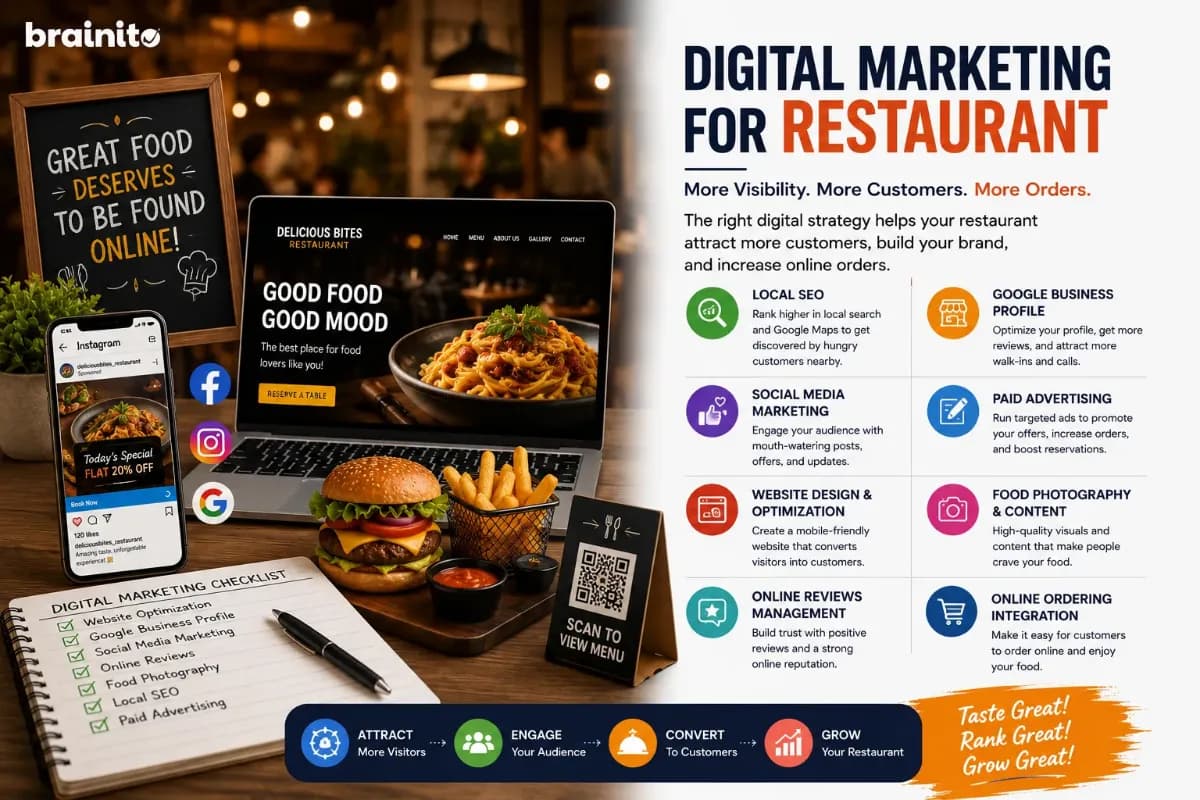
A practical 2026 guide to digital marketing for restaurants: local SEO, social media, reviews, paid ads, and loyalty tactics that fill tables.
Why Digital Marketing Decides Which Restaurants Win
Diners no longer stumble into restaurants. They search, scroll, and read reviews before they ever pick up a menu. In 2026, the restaurants that stay full are the ones that show up first when a hungry local types "best pasta near me" or opens Instagram looking for dinner inspiration. Great food is table stakes. Visibility is what turns a quiet Tuesday into a fully booked service.
Digital marketing for restaurants is not one tactic. It is a connected system: a discoverable online presence, a steady stream of appetizing content, glowing reviews, and smart paid campaigns that reach people within delivery or driving distance. When these pieces work together, you stop competing on price and start competing on desire.
The good news is that you do not need an agency-sized budget to compete. You need the right priorities and a clear plan. If you want to know exactly where your restaurant stands today, start with a free marketing audit that scores your website across 77 factors and hands back a prioritized action list you can work through this month.
Own Local Search: Google Business Profile and Local SEO
For restaurants, local search is the single highest-leverage channel. When someone searches for a cuisine or "restaurants near me," Google leans heavily on your Google Business Profile and your website signals to decide who appears in the map pack. Ranking in those top three spots can matter more than any ad.
Optimize Your Google Business Profile
Claim and verify your profile, then fill in every field: hours, cuisine type, price range, menu link, and high-quality photos of dishes and the dining room. Post updates weekly, add new photos monthly, and keep holiday hours current. Restaurants with complete, active profiles consistently outrank neighbors who set it up once and forgot it.
Strengthen On-Site Local Signals
Your website should state your city and neighborhood clearly, embed a Google Map, and use structured data so search engines understand your menu, hours, and location. Run a quick GMB audit to spot gaps in your profile, and use a keyword research tool to find the exact phrases locals search, such as "brunch spot downtown" or "gluten-free pizza." Build a page or blog post around each intent so you capture that traffic.
Not sure whether your site is sending the right local signals? A free marketing audit flags technical and content gaps that quietly keep you off page one.
Turn Social Media Into a Table-Filling Machine
Instagram, TikTok, and Facebook are where appetite meets impulse. A single reel of cheese pulling off a slice or a chef plating a signature dish can reach thousands of nearby scrollers overnight. Social media is not about follower counts. It is about making people hungry enough to book.
Post Content That Makes People Crave
Lead with visuals. Short vertical videos of prep, plating, and happy tables outperform static photos. Show the people behind the food, behind-the-scenes moments, and seasonal specials. Add clear calls to action ("Reserve tonight," "Order for pickup") and make sure your reservation and ordering links sit right in your bio.
Build a Repeatable Content Rhythm
Consistency beats perfection. Map your posts a month ahead so you are never scrambling for ideas: Monday specials, midweek behind-the-scenes, weekend hype. A content calendar generator makes this painless, and if you want longer-form pieces like local guides or recipe stories to feed your blog and SEO, a blog content generator can get you a strong first draft in minutes.
Make Reviews and Reputation Work for You
Reviews are the modern word of mouth, and they directly influence both bookings and search rankings. A restaurant with 500 recent four-and-five-star reviews will almost always beat one with 40 stale ones, even if the food is comparable. Reputation is a growth channel you can actively manage.
Generate More Reviews on Purpose
Ask at the right moment. Train staff to invite happy guests to review, print a QR code on receipts and table tents, and follow up with a friendly text or email after online orders. Small nudges compound into a steady flow of fresh reviews.
Respond to Every Review, Good and Bad
Thank positive reviewers by name and reference their dish. For negative reviews, respond quickly, own the issue, and offer to make it right offline. Prospective diners judge you as much by how you handle criticism as by the criticism itself. Word-of-mouth advocacy still costs the least and converts the most, so protect it.
Paid Ads and Loyalty: Fill Seats Now, Keep Them Coming Back
Organic reach builds slowly. Paid advertising and loyalty programs let you drive covers this weekend and turn first-timers into regulars. Used together, they lower your cost per new customer and lift lifetime value.
Run Targeted Local Ads
Google and Facebook let you target a tight radius around your restaurant, layer in interests like "foodie" or "date night," and promote specific offers such as a lunch deal or a new menu launch. Start small, test two or three creatives, and scale what works. A Facebook ad copy generator speeds up writing scroll-stopping variations, while a Google ad structure generator helps you organize search campaigns so budget flows to your best keywords.
Reward Repeat Visits
A simple loyalty program, whether a punch card, an app, or points on orders, gives guests a reason to choose you again. Pair it with an email list and a strong email subject line to bring lapsed customers back with a "we miss you" offer. Repeat guests are far cheaper to reach than new ones, and they spend more per visit.
Build Your Restaurant Marketing Plan
Tactics only pay off when they ladder up to a plan. The winning approach for most restaurants is sequential: fix your Google Business Profile and website first, build a consistent social and review engine second, then layer paid ads and loyalty on top once the foundation converts.
Decide honestly whether you will run this in-house or get help. If you have a marketing-minded team member with a few hours a week, a structured DIY marketing plan can carry you a long way. If you would rather cook and let a specialist handle the funnel, you can hire a marketer who knows the hospitality space, and you can compare pricing to match your budget.
Wherever you start, base your priorities on data, not guesses. A free marketing audit gives you a prioritized, restaurant-ready action plan so your next month of effort goes where it moves the needle. For more tactics and walkthroughs, keep an eye on the blog.
Frequently Asked Questions
How much should a restaurant spend on digital marketing?
A common benchmark is 3 to 6 percent of revenue, but the smarter approach is to start with high-return basics that cost little: optimizing your Google Business Profile, gathering reviews, and posting consistently on social. Add paid advertising once those free channels are converting, and scale spend based on measurable results rather than a fixed percentage.
What is the most important digital marketing channel for restaurants?
Local search is usually the highest-leverage channel because it reaches people actively looking to eat nearby right now. A fully optimized Google Business Profile plus strong reviews often drives more bookings than any single social or paid campaign, which is why it should be your first priority.
How fast will digital marketing increase restaurant reservations?
Paid ads and review-driven booking prompts can lift covers within days. Local SEO and organic social typically build momentum over one to three months. The fastest path is to run both at once: paid campaigns for immediate traffic while your organic foundation compounds over time.