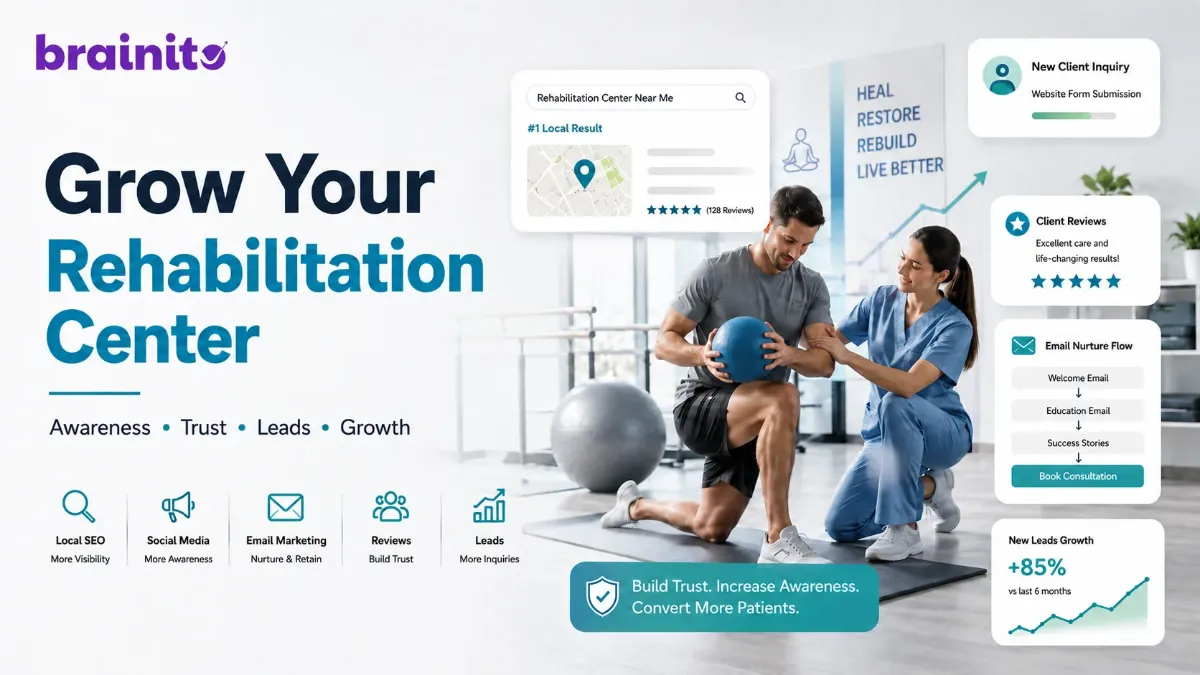
A practical 2026 digital marketing playbook for rehabilitation centers: local SEO, trust-building content, PPC, and referral growth that fills beds.
Why Rehabilitation Centers Need a Modern Marketing Strategy
Families searching for a rehabilitation center are rarely browsing casually. They are frightened, overwhelmed, and looking for a program they can trust with someone they love. In 2026, almost every one of those searches starts on a phone, often late at night, and the center that shows up first with a clear, reassuring message wins the call.
Traditional referrals still matter, but they are no longer enough on their own. Prospective patients now vet you online before they ever pick up the phone. That means your website, your reviews, and your search visibility do the first round of persuading long before a human admissions coordinator says hello.
The good news is that a focused digital strategy levels the playing field. You do not need the biggest budget in your region. You need the right priorities, executed consistently. If you want a clear picture of where your center stands right now, start with a free marketing audit that scores your site across 77 factors and hands you a prioritized action plan.
Build a Mobile-First, Trust-Building Website
Your website is the front door of your rehabilitation center, and most visitors arrive on a small screen. If pages load slowly, phone numbers are hard to tap, or the admissions form is buried, you lose people at the exact moment they were ready to reach out.
The essentials every rehab website needs
- Fast, mobile-responsive design that loads in under three seconds.
- A visible phone number and click-to-call button on every page.
- Clear program pages for the conditions and levels of care you treat.
- Insurance and admissions information that removes friction and answers the first question families ask.
- Accreditations, licenses, and staff credentials displayed prominently to establish credibility.
Design for reassurance, not just conversion
Photography of real facilities, calm color palettes, and plain-language copy do more than look nice. They signal safety. Pair that emotional trust with a fast, functional experience and you turn anxious visitors into confident inquiries. A quick free marketing audit will flag the technical and trust gaps holding your site back.
Dominate Local Search So Families Find You First
When someone types "rehabilitation center near me" or "drug rehab in [city]," you want to be in the map pack and the top organic results. Local SEO is where most rehab centers see the fastest, most durable returns.
Own your Google Business Profile
Claim and fully optimize your profile: accurate hours, services, categories, photos, and consistent name, address, and phone number across every directory. Respond to every review, positive or negative, with professionalism and care. You can pressure-test your listing with a GMB audit tool to catch missing fields and ranking gaps.
Target the right local keywords
Research the exact phrases families in your area use, from "inpatient rehab" to "outpatient recovery program" to condition-specific terms. A keyword research tool helps you find high-intent searches with realistic competition, so you build pages that actually rank. Then create dedicated, location-aware pages for each core service rather than cramming everything onto one thin page.
Create Content That Educates and Earns Trust
Content marketing is how rehabilitation centers demonstrate expertise, answer the questions families are afraid to ask, and climb search rankings at the same time. Every helpful article is a chance to be found and to build confidence before the first conversation.
Topics that resonate
- What to expect during the admissions and detox process.
- How to talk to a loved one about entering treatment.
- The difference between levels of care and how to choose.
- Recovery success stories, shared with consent and dignity.
- Insurance, cost, and family support resources.
Plan and produce consistently
Consistency beats intensity. Map your topics to a schedule using a content calendar generator, then brief each piece with a content brief generator so writers hit the right keywords and intent. If you are short on capacity, a blog content generator can help you draft first versions faster while your clinical team focuses on care. Not sure where to begin? A DIY marketing plan turns these ideas into a step-by-step roadmap.
Use Paid Ads and Social Media to Accelerate Reach
SEO and content build momentum over months. Paid channels give you visibility today, which matters when a bed needs to be filled this week. Used together, they create both immediate and compounding results.
Pay-per-click advertising
PPC puts your center in front of families at the precise moment they are searching. Because the healthcare and recovery space is competitive and tightly regulated, structure your campaigns carefully around high-intent keywords and clear landing pages. A Google ad structure generator helps you organize campaigns and ad groups so your budget works harder and your quality scores improve.
Social media that builds community
Social platforms are where you humanize your center. Share educational content, staff introductions, recovery milestones, and mental health resources. The goal is not to sell aggressively but to build goodwill and stay visible to families and referral partners. Thoughtful, consistent posting positions you as a compassionate authority long before someone needs your services.
Strengthen Referrals, Reputation, and Community Ties
Digital marketing does not replace relationships. It amplifies them. The strongest rehabilitation centers blend online visibility with real-world trust from physicians, alumni, and the local community.
Nurture physician and professional referrals
Doctors, therapists, and case managers remain a primary source of admissions. Support those relationships with an easy referral process, up-to-date outcome data, and an email newsletter that keeps your programs top of mind. A well-crafted subject line matters here too, and an email subject line generator can lift open rates among busy professionals.
Manage reputation and outreach
Encourage grateful families and alumni to leave honest reviews, host community webinars and health-fair booths, and issue press releases when you launch new programs or milestones. Each touchpoint reinforces credibility. When the workload outgrows your team, consider whether it is time to hire a marketer or lean on a partner. You can compare options and see transparent pricing before committing, and browse the blog for more tactical guides.
Frequently Asked Questions
How much should a rehabilitation center spend on digital marketing?
There is no single number, but most centers see the best return by investing consistently across local SEO, a strong website, content, and targeted PPC rather than pouring everything into one channel. Start by fixing foundational gaps, which a free marketing audit will identify, then scale spend into the channels that prove out. A phased DIY marketing plan keeps early spending disciplined.
How long does it take to see results?
Paid ads can drive inquiries within days, while SEO and content typically take three to six months to build meaningful momentum. The centers that win treat marketing as an ongoing program, not a one-time campaign, and review performance monthly.
Should I handle marketing in-house or outsource it?
It depends on your team's capacity and expertise. Many centers start in-house with clear tools and a plan, then hire a marketer or partner as demand grows. Reviewing transparent pricing options helps you decide what fits your budget and goals.