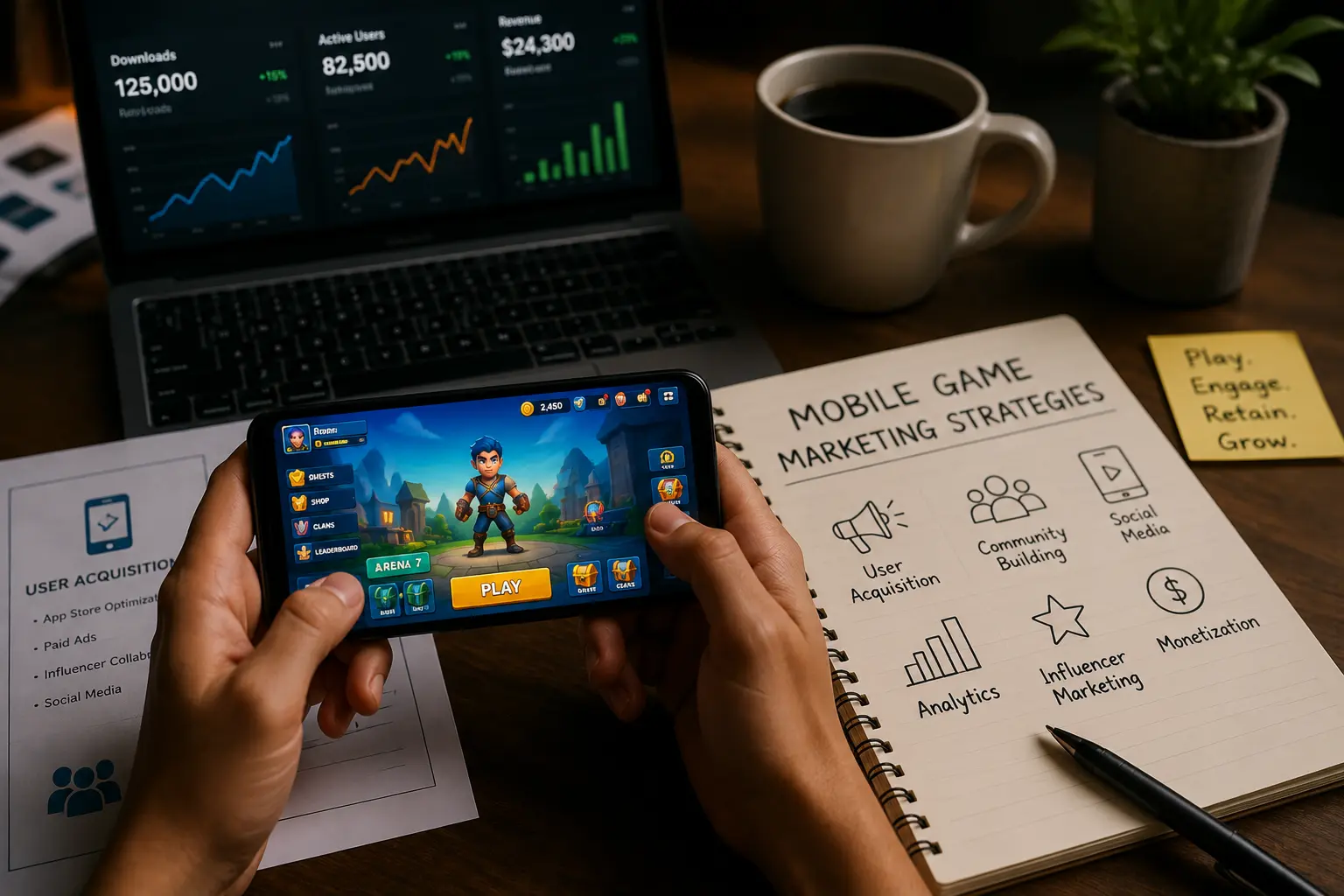
Proven mobile game marketing strategies for 2026: ASO, influencer marketing, paid social, and retention tactics that turn installs into loyal, paying players.
Why Mobile Game Marketing Decides Success Before Launch
A great game is no longer enough. With millions of titles competing for attention across the App Store and Google Play, the games that win are the ones with a marketing engine built long before launch day. In 2026, discovery is harder than ever: app store algorithms reward retention and engagement, ad costs keep climbing, and players decide within seconds whether your title is worth a tap.
That means marketing is not a phase you bolt on after development. It is a parallel workstream that shapes your creative, your monetization, and your community from the first prototype. The strategies below cover the full journey, from pre-launch validation to long-term retention, so you can turn a strong concept into a sustainable player base.
Before you spend a rupee on ads, it helps to know where your foundations are weak. A free marketing audit scores your web and store presence across 77 factors and hands back a prioritized action plan, so you fix the leaks before you pour traffic into the funnel.
Validate With Beta Testing and Community Building
The cheapest marketing win happens before launch. Beta testing with a small, engaged group surfaces bugs, confusing onboarding, and balance issues while they are still cheap to fix. It also seeds your first cohort of advocates who feel ownership over the game.
Build a pre-launch audience
Set up a landing page, a Discord server, and a short email capture form months ahead of release. Share development updates, concept art, and behind-the-scenes clips to convert curiosity into a waitlist. When you launch, this warm audience drives the early velocity that app store algorithms reward.
Turn testers into evangelists
Give beta players a reason to talk: early-access badges, exclusive cosmetics, or credit in the game. People who feel like founders share far more than passive downloaders. If you are mapping this out for the first time, a DIY marketing plan gives you a step-by-step framework to sequence these pre-launch moves.
Win Discovery With App Store Optimization (ASO)
The majority of players still find new games by searching or browsing the app stores directly. That makes App Store Optimization the highest-leverage channel you own, because it drives organic, zero-cost installs that compound over time.
Nail your keywords and metadata
Research the exact terms players use to describe games like yours, then work them into your title, subtitle, and description naturally. Do not guess. Use structured keyword research to find high-intent, low-competition phrases, and validate demand with a keyword research tool before you commit your metadata.
Test your creative relentlessly
Your icon, screenshots, and preview video decide whether a browser becomes an installer. Run A/B tests on each element. A brighter icon or a screenshot that leads with the core loop can lift conversion by double digits. Treat your store listing as a living asset, not a one-time upload, and revisit it every time you ship a major update.
Amplify Reach With Influencers and Live Content
Players trust other players. Influencer marketing and live gameplay put your title in front of engaged audiences through a voice they already follow, which shortens the distance from awareness to install.
Match creators to your audience, not their follower count
A micro-creator with 20,000 loyal, on-genre viewers often outperforms a celebrity with a broad, disengaged following. Prioritize relevance and engagement rate over vanity metrics, and plan activations around three moments: launch, major updates, and seasonal events.
Use streaming and short-form video
Live streams and gameplay clips show your game in motion, which static ads cannot. Short vertical clips built for Reels, Shorts, and TikTok are especially powerful for demonstrating a satisfying core loop in under 15 seconds. If you are not sure how to brief creators or structure a campaign at scale, it can be worth deciding whether to hire a marketer who lives in this channel every day.
Scale With Paid Social and Performance Ads
Once your organic foundations are solid, paid acquisition lets you scale predictably. The key is disciplined creative and tight targeting so your cost per install stays below the lifetime value of a player.
Lead with video, keep it short
Video ads consistently outperform static creative for games. Hook viewers in the first two seconds, show the core loop fast, and keep the clip under 30 seconds. Produce several variations and let the platform find your winners. Strong ad copy matters too, so lean on a Facebook ad copy generator to spin up hooks quickly and a Google ad structure generator to organize your search and UAC campaigns.
Target intent, then optimize for events
Do not just optimize for installs. Optimize for the actions that predict value: tutorial completion, day-one return, or first purchase. Feeding the ad platforms high-quality signal teaches them to find players who actually stick. Continuously prune losing audiences and reinvest in the cohorts that retain.
Keep Players With Retention and Referral Loops
Installs are the beginning, not the finish line. A game that acquires well but retains poorly burns cash. The most profitable studios engineer loyalty into the product and the marketing.
Reward engagement and reactivation
Daily login rewards, streaks, limited-time events, and progression systems give players a reason to return. Pair in-game rewards with lifecycle email and push notifications that bring lapsed players back at the right moment. A steady content calendar keeps these touches consistent, and a content calendar generator helps you plan events and messaging weeks ahead.
Turn players into your acquisition channel
Referral programs that reward both the inviter and the invited turn your happiest players into a growth engine, at a fraction of paid acquisition cost. Ask for reviews at moments of delight, such as after a big win, and respond to feedback publicly to build trust. Once you have this loop running, run another free marketing audit to confirm your funnel is converting attention into retained, paying players, and to catch the next set of priorities. For more playbooks, browse the Brainito blog.
Frequently Asked Questions
How much should I budget for mobile game marketing?
There is no fixed number, but a common approach is to reserve at least as much for marketing as you spend on development, then scale spend only once your cost per install sits comfortably below a player's lifetime value. Start small, prove your funnel with organic channels and beta testing, and add paid acquisition once retention metrics are healthy. A free marketing audit can show you where to spend first for the biggest return.
Which channel drives the best return for a new game?
App Store Optimization usually delivers the highest long-term return because it produces organic installs at no ongoing media cost. Influencer and short-form video are the fastest ways to build early awareness, while paid social is best once you have proven retention and want to scale predictably.
When should I start marketing my mobile game?
Start months before launch. Building a waitlist, community, and beta cohort early creates the launch-day velocity that app store algorithms reward. Waiting until release day means competing from zero. A structured DIY marketing plan helps you sequence pre-launch work so nothing slips.