
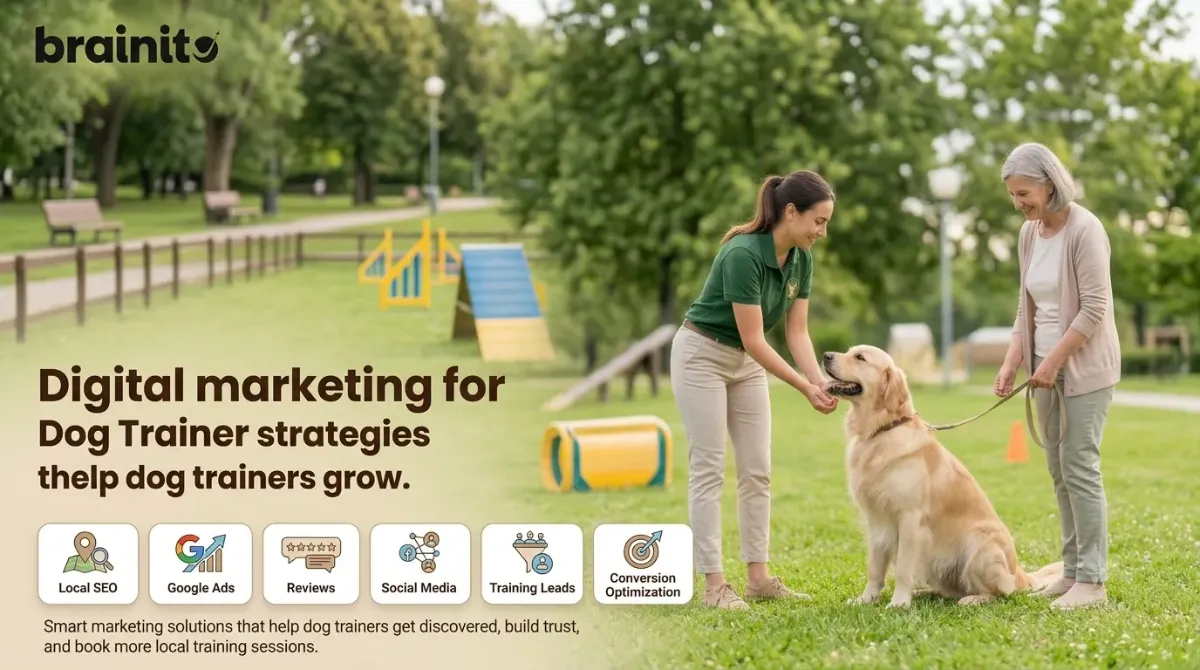
Learn digital marketing for dog trainers in 2026: local SEO, reviews, Instagram, paid ads, and referrals that fill your training calendar with clients.
Why Dog Trainers Need a Real Digital Marketing Plan
Dog owners no longer find trainers by flipping through a phone book. They search "puppy training near me" on their phones, scroll Instagram for local classes, and read a dozen reviews before they ever pick up the phone. If your business is not visible in those moments, a competitor is winning that client instead.
The good news is that dog training is a highly local, trust-driven service, which means the fundamentals of marketing work in your favor. You do not need a massive budget. You need a clear presence, social proof, and a few channels that consistently bring in bookings. This guide walks through the digital marketing tactics that actually move the needle for dog trainers in 2026.
If you would rather see exactly where your current online presence is strong or weak before you start, run a free marketing audit. It scores your website across 77 factors and hands back a prioritized action plan, so you know what to fix first instead of guessing.
Get Found Locally With Google Business Profile and SEO
Local search is the single most valuable channel for a dog trainer. When someone types "dog obedience training" plus a city name, Google shows a map pack of three nearby businesses. Landing in that pack drives a steady stream of qualified calls.
Claim and optimize your Google Business Profile
Fill out every field: services, hours, service areas, and photos of real training sessions. Choose accurate categories like "Dog Trainer" and "Pet Trainer." Post updates weekly, because active profiles rank higher and look more trustworthy to owners comparing options.
Build location-focused pages on your site
Create dedicated pages for each service and each town you serve, such as "Puppy Training in [City]" or "Reactive Dog Programs." Use the exact phrases owners search for. A quick GMB audit can reveal gaps in your profile, and our keyword research tool helps you find the terms local owners actually type. If you want the full picture of your local visibility, the free marketing audit flags on-page and technical issues holding your rankings back.
Turn Happy Clients Into Reviews and Referrals
Trust is everything when someone is handing over their dog. Reviews are the fastest way to build it at scale. A trainer with 80 five-star reviews will almost always beat one with six, even if the training quality is identical.
Make asking for reviews a routine
At the end of a program, when a dog has clearly improved, send a friendly text with a direct link to your Google review page. Timing matters: ask when the owner is thrilled with the results. Respond to every review, positive or negative, to show you are engaged and professional.
Reward referrals
Dog owners talk to other dog owners at parks, daycares, and vet offices. Offer a simple incentive, such as a discounted session for any client who refers a new owner who books. Word of mouth is powerful, and a small nudge turns satisfied clients into an active sales force. To build a repeatable system around this, a DIY marketing plan lays out the steps in order.
Use Social Media and Video to Show Your Results
Dog training is visual and emotional, which makes it perfect for social platforms. Before-and-after clips, a reactive dog calmly passing another dog, or a puppy learning to sit on cue: these moments stop the scroll and prove your skill better than any sales pitch.
Instagram and short-form video
Post consistently with real footage from sessions (always with client permission). Use local hashtags and tag your city so nearby owners discover you. Reels and short clips travel further than static posts and cost nothing but time.
YouTube for depth and search
Longer tutorials like "How to stop leash pulling" pull in owners actively searching for help and position you as the local expert. Each video is an asset that keeps working for years. Plan your posting rhythm with a content calendar so you never scramble for ideas, and spin up captions or blog write-ups fast with our blog content generator.
Run Targeted Paid Ads That Fill Your Calendar
Organic reach takes time to build. Paid ads let you reach interested owners immediately, which is ideal when you have open slots to fill or a new program to launch.
Google Search ads for high intent
Bid on phrases like "puppy training classes near me." These searchers are ready to book, so even a small budget can produce bookings. Structure campaigns tightly by service so your ads stay relevant. Our Google ad structure generator helps you organize campaigns and ad groups without wasting spend.
Facebook and Instagram ads for awareness
Target dog owners in your service area with a compelling offer, such as a free assessment or an intro class. Visual creative wins here, so lead with a strong photo or clip. Write scroll-stopping copy quickly with our Facebook ad copy generator. Before scaling any ad spend, run the free marketing audit to make sure the landing experience converts the clicks you pay for.
Partner Locally and Give Value First
Some of the best marketing happens offline and then gets amplified online. Local partnerships and community goodwill build a referral engine that paid channels cannot match.
Build partnerships with pet businesses
Vets, groomers, pet stores, doggy daycares, and apartment complexes all serve the same owners you want to reach. Offer to leave cards, run a joint class, or cross-promote on social. These relationships create a steady stream of warm referrals.
Offer free value to build authority
Host a free puppy socialization hour or publish a short guide on common behavior problems. Volunteering with a local rescue puts your expertise in front of adopters who often need training right away. Free value builds relationships that convert, and it gives you content to share across every channel above. When your calendar fills faster than you can handle, it may be time to hire a marketer or explore the Brainito blog for more growth playbooks.
Frequently Asked Questions
How much should a dog trainer spend on digital marketing?
Most solo and small dog training businesses do well starting with a modest monthly budget focused on local SEO, reviews, and a small paid ad test. The exact number depends on your market and goals. Rather than guess, run the free marketing audit to see which fixes are free versus which need spend, then invest where the return is clearest.
Which marketing channel works best for dog trainers?
Local search and reviews usually deliver the highest return because they capture owners at the exact moment they are ready to book. Social media and video build trust and awareness over time, while paid ads fill gaps fast. A balanced mix, sequenced through a DIY marketing plan, beats relying on any single channel.
Do I need a website if I already use Instagram?
Yes. Social profiles are rented space you do not control, and many owners still expect a website before they book. A simple, fast site with your services, pricing, reviews, and a booking link converts far better than social alone and is essential for showing up in local search results.