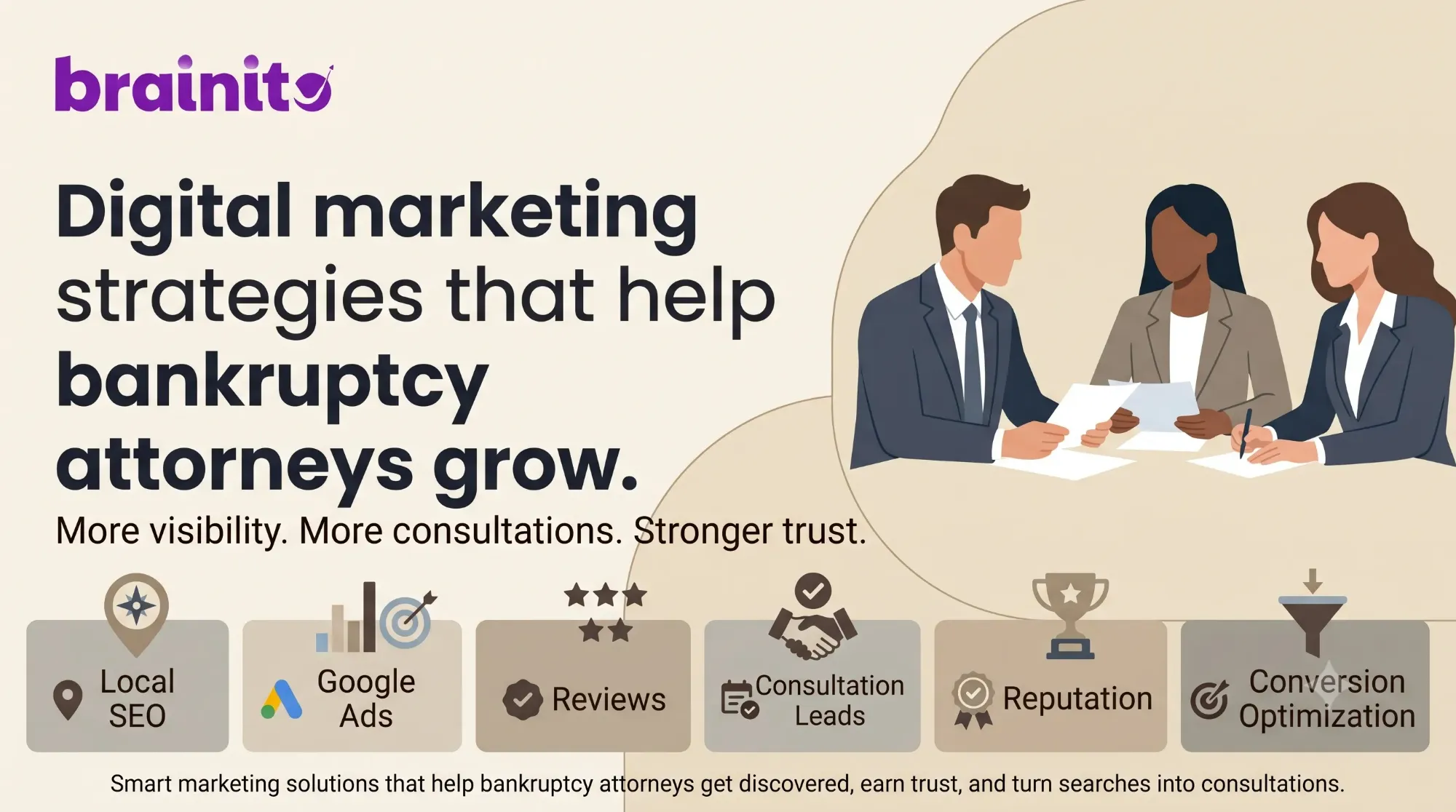
Practical digital marketing for bankruptcy attorneys: local SEO, paid ads, reviews, and content that turns searches into qualified consultations in 2026.
Why Bankruptcy Attorneys Need a Different Marketing Playbook
People searching for a bankruptcy attorney are rarely browsing. They are stressed, often embarrassed, and almost always under time pressure from creditors or a court date. That emotional context changes everything about how you market. A flashy brand campaign means little. What matters is showing up at the exact moment someone types "stop wage garnishment near me" and giving them a reason to trust you within seconds.
The buyer journey is short and high-intent
Most bankruptcy clients move from problem to provider in days, not months. They do not nurture for a quarter the way a B2B software buyer might. This compresses your funnel and rewards visibility and credibility over clever storytelling. The firms that win are the ones that are easy to find, easy to trust, and easy to contact.
Compliance and tone set the guardrails
Legal advertising rules vary by state bar, and bankruptcy adds federal sensitivities around debt relief claims. Your messaging has to be reassuring without overpromising outcomes. Before you scale any channel, it helps to benchmark where you stand. A free marketing audit scores your site across 77 factors and returns a prioritized action plan, so you fix the highest-impact gaps first instead of guessing.
Local SEO: Owning the Map Pack in Your Practice Area
Bankruptcy is a local-intent search category. Almost every valuable query carries a city, county, or "near me" modifier. That means your single biggest lever is local search visibility, specifically the Google map pack that sits above organic results.
Optimize your Google Business Profile relentlessly
Choose the right primary category (Bankruptcy Attorney or Bankruptcy Service), list your real service areas, and fill every field: hours, phone, services, and a description that names Chapter 7 and Chapter 13 explicitly. Post updates regularly and answer questions in the Q and A section. If you serve multiple cities, build a dedicated, genuinely useful page for each one rather than thin duplicates.
Audit your profile and citations
Inconsistent name, address, and phone data across directories quietly suppresses rankings. Run a quick check with a GMB audit tool to spot category, review, and listing issues, then clean up citations on legal directories and local business listings. Consistency compounds, and it is one of the cheapest wins available to a law firm.
Reviews and Reputation: The Trust Engine
For a service this personal, social proof is not optional. A prospect comparing two firms with similar credentials will pick the one with more recent, specific, five-star reviews almost every time. Reviews also feed local rankings, so reputation work doubles as SEO work.
Build a simple, repeatable review system
Ask every satisfied client at the moment relief is felt, usually right after a discharge or a stopped garnishment. Send a short follow-up with a direct link to your Google profile. Make it effortless. Then respond to every review, positive or negative, in a calm, professional voice that future readers will notice.
Handle sensitive feedback with care
Bankruptcy clients value discretion, so never reveal case details in a public reply. Acknowledge, apologize if warranted, and move the conversation offline. A steady drip of authentic reviews beats a sudden burst, which can look manufactured to both prospects and Google.
Paid Ads That Convert Distressed Searchers
Organic visibility takes time to build, and bankruptcy keywords are competitive. Paid search lets you appear instantly for high-intent terms while your SEO matures. The catch is that legal clicks are expensive, so structure and message discipline decide whether you profit or just spend.
Structure campaigns around intent, not vanity terms
Separate Chapter 7, Chapter 13, debt relief, and foreclosure-defense intents into tight ad groups so your copy matches the search precisely. A clean account structure lowers cost per click and raises quality scores. If you are starting from scratch, a Google ad structure generator can lay out campaigns, ad groups, and match types fast.
Test offers and reassurance in your copy
"Free confidential consultation," "stop creditor calls today," and "flexible payment plans" tend to outperform generic "experienced attorney" lines. Lead with relief and certainty. For social retargeting, a Facebook ad copy generator helps you produce empathetic variations to test against each other. Always send paid traffic to a focused landing page, never your homepage.
Content Marketing That Answers Real Fears
Your future clients are quietly searching questions they are too anxious to ask out loud: "Will I lose my house?" "Does bankruptcy ruin my credit forever?" "What is the difference between Chapter 7 and Chapter 13?" Answer those questions thoroughly and you earn rankings, trust, and consultations at the same time.
Build an educational content hub
Plan a steady cadence of plain-English articles that map to each fear and each stage of the process. To keep production consistent, a content calendar generator turns your topic list into a publishing schedule, and a blog content generator helps you draft faster without sacrificing clarity. Always have an attorney review for accuracy and compliance before publishing.
Repurpose into video and email
Turn your best articles into short explainer videos and a simple newsletter that nurtures prospects who are not quite ready to file. Video builds familiarity and trust, while email keeps you top of mind for the weeks a hesitant prospect spends deciding. If you want a structured roadmap for all of this, a DIY marketing plan sequences the work so you are not improvising month to month.
Referrals, Partnerships, and Putting It All Together
Digital channels work best alongside the referral relationships that have always driven legal business. The modern version simply makes those relationships measurable and repeatable.
Cultivate professional referral sources
Financial advisors, accountants, credit counselors, and even divorce attorneys regularly encounter people who need bankruptcy help. Stay visible to them with the occasional useful update, and reciprocate referrals where appropriate. Online networking on professional platforms keeps those relationships warm between in-person touchpoints.
Decide what to run in-house versus delegate
A solo or small firm cannot personally execute SEO, ads, content, and reviews every week. Be honest about capacity. Some firms keep strategy in-house and outsource production, while others bring in help to hire a marketer who owns the whole engine. Whichever path you choose, start with data: run a free marketing audit to see your current scores, then use the prioritized action plan to decide where the next dollar goes. You can compare options and budgets on the pricing page, and browse the blog for deeper tactics.
Frequently Asked Questions
How long does it take to see results from digital marketing for a bankruptcy law firm?
Paid search can generate qualified consultation requests within days once your campaigns and landing pages are properly structured. Local SEO and content marketing typically take three to six months to gain traction, but they produce a durable, lower-cost stream of leads over time. A balanced approach runs ads for immediate visibility while SEO and reviews compound in the background.
Which channel gives bankruptcy attorneys the best return on investment?
For most firms, local SEO paired with a strong review profile delivers the best long-term return because the intent is high and the ongoing cost is low. Paid search is the fastest lever but the most expensive per lead. The strongest results come from combining them, then layering in educational content to support both. Running a free marketing audit first helps you see which channel has the biggest gap to close.
Is content marketing worth it when clients need help urgently?
Yes, because not every prospect is ready to file the moment they search. Helpful articles and videos capture people earlier in their decision, build trust, and improve your search rankings so you appear when the urgent searches do happen. Content marketing and urgency-driven channels are complementary, not competing.