
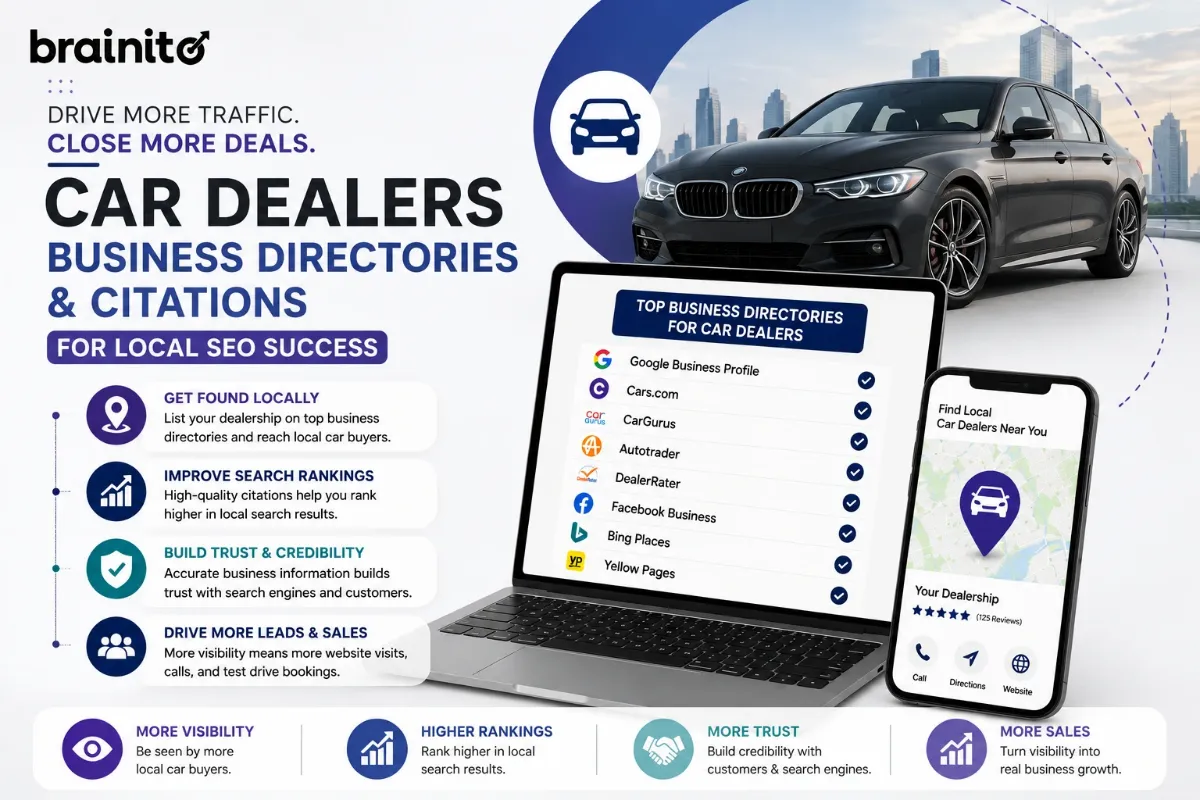
Drive more showroom traffic with the right citations. See how car dealers use business directories and consistent NAP data to win local SEO in 2026.
Why Citations Still Move the Needle for Car Dealers
When someone searches "used trucks near me" or "Toyota dealer open now," the listings that surface first are rarely the ones with the flashiest websites. They are the dealers with clean, consistent, and widespread citations across the directories that search engines trust. For automotive retail, where a single sale can be worth tens of thousands of dollars, that visibility translates directly into floor traffic and signed deals.
A citation is any online mention of your dealership's name, address, and phone number (often called NAP). Search engines treat these mentions as votes of confidence. The more reputable directories that list your dealership accurately, the more confident Google becomes that you are a real, established business worth showing to nearby buyers.
Citations vs. Backlinks: Know the Difference
A backlink passes link authority through a clickable hyperlink. A citation simply confirms your business details exist and match across the web. Both matter, but citations are the foundation of local ranking. Without consistent NAP data, even strong backlinks struggle to lift you in the local pack. If you want a clear picture of where your dealership stands today, our free marketing audit scores your site across 77 factors and flags citation gaps you can fix this week.
How Buyers Actually Shop for Vehicles Online
Today's car buyer spends weeks researching before ever setting foot on a lot. They compare prices on aggregators, read reviews, check inventory photos, and validate that a dealership is legitimate. Each of those touchpoints is usually a directory or marketplace listing, not your homepage.
This is why presence on automotive directories is not optional. A shopper who sees your dealership on three trusted platforms with identical contact details forms an instant impression of credibility. A shopper who finds two conflicting phone numbers and an outdated address moves on to the competitor down the road.
The Trust Signal Compounds
Directories amplify each other. When Google crawls Edmunds, Cars.com, and Kelley Blue Book and finds the same NAP for your dealership, the consistency reinforces your legitimacy. Inconsistency does the opposite and can actively suppress your local rankings. Treat your business details like a contract: one source of truth, replicated everywhere.
The Directories That Matter Most for Dealerships
Not all directories carry the same weight. Authority metrics like Domain Authority, Trust Flow, and Citation Flow help you prioritize where to invest first. A handful of automotive platforms dominate buyer attention and search authority, so start there before chasing long-tail listings.
Tier One: High-Authority Automotive Platforms
Edmunds, Kelley Blue Book, Cars.com, and Autotrader anchor the automotive ecosystem. These carry exceptionally high domain authority and are where serious buyers compare vehicles. Several require paid placement, but the visibility and referral traffic justify the spend for most dealerships.
Tier Two: Free and Niche Listings
Free options such as manufacturer locator tools, regional dealer associations, and specialty platforms for classic cars or motorcycles round out your footprint. They cost nothing but time and reinforce your NAP consistency. Even a small classic-car directory adds a trustworthy citation that strengthens the whole profile.
Tier Three: General Local Directories
Do not overlook Google Business Profile, Yelp, Bing Places, Apple Business Connect, and Facebook. These power the map results and voice search answers that send ready-to-buy customers straight to your showroom. Our GMB audit tool checks whether your Google profile is fully optimized to capture that demand.
Building a Citation Strategy That Scales
Scattershot listing creation wastes hours and creates the inconsistencies that hurt rankings. A disciplined approach wins. Start by documenting your canonical NAP, then audit every existing mention before adding new ones.
Step One: Lock Down Your NAP
Decide on one exact format for your dealership name, street address, suite number, and phone line. Use a tracked local number rather than a generic call center if you operate multiple rooftops. This becomes the single reference every directory must match.
Step Two: Audit and Fix What Exists
Search your dealership name and phone number to surface old, duplicate, or abandoned listings. Stale citations from a previous location or owner actively confuse search engines. Claim or correct them before building anything new. A structured plan helps here, and our DIY marketing plan walks you through prioritizing local SEO tasks step by step.
Step Three: Expand Methodically
Add tier-one automotive platforms first, then general local directories, then niche listings. Track each submission in a simple spreadsheet with the URL, login, and date. Consistency over volume is the rule. Ten flawless citations beat fifty sloppy ones.
Pairing Citations With Content and Reviews
Citations get you into the consideration set, but content and reviews close the gap between visibility and sales. Buyers who find your listing want to see fresh inventory descriptions, helpful buying guides, and a steady stream of recent reviews.
Publishing localized content (think "best family SUVs for snowy commutes in your metro") gives your dealership topical authority and earns the natural backlinks that complement your citations. If writing at scale feels daunting, tools like our blog content generator and content calendar generator help you ship consistent, search-friendly posts without hiring a full editorial team.
Reviews Are the Tiebreaker
When two dealerships rank side by side in the local pack, the one with more recent, higher-rated reviews almost always wins the click. Ask every satisfied buyer for a review and respond to all of them. This signals to both customers and search engines that your dealership is active and trustworthy. For a deeper assessment of where your local presence stands, the free marketing audit returns a prioritized action plan you can hand straight to your team.
Common Citation Mistakes Dealers Should Avoid
Even well-resourced dealerships sabotage their local SEO with avoidable errors. The most damaging is inconsistent NAP data across listings. A "Street" on one platform and "St." on another may seem trivial, but algorithms read them as separate entities.
Other frequent missteps include abandoning listings after creating them, ignoring duplicate profiles, using a toll-free number that does not match the local market, and stuffing the business name with keywords. That last one violates platform guidelines and can get your profile suspended.
Keep It Maintained
Citations are not a one-time project. Phone numbers change, dealerships relocate, and ownership shifts. Schedule a quarterly review to catch drift before it erodes your rankings. If managing this in-house stretches your team too thin, you can hire a marketer to own your local SEO, or compare engagement options on our pricing page.
Frequently Asked Questions
How many directory citations does a car dealership need?
Quality matters far more than quantity. Aim for a strong core of 15 to 25 accurate citations: the major automotive platforms, the big general directories like Google Business Profile and Yelp, and any relevant regional or niche listings. Beyond that, focus on keeping every existing citation consistent rather than chasing low-value directories.
Are paid automotive directories worth the cost?
For most dealerships, yes. Platforms like Edmunds, Cars.com, and Autotrader command enormous buyer attention and high search authority, so the referral traffic and visibility typically justify the spend. Start with one paid platform, track the leads it generates, and scale based on real results rather than assumptions.
What is the fastest way to find my citation gaps?
Search your dealership name and phone number to spot inconsistencies, then run a structured audit. Our free marketing audit scores your website across 77 factors and surfaces citation and local SEO issues in a prioritized list, so you know exactly what to fix first. Pair it with our backlink audit tool to round out the off-site picture.