Build a car dealer marketing strategy that fills your lot with buyers. Local SEO, paid ads, video, and reviews tactics that convert in 2026.
Why Car Dealers Need a Modern Marketing Strategy
Buying a car rarely starts on a dealership lot anymore. It starts on a phone, with a search query, a comparison video, and a scroll through reviews. By the time a shopper walks in or fills out a form, they have already narrowed their choices to a handful of dealers they trust. If your dealership is not visible at those early moments, you are competing on price alone, and that is a race no one wins.
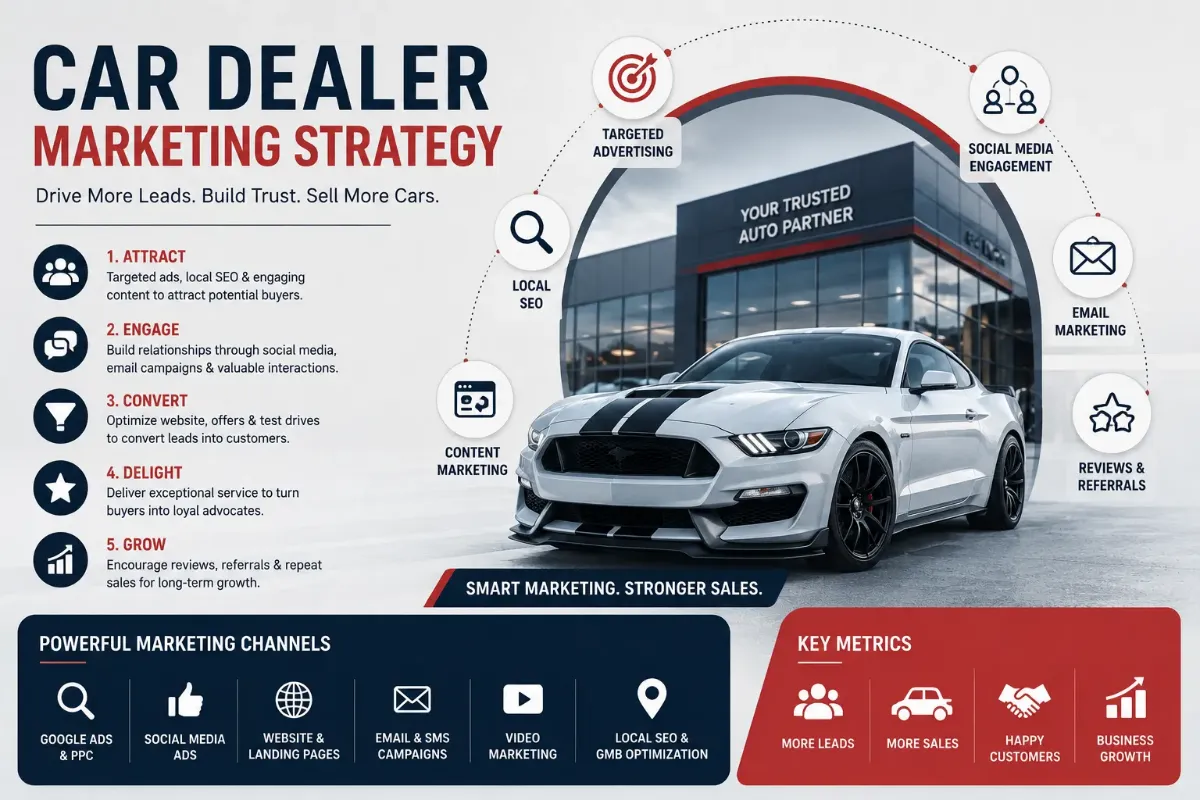
A car dealer marketing strategy is the system that puts your inventory, your reputation, and your offers in front of the right buyer at the right stage of their journey. It blends digital channels like search and social with grounded local tactics like reviews and community presence. The dealers who grow in 2026 are not the ones spending the most. They are the ones with the most coherent strategy across every touchpoint.
The shift to research-driven buyers
Today's car buyer spends hours researching online before contacting a single dealer. They watch walkaround videos, read owner reviews, and compare financing options across sites. Your job is to be present and persuasive at each of those steps, not just at the final sale. If you are unsure where your dealership stands across these channels, a free marketing audit scores your site across 77 factors and returns a prioritized action plan you can start on this week.
Optimize Your Website to Convert Lot Visitors Into Leads
Your website is your busiest salesperson, working nights and weekends. A slow, cluttered, or hard-to-navigate site quietly turns away buyers who would have converted on a competitor's cleaner page. Speed matters most: a site that takes more than three seconds to load loses a meaningful share of mobile shoppers before they ever see your inventory.
What a high-converting dealer site needs
Make the inventory search fast and filterable by price, body type, mileage, and fuel type. Put clear calls to action on every vehicle page, whether that is "check availability," "get financing," or "book a test drive." Display real photos, not stock images, and show pricing transparently. Add trust signals like review counts, certifications, and warranty details near the buttons that ask for a commitment.
Most importantly, design for mobile first. The majority of your traffic is on a phone, and a form with too many fields will tank your conversion rate. Ask for the minimum needed to start a conversation. If you want a structured way to fix these gaps yourself, our DIY marketing plan walks through website and conversion priorities step by step.
Win Local Search With SEO Built for Dealerships
When someone searches "used SUVs near me" or "best car dealership in [your city]," you want to be in the top three results and the map pack. Local SEO is one of the highest-return investments a dealership can make because the intent is so strong. These searchers are ready to buy soon, and they are searching with their location in mind.
The local SEO essentials
Start with your Google Business Profile. Keep your name, address, phone, and hours accurate, add fresh photos of your lot and inventory, and post updates about promotions. Your profile health directly shapes how often you appear in local results, so run a GMB audit to spot what is missing or inconsistent.
On your website, build location and model-specific pages that match how people actually search. Target terms with a keyword research tool to find the exact phrases buyers use in your area, then create content around them. Earn local backlinks from community sponsorships, local news, and supplier directories, and audit your existing links with a backlink audit tool to clean up anything hurting your authority.
Use Paid Ads to Capture High-Intent Buyers Fast
SEO builds long-term momentum, but paid advertising delivers leads while you wait for organic rankings to climb. Google Search Ads put your dealership at the very top of results for queries like "2026 hybrid sedan deals" the moment someone searches. Because these shoppers have clear intent, the cost per lead is often well worth it.
Structuring campaigns that pay off
Group your campaigns by intent: brand searches, model searches, financing queries, and competitor terms each deserve their own ad groups with tailored messaging. A clean account structure keeps your quality scores high and your costs low. Our Google ad structure generator helps you lay out campaigns and ad groups that mirror how buyers search.
Pair search with social retargeting. Shoppers who viewed a vehicle but did not convert are your warmest audience. Bring them back with Facebook and Instagram ads featuring the exact model they browsed. Strong ad copy makes or breaks these campaigns, so use a Facebook ad copy generator to test angles around price, trade-in value, and limited-time offers without writer's block.
Build Trust With Video, Content, and Reviews
Cars are a high-consideration purchase, so trust is the currency that closes the deal. Three channels build it faster than anything else: video, helpful content, and customer reviews. Used together, they turn a curious browser into a confident buyer.
Video that sells the experience
A large share of car buyers say online video influences their decision, and it is easy to see why. Walkaround tours, feature explainers, and customer delivery moments let shoppers picture themselves in the car. You do not need a studio. A clean phone video with good lighting and clear narration outperforms a glossy ad that feels like a commercial.
Content that answers real questions
Blog content captures shoppers in the research phase. Posts like "lease versus finance" or "best family SUVs under your budget" pull in traffic and position your dealership as a helpful expert. Plan topics with a content calendar generator and draft faster with our blog content generator so you publish consistently instead of in bursts. For deeper inspiration on tactics, our marketing blog covers SEO and content strategy in depth.
Reviews that close the loop
Ask every happy customer for a Google review, and respond to all of them, positive or negative. A steady stream of recent, genuine reviews lifts both your local rankings and your conversion rate, because buyers trust other buyers more than any ad you run.
Tie It Together and Measure What Matters
The most common reason dealership marketing underperforms is not a weak channel. It is the absence of a plan connecting the channels. Search, social, video, and reviews should reinforce each other, with every dollar pointed at a clear goal: more qualified leads at a lower cost per sale.
Track the metrics that drive revenue
Watch cost per lead, lead-to-appointment rate, and appointment-to-sale rate, not just clicks and impressions. These numbers tell you where buyers drop off so you can fix the leak instead of pouring more budget into a broken funnel. Refresh your email follow-up too, since a strong subject line dramatically lifts open rates. Test variations with an email subject line generator to keep your nurture sequences working.
If building and running all of this in-house feels like too much, you have options. A free marketing audit gives you a prioritized roadmap, and if you would rather hand it off, you can hire a marketer to execute the plan while your team focuses on selling cars.
Frequently Asked Questions
How much should a car dealership spend on marketing?
There is no single number, but many dealers allocate a percentage of total revenue toward marketing and weight it toward digital channels where intent is highest. Start by auditing your current results, fix the highest-impact gaps first, then scale the channels that prove out a strong return. A free marketing audit helps you find those high-impact priorities before you increase spend.
What is the most effective marketing channel for car dealers?
Local SEO and Google Business reviews tend to deliver the best long-term return because they reach buyers with strong purchase intent in your area. Paid search adds speed for immediate leads. The strongest results come from combining both rather than relying on any single channel.
Do car dealerships still need a blog in 2026?
Yes. Helpful content captures shoppers during the research phase, builds trust, and improves your search visibility for the questions buyers actually ask. Using a DIY marketing plan and tools like a content calendar keeps publishing consistent without overwhelming your team.