
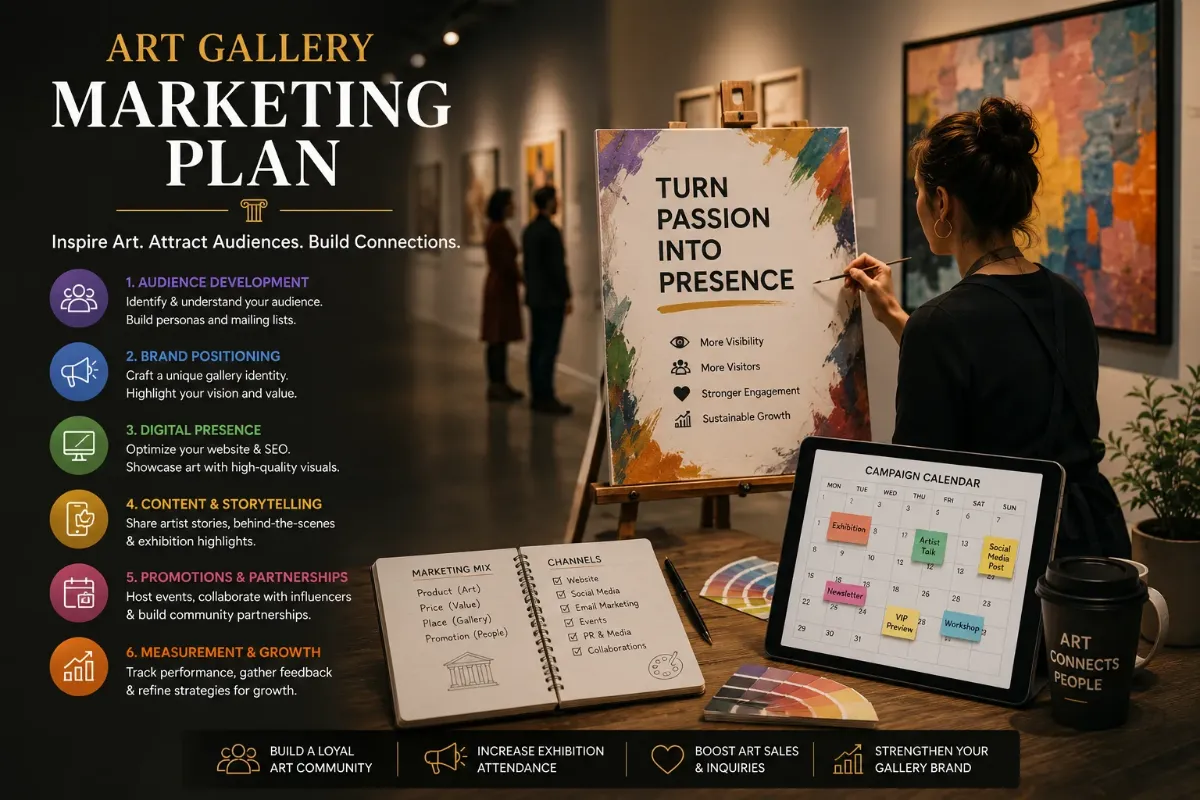
Build an art gallery marketing plan that fills openings and sells work. Get website, social, email, and local SEO tactics for galleries in 2026.
Why Galleries Need a Different Marketing Playbook
Most marketing advice assumes you are selling a product people already understand. A gallery is not selling a coffee mug. You are selling an experience, a point of view, and a relationship with an artist. Visitors do not arrive because of a discount. They arrive because something made them curious enough to walk through the door or click into your collection.
That changes how an art gallery marketing plan should be built. Instead of leading with price, you lead with story, atmosphere, and access. The goal is to turn casual browsers into regulars who attend openings, follow your artists, and eventually buy. This guide walks through a practical plan you can start using this month, with the channels that matter most for galleries in 2026.
Start With Clear Goals
Before you touch a single channel, decide what success looks like. Are you trying to grow opening-night attendance, sell more original work, build a collector email list, or get press for a specific exhibition? Each goal points to different tactics. Write down one primary goal and two supporting ones, then build everything around them. If you want a structured starting point, our DIY marketing plan framework helps you map goals to channels without guesswork.
Build a Website That Sells the Experience
Your website is the digital version of your gallery floor. It should load fast, look uncluttered, and put the art first. Large, high-quality images, short artist bios, and clear exhibition dates do more work than long paragraphs. Add short video walkthroughs of current shows so people who cannot visit in person still feel the space.
The Pages Every Gallery Site Needs
At minimum, include a current exhibitions page, an artists page with individual profiles, a visit page with hours and directions, and a simple way to inquire about a piece. Make the inquiry button impossible to miss. Many sales start with a single curious email, so reducing friction there directly affects revenue.
Get the Technical Foundation Right
Beautiful images mean nothing if search engines and visitors struggle with your site. Slow pages, broken links, and missing metadata quietly cost you traffic. A good way to find these issues is to run a free marketing audit, which scores your website across 77 factors and returns a prioritized action plan so you fix the highest-impact problems first instead of guessing.
Win Local SEO So Nearby Visitors Find You
Galleries live and die by foot traffic and local reputation. When someone searches "art gallery near me" or "contemporary art in my city," you want to be the result they tap. That is local SEO, and it is one of the highest-return channels for any gallery with a physical location.
Optimize Your Google Business Profile
Claim and fully complete your Google Business Profile. Add your hours, current exhibition photos, an accurate category, and a steady stream of posts about upcoming openings. Profiles with fresh photos and regular updates rank higher and convert more clicks into visits. You can check how well your listing is set up with our GMB audit tool and fix the gaps it surfaces.
Target the Right Local Keywords
Research the exact phrases collectors and visitors use in your area, then weave them into your page titles, headings, and artist descriptions. A quick session with a keyword research tool reveals which terms have real search volume so you are not optimizing for phrases nobody types.
Use Social Media and Email to Build a Following
Visual platforms were practically built for galleries. Instagram and short-form video let you show work in progress, behind-the-scenes studio visits, and the energy of an opening night. The galleries that grow fastest treat social as storytelling, not a billboard. Show the artist's hands, the texture of a canvas, the crowd reacting to a new piece.
Post With Intention, Not Just Frequency
Consistency beats volume. A simple content calendar keeps you posting around exhibition cycles instead of scrambling for ideas. Plan a sequence: tease an upcoming show, reveal featured works, promote the opening, then recap with photos that pull in the people who missed it.
Own Your Audience Through Email
Social reach is rented. Email is owned. Build a list of collectors, attendees, and subscribers, and send a short, image-rich newsletter before each opening. Personal previews and first-look access make collectors feel like insiders, which is exactly the relationship that leads to sales. Strong subject lines decide whether those emails get opened, so test a few with our email subject line generator before you hit send.
Network, Earn Press, and Collect Reviews
Marketing for galleries is not only digital. Relationships still drive a large share of sales, especially for higher-value work. Attend art fairs, host artist talks, and partner with local businesses, designers, and interior decorators who influence buying decisions. Every conversation is a potential collector or a referral.
Pitch Local Press and Publications
A feature in a local magazine, culture blog, or neighborhood newspaper still carries weight and often ranks in search results for years. Build a short, compelling pitch around what makes your current exhibition newsworthy: a debuting artist, an unusual medium, or a community theme.
Make Reviews Part of the Routine
Ask happy visitors and buyers to leave Google and Yelp reviews. Social proof reassures first-time visitors and improves your local ranking at the same time. A simple after-visit email or a small sign at the front desk with a QR code can steadily grow your review count. If you want help turning these tactics into a staffed, ongoing effort, you can hire a marketer to run the program for you.
Measure, Refine, and Outpace Competitors
A marketing plan is never finished. The galleries that keep growing are the ones that review what worked and quietly drop what did not. Track which exhibitions drew the most attendance, which posts drove inquiries, and which emails led to sales. Patterns appear quickly once you start paying attention.
Watch What Other Galleries Do Well
Study competitors and respected galleries in other cities. Notice how they frame exhibitions, what their websites do well, and where they earn backlinks. A quick backlink audit shows where similar galleries get coverage, giving you a list of publications and partners worth pitching.
Build a Repeatable Review Cycle
Set a monthly check-in to compare results against the goals you set at the start. Adjust your spending and effort toward the channels that produce visits and sales. To make sure your whole digital presence is pulling its weight, run a free marketing audit each quarter and work through its prioritized action plan. For deeper resources and tactics, keep an eye on the Brainito blog.
Frequently Asked Questions
How much should an art gallery spend on marketing?
There is no fixed number, but many small and mid-size galleries reinvest a meaningful slice of revenue into marketing, weighted toward the channels that fill openings and drive inquiries. Start lean by focusing on local SEO, email, and organic social, which cost little beyond your time, then add paid promotion once you know which exhibitions and audiences convert best.
What is the most effective channel for selling art?
For most galleries, the highest-return combination is local SEO plus a well-tended email list. Local search brings in nearby visitors actively looking for art, while email nurtures the collectors who eventually buy. Social media supports both by building awareness and showing work in an emotionally engaging way.
How do I know if my gallery website is working?
Look at three signals: how much organic traffic you get, how many inquiries the site generates, and whether visitors complete actions like signing up or asking about a piece. If any of those are weak, run a free marketing audit to pinpoint the technical and content issues holding your site back, then fix them in priority order.