
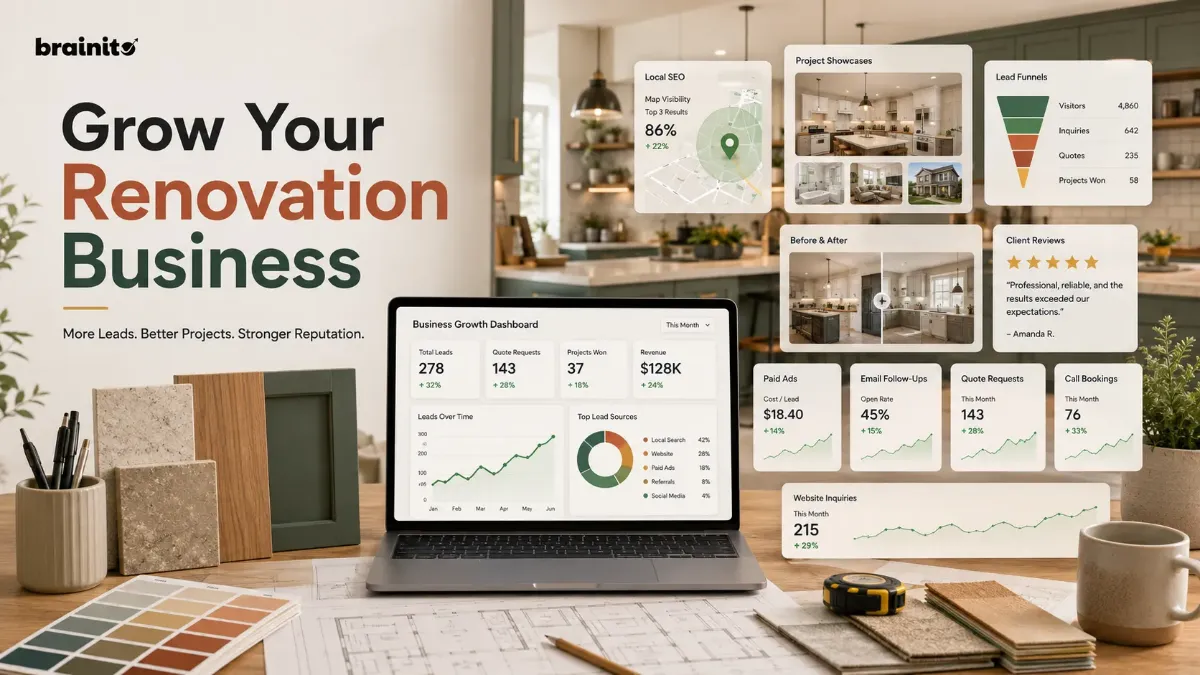
Practical marketing strategies for renovation businesses: win local search, build a visual portfolio, run ad funnels, and turn happy clients into referrals.
Why Renovation Marketing Is Different
Selling a kitchen remodel or a full home renovation is not like selling a quick service. The job is expensive, the decision is emotional, and homeowners spend weeks or months researching before they ever pick up the phone. That long, trust-heavy buying cycle changes how you should market. Your job is not to close on the first click. It is to stay visible, build credibility, and be the obvious choice when the homeowner is finally ready.
The renovation market is also intensely local and intensely competitive. A homeowner searching for a contractor is comparing you against five other companies in the same zip code, all promising quality work. The businesses that win are not always the best with a hammer. They are the ones that show up first, look the most trustworthy, and make the next step feel easy. Below are the strategies that consistently move the needle for renovation companies in 2026.
Before you spend a dollar on ads, it helps to know where your current marketing is strong and where it leaks leads. A free marketing audit scores your website across 77 factors and hands back a prioritized action plan, so you fix the highest-impact problems first instead of guessing.
Dominate Local Search and Google Business Profile
Most renovation leads start with a local search: "kitchen remodel near me" or "bathroom renovation contractor [city]." If you are not in the top map results and the first page of organic listings, you are invisible to the people most ready to hire.
Optimize Your Google Business Profile
Your Google Business Profile is often the first thing a homeowner sees. Fill out every field, choose the right primary category, add real project photos, and keep your service area accurate. Then ask every satisfied client for a review. Reviews and recent photo activity are major ranking signals for the local map pack. Run a quick GMB audit to spot gaps in your profile before a competitor outranks you.
Build Location and Service Pages
Create dedicated pages for each core service (kitchens, bathrooms, additions, basements) and each city you serve. These pages capture specific, high-intent searches. Use a keyword research tool to find the exact phrases homeowners type, then build content around them. If you want a documented plan for this, a DIY marketing plan walks you through the structure step by step.
Build a Visual Portfolio That Sells the Dream
Renovation is a visual business. Homeowners do not buy drywall and tile. They buy the feeling of walking into a transformed space. Before-and-after content is the single most persuasive asset you own, so treat it as a marketing priority, not an afterthought.
Photograph every project properly. Shoot the "before" the day you start and the "after" once the space is staged and clean. Post these transformations on Instagram and Pinterest, where renovation inspiration thrives, and embed your best ones on your website. A strong gallery does more selling than any paragraph of copy because it proves you can deliver.
Short video tours and time-lapse clips perform especially well. They show craftsmanship, build trust, and keep your brand in front of homeowners who are still in the dreaming phase. When you publish project breakdowns on your blog, a blog content generator can help you turn each finished job into a search-friendly case study with minimal writing time.
Run Lead-Generation Ads and Smart Funnels
Organic visibility takes time. Paid advertising fills the pipeline now and lets you target homeowners actively searching for renovation work. The key is structure: a focused campaign beats a scattered budget every time.
Search Ads for High Intent
Google and Bing search ads put you in front of people typing buying-intent queries today. Tight ad groups, specific keywords, and strong landing pages keep your cost per lead under control. A Google ad structure generator helps you organize campaigns so your budget goes to the searches most likely to convert.
Retargeting and Social Ads
Most visitors leave your site without converting on the first visit. Retargeting ads on Google and Facebook bring them back, gently reminding them of your work as they keep browsing. Pair this with social ads featuring your best transformations, and write scroll-stopping copy with a Facebook ad copy generator.
Email Funnels That Nurture
Because the renovation decision is slow, capture leads early with a free estimate or design guide, then nurture them with automated emails. Start with education, share project results, and gradually invite them to book a consultation. Strong subject lines decide whether those emails get opened, so test variations with an email subject line generator.
Earn Referrals and Strategic Partnerships
Word of mouth is gold in renovation. A homeowner who just lived through a remodel and loved the result is your most credible salesperson. Make referrals deliberate, not accidental. Deliver excellent service, ask for a review while the excitement is fresh, and consider a simple referral incentive for clients who send you a neighbor.
Partnerships multiply your reach. Real estate agents, property managers, interior designers, and home stagers all talk to homeowners who need renovation work. Build relationships with a handful of them and become their trusted referral. These partners send pre-qualified leads who already trust the person recommending you.
Community presence reinforces everything. Sponsor a local event, support a neighborhood cause, or offer a thoughtful discount for veterans and nonprofits. This builds genuine goodwill and keeps your name circulating locally. When your reputation and referral engine are humming, you rely far less on paid ads to stay busy. If you would rather have an expert build and run this whole system, you can hire a marketer to handle it for you.
Measure, Refine, and Reinvest
Marketing without measurement is just spending. Track where your leads come from, what they cost, and which sources turn into booked jobs. A lead from a referral partner and a lead from a Google ad cost very different amounts and close at very different rates, and you should be reinvesting where the return is highest.
Watch a few core numbers: cost per lead, lead-to-consultation rate, and consultation-to-job rate by channel. Over a quarter, these tell you where to double down and where to cut. Your website is the hub that everything feeds into, so keep it fast, trustworthy, and easy to act on. If you are not sure where it falls short, run a free marketing audit to get a clear, prioritized list of fixes ranked by impact. Pairing that audit with a documented DIY marketing plan turns a pile of tactics into a repeatable system that grows your renovation business month over month.
Frequently Asked Questions
What is the most effective marketing channel for a renovation business?
Local search is usually the highest-return channel because it captures homeowners with active buying intent. A well-optimized Google Business Profile, strong reviews, and dedicated service and location pages put you in front of people ready to hire. Pair that with referrals and a visual portfolio, and you have a durable lead engine. To see exactly where your current setup is leaking leads, start with a free marketing audit.
How long does it take to see results from renovation marketing?
It depends on the channel. Paid search ads can generate leads within days, while SEO and content marketing typically take three to six months to build momentum. Referrals and partnerships compound over time. The smartest approach runs paid ads for immediate leads while building organic visibility and relationships for long-term, lower-cost growth.
Do I need a big budget to market a renovation business?
No. A polished Google Business Profile, consistent before-and-after content, and an active referral program cost little beyond your time and deliver outsized returns. Start with these fundamentals, measure what works, then reinvest profits into paid ads. If you would rather not manage it yourself, you can hire a marketer to scale once the basics are proven.