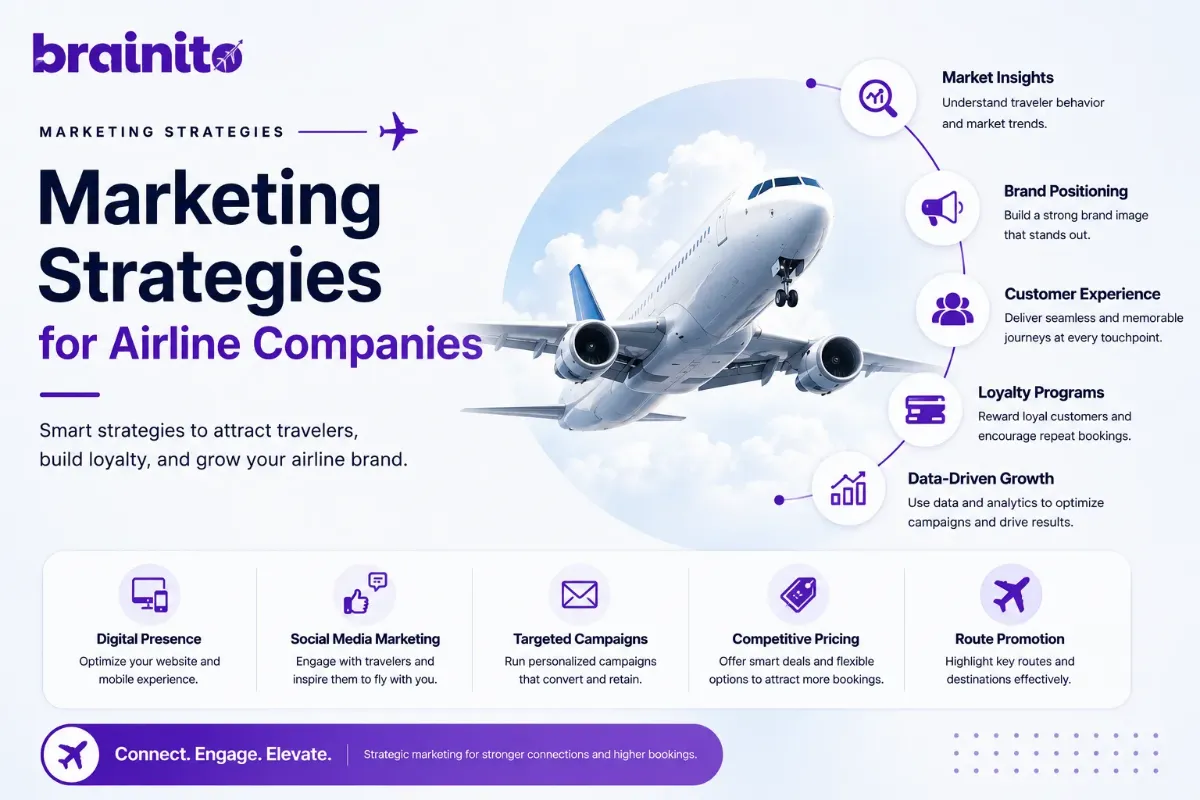
Proven airline marketing strategies for 2026: loyalty programs, social media, personalization, and partnerships that fill seats and build lasting customer loyalty.
Why Airline Marketing Is a Different Game
Few industries are as competitive, as emotional, and as data-rich as commercial aviation. Travelers compare fares in seconds, abandon carts the moment a price feels wrong, and remember a single delayed flight far longer than ten smooth ones. That mix of high stakes and razor-thin loyalty makes airline marketing uniquely demanding.
In 2026, passengers expect more than a seat from point A to point B. They expect a brand experience that respects their time, anticipates their needs, and rewards their repeat business. The airlines that grow are the ones treating marketing not as a discount engine but as a relationship engine.
This guide walks through the strategies that actually move the needle for airlines today, from loyalty design to data-driven personalization. If you want a clear read on where your own brand stands before you dive in, a free marketing audit scores your website across 77 factors and hands back a prioritized action plan you can start on this week.
Build Loyalty Programs People Actually Use
Frequent flyer programs are the backbone of airline marketing, but most travelers belong to several and engage with few. The difference between a dormant membership and an active one comes down to perceived value and ease of redemption.
Make rewards feel attainable
Tiered programs work when each level feels reachable. Bury the best perks behind impossible mileage thresholds and members disengage. Offer early wins, like a free checked bag or priority boarding after a handful of flights, and you create momentum that keeps people booking with you.
Reward more than flying
The strongest programs in 2026 award points for everything from co-branded credit card spending to hotel stays and dining. The more touchpoints that earn miles, the more your brand stays top of mind between trips. Surprise-and-delight bonuses, like a birthday upgrade or double points on a quiet route, build the emotional connection discounts alone never will.
Win Social Media With Stories, Not Sales
Airlines sit on some of the most shareable content on the planet: window-seat sunrises, new destinations, behind-the-scenes crew moments. Yet many carriers waste the channel on fare blasts that get scrolled past instantly.
The platforms reward emotion and authenticity. User-generated travel photos, short-form videos of crew preparing a cabin, and quick destination guides earn far more reach than a promo graphic. Partnering with travel creators who genuinely fit your routes extends that reach to engaged, ready-to-book audiences.
Social is also your fastest customer-service desk. A delayed passenger who tweets at you wants a human reply in minutes, not a canned link. Responsive, warm public support does more for brand perception than any campaign. For a deeper framework on building a channel mix that fits your resources, our DIY marketing plan lays out a step-by-step structure you can adapt.
Use Data to Personalize Every Touchpoint
Airlines collect extraordinary amounts of behavioral data: search history, route preferences, seat choices, ancillary purchases. The carriers that turn that data into relevant, timely messaging consistently outperform those that blast the same offer to everyone.
Segment by intent and behavior
A business traveler who books last-minute aisle seats wants different messaging than a family planning a summer holiday six months out. Segmenting by travel pattern, frequency, and spend lets you send offers that feel helpful rather than spammy. Personalized fare alerts and route suggestions based on past searches recover bookings that would otherwise leak to competitors.
Sharpen your email and offers
Email remains one of the highest-ROI channels in travel, but only when the message earns the open. A compelling, specific subject line is the difference between a booking and the trash folder. Our email subject line generator helps you test variations quickly so your fare alerts and loyalty updates actually get seen.
Court Business Travelers and Partner Strategically
Business travelers book more often, pay premium fares, and stay loyal when treated well, which makes them disproportionately valuable. Lounge access, priority everything, flexible change policies, and dedicated support all signal that you understand their time is money. Corporate travel agreements and tailored loyalty perks turn one road warrior into an account that books dozens of trips a year.
Partnerships multiply your reach without multiplying your ad budget. Bundle flights with hotels, car rentals, ride-share credits, and local experiences, and you become part of the entire trip rather than a single leg of it. Cross-promotion with complementary brands puts your name in front of audiences already in a travel mindset.
These partnerships also generate ancillary revenue, the high-margin extras that increasingly fund airline profitability. If you are weighing whether to build this work in-house or bring in specialist help, our guide to hiring a marketer breaks down what to look for and when outside expertise pays off.
Make Mobile and Self-Service the Default
The 2026 traveler lives on their phone. Booking, check-in, boarding pass, seat changes, baggage tracking, and real-time delay updates all need to work flawlessly in a single app. Friction at any step sends customers to a competitor and erodes trust.
Self-service is not just convenient for passengers; it lowers your cost to serve. Digital wallets, contactless boarding, and chatbot support for common questions free up staff for the moments that genuinely need a human. Done well, automation improves the experience and the margin at the same time.
Your app and website are also your most important marketing assets, because they are where intent converts to revenue. A slow, confusing booking flow quietly kills conversions no matter how good your ads are. Running a free marketing audit surfaces the technical and experience gaps costing you bookings, ranked so you fix the most expensive problems first. You can browse more tactical guides on our blog as you build out the plan.
Frequently Asked Questions
What is the most effective marketing strategy for airlines in 2026?
There is no single tactic that wins alone, but personalization driven by customer data consistently delivers the strongest returns. Airlines that segment travelers by behavior and intent, then deliver relevant fare alerts, loyalty perks, and timely offers, see higher conversion and retention than those running one-size-fits-all promotions. Pairing that with a well-designed loyalty program and a frictionless mobile experience creates a flywheel that compounds over time.
How can a smaller or regional airline compete with major carriers?
Smaller carriers win by being focused and human. Lean into the routes, communities, and service moments the majors overlook, build genuine social engagement, and partner with local hotels and experiences to own the whole trip. Speed and warmth in customer service are advantages a small team can deliver better than a giant. Start with a free marketing audit to find the highest-impact fixes, then follow a structured DIY marketing plan to execute without a massive budget.
How important is social media for airline marketing?
Very, but mostly as a brand and service channel rather than a direct sales tool. Travelers share their journeys, research destinations, and voice complaints publicly, so a responsive, story-driven presence shapes how millions perceive your brand. The goal is reach, trust, and fast support, not constant fare promotion.