
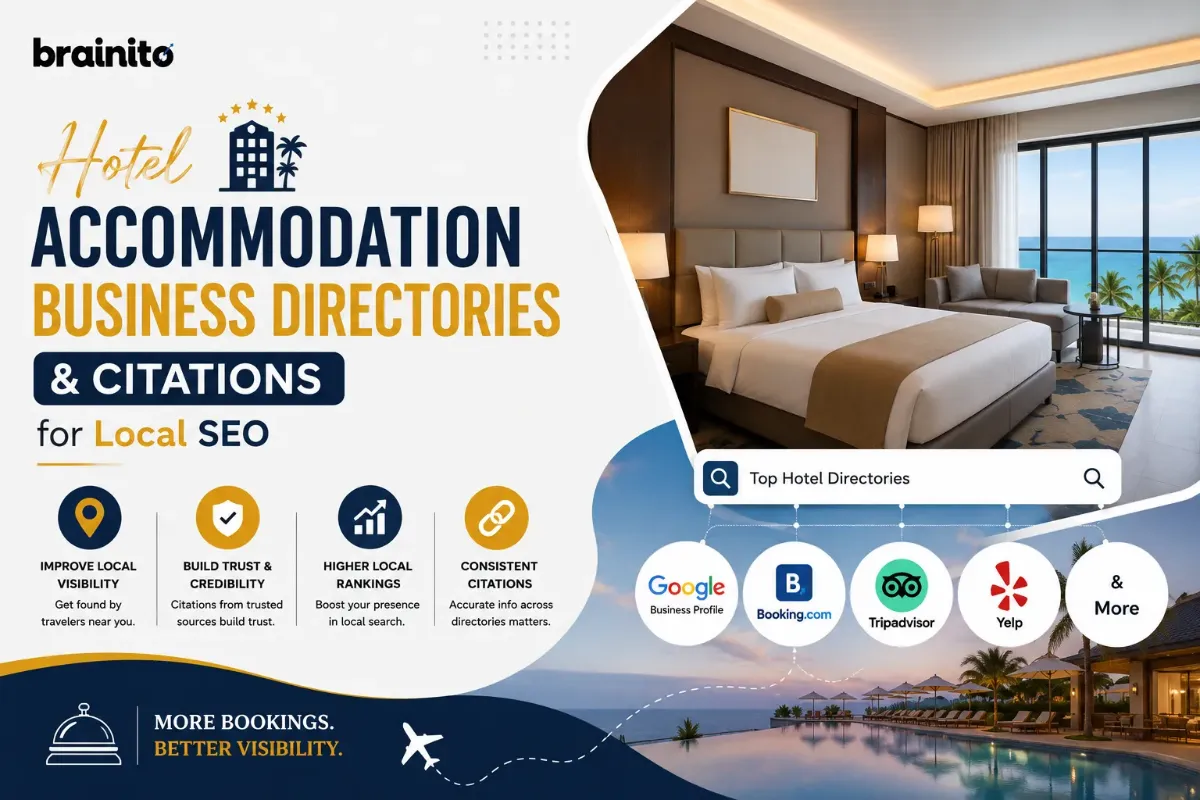
Boost your hotel's local SEO with the right accommodation directories and consistent citations. See which listings matter and how to build NAP authority in 2026.
Why Directories and Citations Decide Where Travelers Find You
Most guests do not start their search on your website. They start on Google Maps, on a travel app, or inside a directory like TripAdvisor or Booking.com. For hotels, guesthouses, and short-stay properties, your visibility on those platforms is often the difference between a fully booked weekend and an empty wing. That is where business directories and local citations come in.
A citation is any online mention of your property's name, address, and phone number (commonly called NAP). When that information is accurate and repeated consistently across high-authority directories, search engines gain confidence that your business is real, established, and worth ranking. For accommodation brands competing in a crowded local market, citations are one of the most underrated levers in local search.
What a Strong Citation Profile Actually Does
It does three things at once. It feeds search engines the verification signals they use to rank local results. It puts your property in front of travelers who never visit your site directly. And it builds the trust layer that turns a curious browser into a confirmed booking. If you are unsure where your property currently stands, a free marketing audit can map your existing citations and flag gaps before a competitor fills them.
How Directories Influence Local Rankings
Google evaluates local businesses on relevance, distance, and prominence. Directories feed directly into prominence. When authoritative travel sites list your property with consistent details, Google reads that as a vote of legitimacy. The more reputable the directory, the stronger the signal.
Authority Beats Volume
It is tempting to chase every listing site you can find, but ten low-quality directories rarely outperform three high-authority ones. A listing on a site with strong domain authority, such as TripAdvisor or Booking.com, carries far more weight than a dozen obscure pages nobody visits. Focus your energy where travelers and search engines already pay attention.
Reviews Compound the Effect
Directories are not just static listings. They host reviews, and positive reviews on high-traffic platforms reinforce both rankings and conversions. A property with hundreds of strong reviews on a trusted directory will routinely outrank a technically optimized competitor with none. Encourage happy guests to leave reviews on the platforms that matter most, then respond to them promptly to signal an active, engaged business.
The Directories Accommodation Brands Should Prioritize
Not every directory deserves your time. Build your foundation on the platforms that carry real authority and real traveler traffic, then expand into niche listings that match your property type.
High-Authority Travel Platforms
Start with the giants. Booking.com, TripAdvisor, Expedia, VRBO, and Orbitz command enormous domain authority and the kind of search traffic that smaller sites cannot match. A complete, accurate profile on each of these is non-negotiable for any serious accommodation business.
Free and Widely Used Listings
Several strong platforms cost nothing to join, including Trivago, Booked.net, and Hostels.com. These broaden your reach and add more consistent citations to your profile. The barrier to entry is low, so there is little reason to skip them.
Niche Directories That Match Your Property
Specialty directories help you reach travelers with specific intent. Pet-friendly listing sites, eco-conscious and sustainable stay directories, and region-specific tourism boards all connect you to audiences who are actively looking for exactly what you offer. A boutique eco-lodge gains more from a sustainable-travel directory than from another generic hotel index. To plan which platforms fit your positioning, a structured DIY marketing plan can keep your outreach focused.
NAP Consistency: The Detail That Quietly Sinks Rankings
If there is one mistake that undermines accommodation SEO more than any other, it is inconsistent business information. Search engines cross-reference your name, address, and phone number across the web. When those details conflict, even slightly, confidence drops and rankings slip.
Where Inconsistencies Creep In
"Suite 4" on one listing and "Ste. 4" on another. A landline on your website but a mobile number on a directory. A rebranding that updated your homepage but never touched the fifteen directories listing the old name. Each small mismatch chips away at the trust signals you are working to build.
Build a Single Source of Truth
Create one master record of your exact business name, address, phone number, website, and hours, then format every listing to match it precisely. Audit your existing citations, correct the conflicts, and update everything whenever a detail changes. Running a free marketing audit is the fastest way to surface these inconsistencies, since it scores your site across 77 factors and returns a prioritized action plan rather than a vague checklist.
Optimizing Your Listings Beyond the Basics
A directory listing is a mini landing page, and most properties leave it half-finished. Filling in every field is an easy win that many competitors ignore.
Complete Every Profile Fully
Add high-quality photos, a compelling description, amenities, accurate pricing, and check-in details. Listings with rich, complete profiles convert better and tend to rank higher within the directory's own results. Travelers trust properties that look cared for.
Use Keywords Travelers Actually Search
Weave in the phrases your guests type, such as your neighborhood, "pet-friendly," "near the airport," or "family suites." A little keyword research reveals the exact language your market uses, which you can then mirror in your descriptions and your on-site content. The same research strengthens your website and your directory profiles at the same time.
Keep Listings Fresh
Update seasonal offers, refresh photos after renovations, and respond to reviews regularly. Active listings signal a living business, and both travelers and algorithms reward that activity.
Turning Citations Into a Repeatable System
Citation building is not a one-time project. Travel directories evolve, new platforms emerge, and your details change over time. The properties that win local search treat citations as an ongoing routine rather than a launch-day task.
A Simple Quarterly Cadence
Once a quarter, verify your NAP across your priority directories, claim any new listings worth pursuing, request reviews from recent satisfied guests, and refresh imagery or offers. This rhythm keeps your profile consistent and competitive without overwhelming your team.
If managing this in-house stretches your capacity, it can pay to bring in support. You can hire a marketer to own your local SEO, or review what dedicated help looks like on the pricing page. Either way, the goal is the same: a citation profile so consistent and complete that travelers find you first, trust you faster, and book with confidence.
Frequently Asked Questions
How many directories should my hotel be listed on?
Quality matters more than quantity. Start with the major high-authority platforms like Booking.com, TripAdvisor, Expedia, and VRBO, then add free directories and niche sites that match your property type. A focused profile on twelve to twenty strong, consistent listings will outperform fifty scattered, half-finished ones.
What is NAP and why does it matter so much for accommodation SEO?
NAP stands for Name, Address, and Phone number. Search engines cross-reference these details across every listing to confirm your business is legitimate. When the information is identical everywhere, your local rankings strengthen. When it conflicts, even by a small abbreviation, trust and visibility drop. Consistency is the single most important habit in citation building.
How do I find out which citations I am missing?
Audit your current listings against your priority directory list, or use a tool that does it for you. A free marketing audit scans your site across 77 factors, flags missing and inconsistent citations, and hands you a prioritized action plan so you can fix the highest-impact gaps first.