Learn how smart Google Ads management drives cheaper clicks and more conversions in 2026, from campaign structure and bidding to Quality Score wins.
What Google Ads Management Actually Involves
Google Ads can be the fastest way to put your business in front of buyers who are actively searching, but the platform rewards discipline and punishes guesswork. Google Ads management is the ongoing work of planning, launching, and refining paid campaigns so every dollar of budget produces measurable returns. It is far more than picking a few keywords and writing an ad.
Strong management touches account structure, keyword research, audience targeting, bidding strategy, ad copy, extensions, landing pages, and conversion tracking. Each of these levers affects the others. A brilliant ad on a slow landing page still wastes money, and perfect targeting with the wrong bid strategy quietly drains your budget.
Why Ongoing Optimization Matters
Search behavior, competitor bids, and Google's own auction dynamics shift constantly. A campaign that performed beautifully three months ago can drift without regular attention. The best results usually appear after two to three months of testing, trimming waste, and doubling down on what converts. If you want a clear picture of where your current setup stands, our free marketing audit scores your site across 77 factors and returns a prioritized action plan.
Building a Clean Campaign Structure
Structure is the foundation of a profitable account. When campaigns and ad groups are organized logically, you gain tighter control over budget, targeting, and messaging. When they are messy, reporting becomes noise and optimization becomes guesswork.
Campaigns, Ad Groups, and Themes
Group related products or services into their own campaigns, then split each campaign into tightly themed ad groups. A single ad group should focus on one intent so your keywords, ads, and landing page all speak to the same need. This alignment is what drives relevance, and relevance is what lowers your costs.
If you find yourself stuck on how to lay out an account, our Google ad structure generator can produce a clean starting framework in minutes. From there you can refine themes based on your real product lineup.
Keyword Research and Match Types
Effective research balances high intent keywords with realistic competition. Use a mix of exact, phrase, and broad match, then watch the search terms report closely. Our keyword research tool helps you surface terms worth targeting, while negative keywords filter out clicks that will never convert. Adding negatives early is one of the simplest ways to stop wasted spend.
Choosing the Right Campaign Type
Google offers several campaign types, and picking the right one depends on your goal, your audience, and where they are in the buying journey. Running the wrong type is a common and expensive mistake.
Search, Display, Shopping, and Video
Search campaigns capture active demand from people typing queries, making them ideal for lead generation and direct response. Display campaigns build awareness across websites and apps with visual creative. Shopping campaigns showcase products with images and prices, which is essential for ecommerce. Video campaigns on YouTube extend reach and storytelling.
Retargeting and Local Intent
Retargeting keeps your brand in front of visitors who left without converting, often at a lower cost per acquisition. If you serve a specific area, local campaigns and location targeting connect you with nearby customers ready to act. Layering these types thoughtfully lets you meet buyers at every stage rather than betting everything on a single format.
Bidding, Budget, and Quality Score
How you bid determines how efficiently your budget works. Manual bidding gives you granular control, while automated strategies like Target CPA and Maximize Conversions let Google's machine learning optimize toward your goals. Newer accounts often benefit from starting manual to gather data, then shifting to automation once conversion tracking is reliable.
Understanding Quality Score
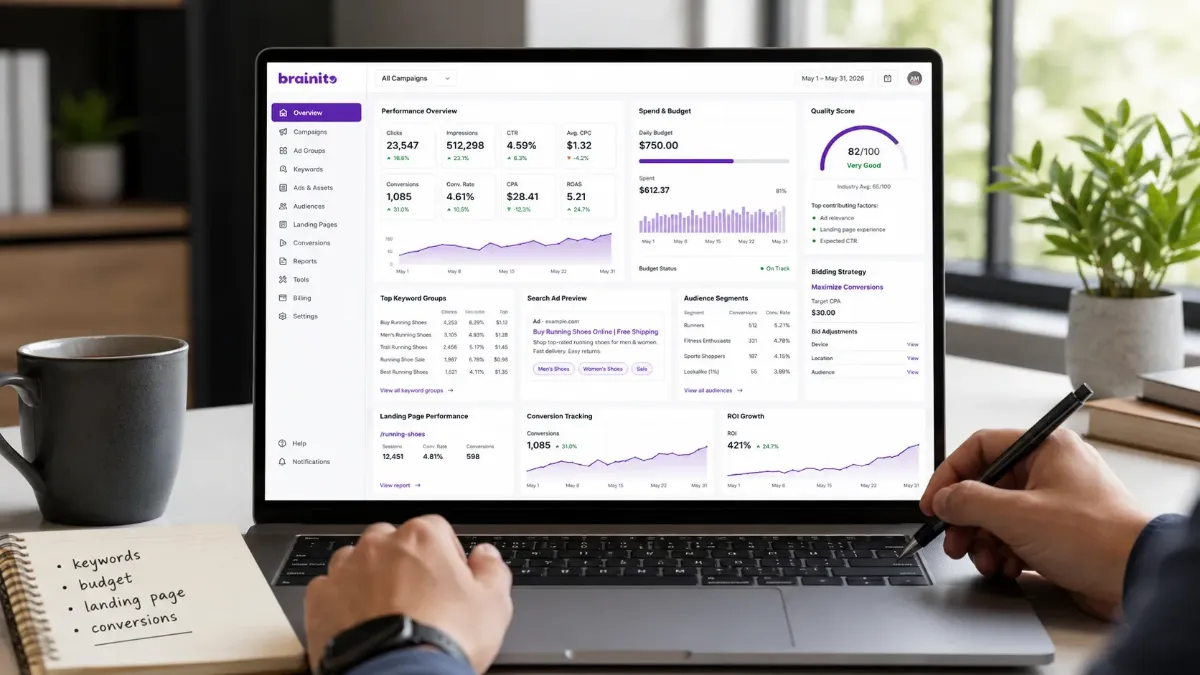
Quality Score is Google's rating of how relevant your keywords, ads, and landing pages are to a searcher. A higher score lowers your cost per click and improves ad position, so it directly affects profitability. The three drivers are expected click through rate, ad relevance, and landing page experience. Improving any of them compounds into real savings.
Making Every Click Count
Budget discipline means concentrating spend where it converts and cutting where it does not. Review your top and bottom performers weekly. Pause underperforming keywords, reallocate to winners, and test new landing pages against your best. If ad spend is stretching your resources, weigh the tradeoffs on our pricing page or consider whether a dedicated specialist would move the needle faster than a solo effort.
Writing Ads and Extensions That Convert
Your ad copy is the handshake between a search query and your offer. Great ads speak directly to the searcher's intent, highlight a clear benefit, and end with a strong call to action. Weak ads describe your company instead of solving the searcher's problem.
Copy That Earns the Click
Lead with the outcome the customer wants, include the keyword naturally, and add proof or urgency where it fits. Testing multiple headlines and descriptions lets Google serve the best combinations. If you need fresh angles fast, our ad copy generator can spark variations you can adapt for search.
Extensions Expand Your Footprint
Ad extensions add sitelinks, callouts, structured snippets, call buttons, location details, and promotions to your ads. They increase your ad's size, give searchers more reasons to click, and often lift click through rate at no extra cost. Enable every extension that fits your business, because unused extensions are missed real estate on the results page.
Tracking, Reporting, and Knowing When to Get Help
You cannot optimize what you do not measure. Conversion tracking is the backbone of any serious Google Ads program, telling you which keywords, ads, and campaigns actually generate leads or sales rather than just clicks.
Set Up Meaningful Metrics
Track the actions that matter to your business, whether that is form fills, calls, purchases, or bookings. Then evaluate campaigns on cost per acquisition and return on ad spend, not vanity metrics like impressions. Clean data lets automated bidding work as intended and gives you confidence in every decision.
Should You Manage It Yourself?
Plenty of businesses run capable in house campaigns, especially with a solid plan. If you prefer a structured DIY path, our DIY marketing plan walks you through building and running campaigns step by step. If your time is better spent elsewhere, you can hire a marketer to take the account off your plate. Either way, start by running our free marketing audit to see exactly which fixes will deliver the fastest gains, and browse the blog for deeper tactical guides.
Frequently Asked Questions
How much does Google Ads management cost?
Management fees vary widely based on account size and whether you hire an agency, a freelancer, or run it yourself. Fees are separate from your actual ad spend, which you pay to Google directly. Start with a budget you can sustain, prove the model on a small scale, and scale spending only once your conversion tracking confirms a healthy return.
How long before Google Ads shows results?
You can see clicks and impressions within hours of launching, but meaningful optimization takes time. Most accounts need two to three months of testing, trimming waste, and refining targeting before performance stabilizes. Patience combined with consistent adjustments beats constant overhauls.
What is the fastest way to lower my cost per click?
Improving Quality Score is the most reliable path. Tighten the match between your keywords, ad copy, and landing page, add negative keywords to filter irrelevant traffic, and enable every relevant ad extension. Running our free marketing audit will pinpoint the specific weaknesses dragging your costs up.