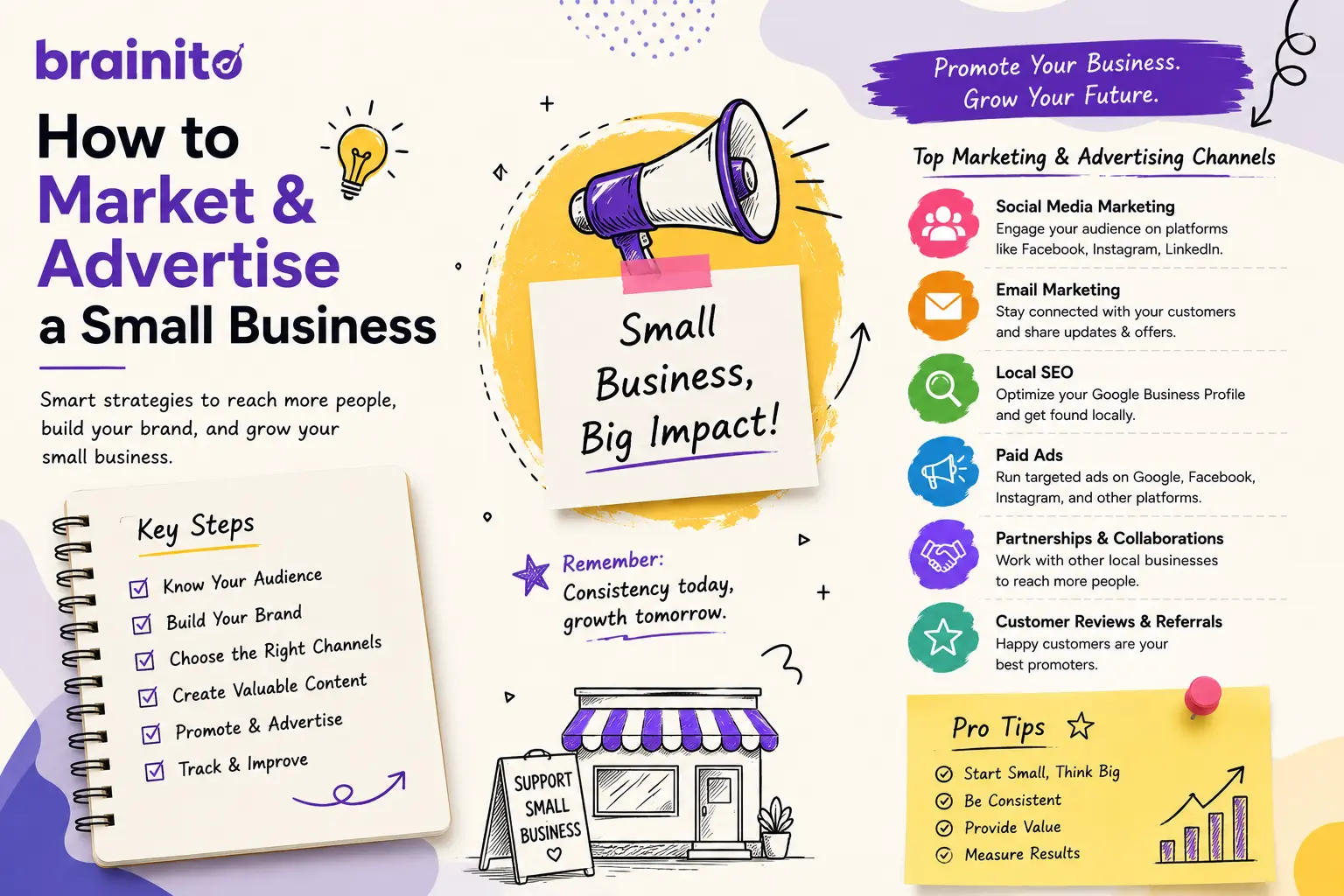
Learn how to market and advertise a small business on a budget in 2026: website, local SEO, social media, paid ads, email, content, and referrals.
Start With a Website That Actually Earns Its Keep
Before you spend a dollar on ads, make sure the place you are sending people is ready to convert. Your website is the one marketing asset you fully own, and in 2026 it doubles as your storefront, your sales rep, and your credibility check. Most small business sites quietly leak customers because they load slowly, look dated on a phone, or bury the one thing visitors came to find.
Nail the fundamentals first
Aim for a site that loads in under three seconds, reads cleanly on mobile, and puts your offer and a clear call to action above the fold. Spell out what you do, who you serve, and how to buy or book. Add real photos, customer reviews, and a phone number people can tap.
Build SEO in from day one
Search engine optimization is still the cheapest long-term traffic source there is. Write one focused page per service, target the phrases your customers actually type, and use clear titles, headings, and image alt text. If you are not sure where your site stands, run a free marketing audit to get a 77-factor scan and a prioritized action plan instead of guessing.
Win Local Search and Google Business Profile
If you serve a specific area, local search is where most of your easy wins hide. People searching "near me" are ready to act, and showing up in the local map pack can outperform a paid campaign without costing a thing.
Claim and complete your Google Business Profile
Fill in every field: categories, hours, services, service area, and a steady stream of photos. Post updates, answer questions, and keep your name, address, and phone number identical everywhere online. Consistency is what tells Google you are legitimate.
Turn reviews into a system
Reviews are the single biggest local ranking and trust lever. Ask every happy customer, make it one tap easy, and reply to every review you get. To see exactly what is holding your listing back, run our GMB audit tool and fix the gaps competitors are exploiting.
Use Social Media With Intent, Not Everywhere
You do not need to be on every platform. You need to be consistent on the one or two where your customers already spend time. A local service business often thrives on Facebook and Instagram, while a B2B consultant lives on LinkedIn. Pick your lane and go deep.
Show the human behind the business
Short videos of you, your team, and your work outperform polished stock content because they build familiarity and trust. Mix helpful tips, behind-the-scenes clips, and customer stories so you are not constantly selling.
Post on a rhythm you can sustain
Three solid posts a week beats a daily burst that burns out by month two. Batch your content in advance with a content calendar generator so you always know what is going out next, and treat comments and DMs as customer service, not an afterthought.
Run Paid Ads Without Burning Your Budget
Paid ads get a bad reputation mostly because people launch them without a plan. Done right, they are the fastest way to test offers and buy traffic on demand. Start small, measure honestly, and scale only what works.
Match the platform to the intent
Google Search ads capture people already looking for what you sell, which makes them ideal for high-intent services. Facebook and Instagram ads are better for awareness and visually driven offers. Begin with a modest daily budget and one clear goal per campaign.
Get the creative and structure right
Your ad copy and account structure decide whether you waste money or make it. Tighten your campaigns with a Google ad structure generator, and spin up scroll-stopping social creative with our Facebook ad copy generator. Always send clicks to a focused landing page, never your homepage.
Email and Content: The Compounding Channels
Social reach is rented and ad costs rise, but an email list is an audience you own. Email consistently returns more per dollar than almost any other channel, and content marketing keeps feeding it new subscribers.
Build a list and actually mail it
Offer something useful in exchange for an email, such as a discount, a checklist, or a short guide. Then send a regular newsletter with tips, offers, and updates. Open rates live and die by the subject line, so test yours with an email subject line generator before you hit send.
Let content do the heavy lifting
A blog that answers your customers' real questions earns search traffic for years. Publish helpful, specific articles rather than fluff, and repurpose each one into social posts and emails. If a blank page slows you down, our blog content generator gives you a fast first draft to edit and make your own.
Turn Customers Into a Referral Engine
Word of mouth is still the most trusted form of advertising, and for small businesses it is often the most profitable. A happy customer who recommends you carries more weight than any ad, and it costs you almost nothing to encourage.
Make referrals easy and worth it
Create a simple referral offer, such as a discount or credit for both the referrer and the new customer. Ask at the moment people are most satisfied, right after a great result. The key is to ask deliberately rather than hoping it happens on its own.
Decide where to focus your time
You cannot do everything at once, so pick the two or three channels that fit your business and master them before adding more. If you want a clear roadmap, build a DIY marketing plan tailored to your goals, or if you would rather hand it off, learn what it takes to hire a marketer. You can compare options on our pricing page or browse more guides on the blog.
Frequently Asked Questions
How much should a small business spend on marketing?
A common benchmark is 7 to 10 percent of revenue, but on a tight budget the smarter move is to focus spending where it converts. Start with the free or low-cost channels (SEO, Google Business Profile, email, referrals) and reinvest profits into paid ads once you know what works.
What is the cheapest way to market a small business?
The cheapest high-impact channels are local SEO, a complete Google Business Profile, customer reviews, and word-of-mouth referrals. These require time more than money, and they compound over months. A free marketing audit will show you which of these is most worth your effort right now.
How long before marketing starts working?
Paid ads can drive traffic within days, while SEO and content typically take three to six months to gain momentum. The businesses that win combine a quick channel for immediate leads with a slow channel that compounds, so they are never dependent on a single source.