
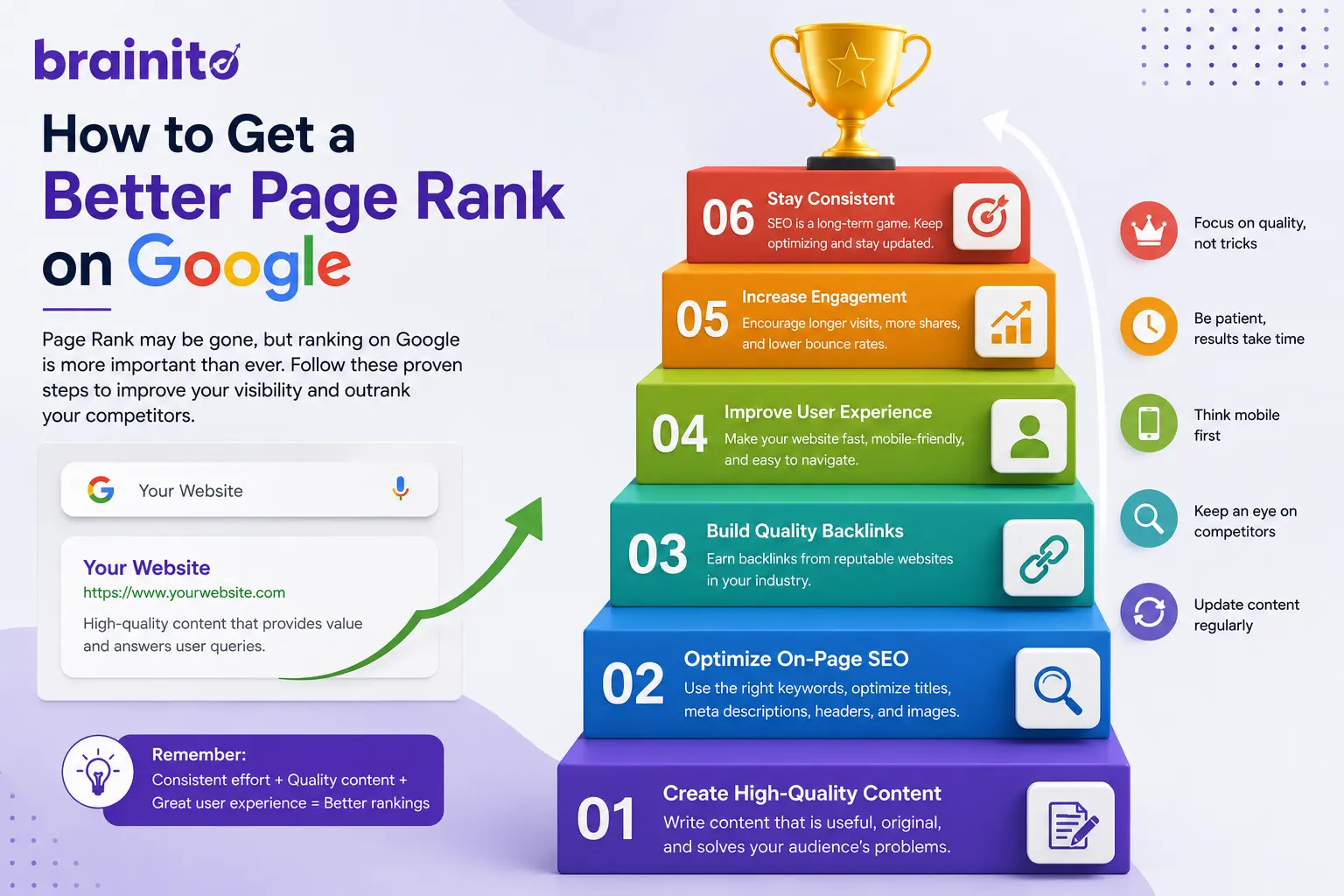
Want to rank higher on Google in 2026? Learn the on-page SEO, content, keyword, technical, Core Web Vitals, backlink, and E-E-A-T tactics that move rankings.
Why Google Rankings Still Matter in 2026
The old idea of chasing a single "PageRank" number is long gone. Today Google blends hundreds of signals (relevance, quality, technical health, and trust) to decide which pages deserve the top of the results. If you want to rank higher on Google, you no longer optimize for one metric. You build a page that genuinely answers a query better than anyone else and make it easy for both people and crawlers to understand.
The good news: most of these levers are within your control, even on a small budget. This playbook walks through the seven areas that actually move rankings in 2026, in roughly the order you should tackle them. If you would rather see your own gaps first, you can run a free marketing audit and get a prioritized list before you start.
Nail On-Page SEO Fundamentals
On-page SEO remains one of the fastest ways to improve visibility because you control every element. Start with intent: figure out what someone actually wants when they type a query, then structure the page to deliver it.
Title tags and headings
Put your primary keyword near the front of the title tag and keep it under roughly 60 characters. Use one clear H1, then organize the body with descriptive H2s and H3s. Headings help readers skim and give Google a map of your content.
Meta descriptions and internal links
Write meta descriptions that read like an honest ad: compelling, keyword-aware, 140 to 160 characters. Then link related pages together so authority flows through your site and visitors stay longer. A simple habit of linking new posts to your blog hub pays off over time.
Create Content That Deserves to Rank
Word count is not a ranking factor, but depth often is. Pages that fully cover a topic tend to win because they answer follow-up questions before the reader asks them. Aim for genuinely useful, not padded.
Answer real questions
Question-and-answer formatting works well because it matches how people search and how voice assistants read results aloud. Pull questions from "People also ask," support tickets, and sales calls, then answer each one plainly.
Plan before you write
A structured outline keeps content focused and complete. A content brief generator can map the headings, entities, and questions to cover, and a blog content generator can speed up the first draft so you spend your time editing for accuracy and voice. If you would rather hand the whole thing off, you can hire a marketer to run your content engine.
Do Keyword Research the Modern Way
Keywords are still how you connect intent to pages, but the strategy has shifted from stuffing single phrases to covering topics and the questions around them.
Find the right terms
Target a mix of high-intent commercial keywords and lower-competition long-tail phrases you can realistically win. A keyword research tool shows search volume, difficulty, and related queries so you prioritize terms that are worth the effort. If you sell products, an Amazon keyword research tool surfaces buyer-intent phrases shoppers actually use.
Build topic clusters
Group related keywords into clusters: one pillar page covering the broad topic, supported by focused articles that link back to it. This signals depth and authority on a subject rather than a scattering of unrelated posts. Map your clusters inside a DIY marketing plan so every piece has a purpose.
Fix Technical Health and Core Web Vitals
Great content can stall if Google struggles to crawl, render, or trust your site. Technical SEO clears those roadblocks.
Crawlability and indexing
Make sure important pages are not blocked by robots.txt, submit an up-to-date XML sitemap, and resolve broken links and redirect chains. Use canonical tags to avoid duplicate-content confusion.
Core Web Vitals and mobile
Google measures real user experience through Core Web Vitals: Largest Contentful Paint (loading), Interaction to Next Paint (responsiveness), and Cumulative Layout Shift (visual stability). Compress images, defer non-critical scripts, and use a fast host. With mobile-first indexing, your responsive mobile experience is effectively the version Google ranks, so test it on a real phone. A free marketing audit runs a 77-factor scan that flags these technical issues and hands you a prioritized fix list, so you act on what matters first instead of guessing.
Earn Backlinks and Build E-E-A-T
Off-page signals tell Google the rest of the web vouches for you. Backlinks remain one of the strongest of those signals when they come from relevant, reputable sites.
Quality over quantity
A handful of links from trusted, on-topic sites beats hundreds of low-quality ones. Earn them with original research, useful tools, guest contributions, and genuinely link-worthy content. Audit what you already have (and disavow the spam) with a backlink audit tool.
Demonstrate experience and trust
Google's quality guidelines lean on E-E-A-T: Experience, Expertise, Authoritativeness, and Trustworthiness. Show real authorship with bylines and credentials, cite sources, keep content current, and make contact and policy details easy to find. First-hand experience (original photos, case studies, hands-on testing) is increasingly what separates pages that rank from generic AI-spun filler.
Frequently Asked Questions
How long does it take to rank higher on Google?
For new or competitive pages, meaningful movement usually takes three to six months as Google crawls, indexes, and gathers engagement signals. Quick wins (fixing technical errors, improving titles, refreshing existing content) can show up in weeks, while building authority through backlinks and topic depth is a longer game.
Is PageRank still a thing in 2026?
PageRank was an early link-based algorithm and Google no longer publishes a public score. Links still matter, but rankings now depend on relevance, content quality, technical health, Core Web Vitals, and E-E-A-T combined. Focus on those instead of chasing a single number.
What is the fastest way to find what is holding my rankings back?
Run a diagnostic before you start changing things. A free marketing audit scans your site across 77 factors and returns a prioritized action plan, so you fix the highest-impact issues first. From there, compare plans on the pricing page if you want ongoing tracking.