Build a digital marketing strategy in 2026 with this step-by-step guide covering goals, audience personas, channels, content, budget, and measurement.
What a Digital Marketing Strategy Actually Is
A digital marketing strategy is the plan that connects your business goals to the specific online activities meant to achieve them. It is not a list of tactics like "post on Instagram" or "run some ads." It is the reasoning that decides which channels you invest in, who you are speaking to, what you say, and how you know whether any of it is working.
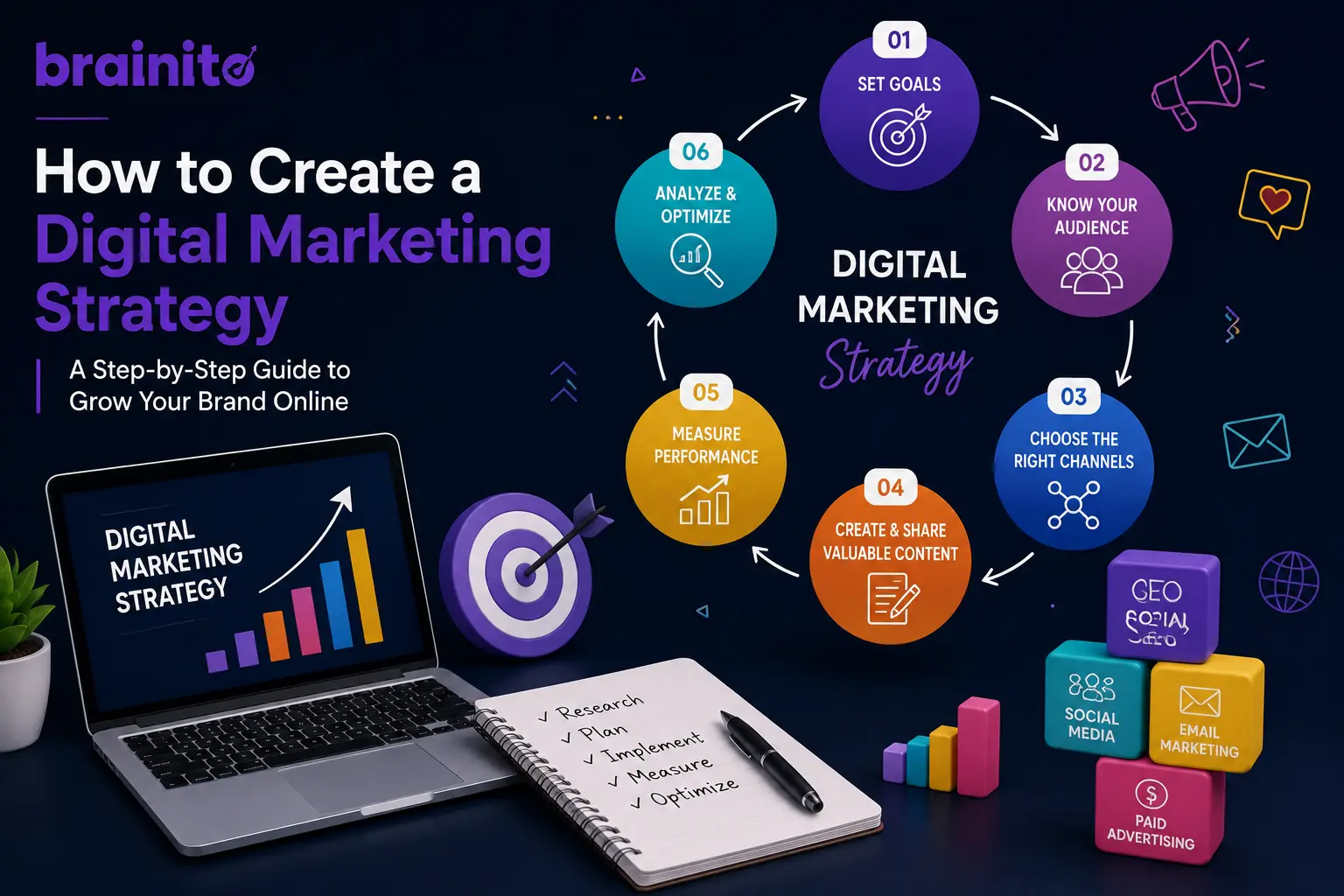
Most teams skip the strategy and jump straight to execution. That is why they end up busy but flat. In 2026, with rising ad costs, AI-generated content flooding every feed, and shorter attention spans, a deliberate strategy is the difference between spending money and building momentum. The six steps below walk you through it. If you would rather follow a guided template, our DIY marketing plan turns this same framework into a fill-in-the-blanks workflow.
Step 1: Set Goals You Can Actually Measure
Every strategy starts with a destination. Vague ambitions like "grow the brand" give you nothing to aim at, so translate them into measurable outcomes.
Use the SMART filter
Make each goal specific, measurable, achievable, relevant, and time-bound. "Generate 150 qualified leads per month by Q3" beats "get more leads" because you can track it weekly and course-correct.
Separate business goals from marketing metrics
Your business goal might be revenue or customer count. Your marketing metrics (traffic, conversion rate, cost per acquisition) are the levers that move it. Keep them linked so every campaign ties back to something the business cares about. Not sure where your current efforts stand? A free marketing audit benchmarks your performance across 77 factors and shows which gaps to close first.
Step 2: Define Your Audience and Build Personas
You cannot write compelling messaging for "everyone." The sharper your audience definition, the cheaper and more effective every channel becomes.
Build two or three buyer personas
A persona is a semi-fictional profile of your ideal customer: their role, goals, frustrations, and the words they use to describe their problem. Pull these details from sales calls, support tickets, reviews, and customer interviews rather than guessing.
Map the customer journey
Sketch how someone moves from first hearing about you (awareness) to comparing options (consideration) to buying (decision). Each stage needs different content and channels, which makes your later choices far easier. You can validate the language your audience searches for with our keyword research tool.
Step 3: Choose the Right Channels
You do not need to be everywhere. You need to be where your audience already spends attention, with enough focus to do it well.
Match channels to intent
Search engines capture people actively looking for a solution, so SEO and Google Ads work for high-intent demand. Social platforms build awareness and trust earlier in the journey. Email nurtures the people you already reached. Pick two or three to start, then expand once they perform.
Weigh owned, earned, and paid
Owned channels (your website, blog, email list) compound over time. Paid channels (Google and Meta ads) buy speed but stop the moment you stop spending. A healthy 2026 strategy blends both so you are never fully dependent on rented audiences. If you are weighing whether to build this in-house, compare the tradeoffs of choosing to hire a marketer versus running it yourself.
Step 4: Plan Content That Earns Attention
Content is how your strategy actually reaches people. The goal is not volume; it is publishing the right thing for the right stage of the journey, consistently.
Build a content calendar
A calendar keeps you from scrambling and ensures you cover awareness, consideration, and decision topics in balance. Our content calendar generator maps out a month of themes in minutes, and the content brief generator turns each idea into a writer-ready outline.
Repurpose ruthlessly
One strong blog post can become a newsletter, several social posts, and an ad angle. For long-form pieces, the blog content generator gives you a fast first draft you can refine into something genuinely useful. Quality and originality still win in 2026, especially as search engines reward genuine expertise.
Step 5: Set a Budget and Allocate by Priority
A budget forces discipline. Without one, paid channels quietly eat your resources while owned channels starve.
Start from your goals, not your guesses
Estimate the cost per result on each channel, then work backward from your target. If a lead costs roughly 40 dollars on paid search and you need 150 leads, you can size the spend instead of hoping. For ad-heavy plans, tools like our Google ad structure generator and Facebook ad copy generator help you launch campaigns that waste less budget on weak creative.
Reserve room to experiment
Keep ten to twenty percent of the budget for testing new channels or angles. The winners from those small bets become next quarter's main investments.
Step 6: Measure, Learn, and Refine
A strategy is a hypothesis until the data confirms it. Measurement closes the loop and tells you where to double down.
Track a focused dashboard
Pick a handful of metrics tied to your goals (traffic, conversion rate, cost per acquisition, email engagement) and review them on a regular cadence. Watching everything means acting on nothing.
Run a regular audit
Quarterly, step back and assess the whole system, not just individual campaigns. The fastest way to do this is a free marketing audit, which scans your marketing across 77 factors and returns a prioritized action plan so you fix the highest-impact issues first. Pair it with email tools like our email subject line generator to keep improving the channels that already work, and browse the blog for deeper tactics on each step.
Frequently Asked Questions
How long does it take to build a digital marketing strategy?
A focused strategy for a small business takes one to two weeks of real work: a few days defining goals and personas, a few more choosing channels and mapping content, and a final pass on budget and metrics. A guided DIY marketing plan shortens that to an afternoon by giving you the structure to fill in.
Which channel should I start with in 2026?
Start where intent and effort align. If people are already searching for what you offer, SEO and search ads usually deliver the fastest qualified traffic. If you are creating new demand, lean on social and content first. A free marketing audit can point you to the channel with the most untapped upside for your specific situation.
How much should I spend on digital marketing?
A common benchmark is seven to ten percent of revenue for maintaining growth and more if you are scaling aggressively, but the right number depends on your margins and goals. Size it from your target results and cost per acquisition rather than copying an industry average. See pricing if you want done-for-you support.